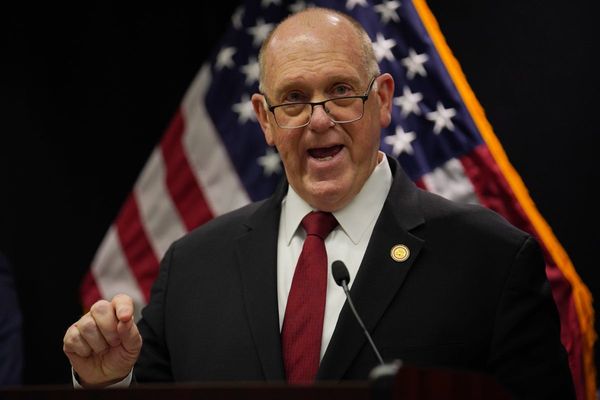
https://www.star-telegram.com/article239042893.html "We have no way of knowing whether anything is government-based or not, or government-sanctioned. What we're doing is scanning on our state networks, and we can see where attacks are coming from (geographically)," Crawford said.
Tensions between the two countries have boiled over after the U.S. killed Iran Maj. Gen. Qassem Soleimani last week in a drone strike authorized by President Donald Trump. Crawford said that while federal agencies, including the U.S. Department of Homeland Security and the Cybersecurity and Infrastructure Security Agency, have issued advisories warning of a heightened cybersecurity threat, similar probes are not uncommon.
"These sorts of attacks happen every day. It happened yesterday. It's going to happen tomorrow. This is just in particular because of events that are going on, we're being extra vigilant," Crawford said, estimating that DIR receives upwards of billions of similar probes daily.
A successful cyberattack could result in data compromises or the shutdown of state agency websites, Crawford said.
Abbott encouraged local governments who may detect potential cyberattacks to contact DIR, noting that attacks can sometimes be difficult to discern, and in light of nearly two dozen Texas communities targeted by ransomware just this past August.
The increase in potential cyberterrorism threats from Iran was discussed at the second meeting of Domestic Terrorism Task Force Tuesday at the Texas Capitol. Formed in the wake of the August mass shooting in El Paso in which 22 people were killed and more than two dozen others injured in an attack targeting Hispanics, the task force will address domestic terrorism in all its forms _ not just mass shootings _ Abbott said.
"We all need to understand that terrorism evolves," Abbott said.
Part of the task force's ongoing work will be to continue to define what "domestic terrorism" is, in order to pass a state statute next legislative session that will give prosecutors a tool to pursue legal action, Abbott said.
When asked whether Abbott considers the recent shooting at the West Freeway Church of Christ in White Settlement, in addition to a stabbing attack in Austin last week, as acts of domestic terrorism, Abbott was hesitant to assign the label to either incident.
"Those are acts of murder that unfortunately happen across the state, the country, everyday," Abbott said. "Even though they are murderous acts, that doesn't mean that they are acts of domestic terrorism."
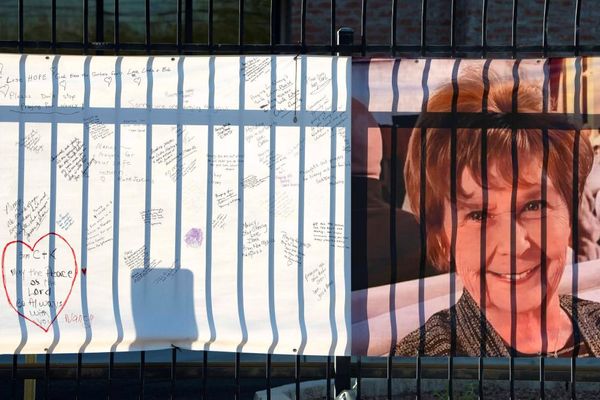
Abbott said more details still need to be learned about the church shooting in White Settlement before determining whether it was an act of domestic terrorism, but noted that the task force did discuss aspects of the shooting, such as the potential consequences of its display on a livestream video of the church service.
While both the recent shooting in Fort Worth and stabbing in Austin were committed by suspects who were believed to have experienced homelessness, Abbott doubled down Tuesday on his past critiques of Austin's new ordinances regulating where people can sleep or camp, saying it was time for city officials to put "the public safety of the people in Austin first."
In addition, Abbott said the task force discussed the Department of Public Safety's implementation of eight executive orders Abbott issued in September that had the goal of improving reporting of suspicious activity.
DPS released "unclassified" versions of two reports on its website Tuesday afternoon that were discussed during the meeting and assess the threats of mass attacks and domestic terrorism to Texas.
"Evaluating our state's public safety vulnerabilities in today's threat environment is critical to keeping Texas safe from the most unthinkable tragedies," DPS Director Steven McCraw said in a statement on the reports' release.
Manny Garcia, the executive director of the Texas Democratic Party, said in a statement Tuesday that Abbott's Domestic Terrorism Task Force "continues to ignore the real threats facing Texas."
"Gun violence and White Supremacist terrorism remains the number one domestic terrorist threat in Texas, yet Governor Abbott still refuses to call a common-sense special session to keep our families safe," Garcia said, referring to the calls for a special legislative session to address gun violence from over 60 Democratic state lawmakers last year.
The Domestic Terrorism Task Force, which meets quarterly or at the call of the governor, was one of a handful of initiatives Abbott implemented after two Texas mass shooting killed 29 within a month. The House committee tasked with recommending legislative solutions to prevent future mass shootings is scheduled to hold a public hearing Thursday in El Paso.