What you need to know about the Chinese coronavirus that has spread to Thailand and other countries
Test Yourself is where you can improve your reading skills. Whether it’s for tests like University Entrance Exams or IELTS and TOEFL, or even just for fun, these stories help you to read, understand and improve your English.
You can download a PDF of this story to be used in class or at home. Click the link below.
Read the following story by Arusa Pisuthipan from the Bangkok Post. Then, answer the questions that follow.
What you need to know about the Chinese coronavirus that has spread to Thailand and other countries
AROUND THE WORLD
At first, the number of coronavirus-infected cases in China was only 27 when first reported at the end of December. Then, only three days later, the number rose to 44, before hitting 59 two days after that.
As of now, the coronavirus, which has been wreaking havoc mainly in China, has infected more than 2,500 people -- from the central city of Wuhan to Beijing, Shanghai and other cities -- with more than 100 deaths reported so far. Unfortunately, the virus eventually found its way out of China, with countries like Japan, South Korea, Singapore, France and even the United States being hit.
Last week, according to a New York Times report, a man in his 30s in Washington was infected with the Wuhan coronavirus, the first confirmed case in America of the mysterious respiratory infection. The Chinese authorities last Thursday morning decided to close off Wuhan by cancelling planes and trains leaving the city, and suspending buses, subway services and river ferries within it.
THAI VIRUS
The virus hit Thailand recently, with the first infected case having been reported earlier this month. The patient was a 61-year-old Chinese tourist travelling from China to Thailand. She was transferred to an isolation ward in Nonthaburi province after her infection was confirmed.
In total, Thailand has seen eight confirmed cases of novel coronavirus-infected patients. Last week, media outlets reported a British tourist was feared to be the first Western victim of the new virus outbreak, as he was admitted to a hospital in Phuket before being transferred to a private hospital in Bangkok.
Although the World Heath Organisation said it would consider declaring an international public health emergency over the outbreak, in Thailand there is no reason to be overly paranoid, said Dr Thanarak Plipat, deputy director of the Bureau of Epidemiology under the Ministry of Public Health's Department of Disease Control.
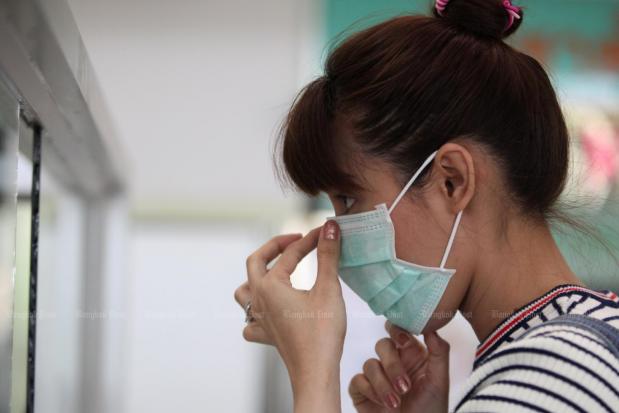
"In Thailand, the coronavirus infection is not yet considered a pandemic [a disease that spreads over the whole world]. So standard healthcare precautions like regular handwashing, avoiding crowded areas and wearing protective masks are adequate at this point," said Dr Thanarak.
BEING CAREFUL
The new strain of coronavirus, or the 2019 novel coronavirus, is believed to have originated in the city of Wuhan, the capital of Hubei province. A market was pinpointed as the centre of the outbreak. Coronaviruses are zoonotic, meaning they are transmitted between animals and people. Some of the first group of patients in Wuhan worked or shopped at a seafood market where live animals and wildlife parts were reportedly sold. The market was shut down on Jan 1.
"If you ask how the virus travels, I would say by plane," said Dr Thanarak.
There are three direct flights from Wuhan to Suvarnabhumi daily, and two flights daily to Don Mueang, as well as flights to Chiang Mai and Phuket. According to Dr Thanarak, around 10% of Chinese visitors coming to Thailand -- approximately 300,000 -- are from Wuhan. Yet he firmly believes that Thailand is fully prepared when it comes to handling the new virus strain.
Now that the novel coronavirus is spreading across countries, apart from basic personal hygiene practices like frequent handwashing and getting a flu vaccine, Dr Thanarak offered advice for international travellers.
"A trip to Wuhan should not be planned unless it is extremely necessary. Yet if you really need to visit there, don't go to markets that sell animal carcasses, seafood and wildlife."
He concluded: "Thais in general should be able to live their normal lives -- except for healthcare personnel, who should take extra precautionary steps."

Section 1: Read through the story and answer the following questions.
1. How many cases of coronavirus were there in 2019? …………….
2. The number of cases more than doubled in the first five days. True or false? …………….
3. A Westerner had the virus in Phuket. True or false? …………….
4. How many precautions does Dr Thanarak mention? …………….
5. Which province is Wuhan in? …………..
6. The first group of patients all worked at a Wuhan market. True or false? …………….
7. There are five flights from Wuhan to Thailand daily. True or false? …………….
8. Dr Thanarak advised healthcare staff to panic. True or false? …………….
Section 2: Match the symptom with the adjective.
9. high …………
10. respiratory …………
11. shortness ……….
12. rapid ……….
13. sore ……….
a. throat b. of breath c. breathing d. fever e. symptoms
Section 3: Read the following passage. Then, fill in the blanks with the correct words from the choices given.
The …14… that the coronavirus is transmitted only between animals and people could be a …15…. …16… on the WHO report, a Japanese patient -- a male in his 30s -- travelled to Wuhan in December and ...17...a fever earlier this month while staying there. …18…, he did not visit the market or any other live animal markets in Wuhan. He was in …19… contact with a person suffering pneumonia.
14. a. belief b. believe c. believes
15. a. misunderstood b. misunderstand c. misunderstanding
16. a. Based b. According c. Reading
17. a. developed b. develop c. development
18. a. Also b. However c. Unfortunately
19. a. closer b. close c. closely
Section 4: Find words that match the following definitions.
20. a situation in which there is a lot of damage, destruction or confusion ……………
21. connected with breathing ……………
22. the state of being alone and away from anybody else ……………
23. a sudden serious and dangerous event or situation …………
24. things that are done in advance to prevent problems or avoid danger ……………
Answers: 1. 27. 2. True. 3. True. 4. Three. 5. Hubei. 6. False. 7. False. 8. False.
9. d. 10. e. 11. b. 12. c. 13. a. 14. a. 15. c. 16. a. 17. a. 18. b. 19. b.
20. havoc. 21. respiratory. 22. isolation. 23. emergency. 24. precautions.
SCORE 21-24: Excellent! 17-20: Good. 13-16: Fair. 12 or fewer: You'll do better next time!