Test results of samples collected from the first suspected case of monkeypox in Telangana is expected to be received by Tuesday evening. Five forms of samples, including blood, urine, samples from lesions, swab from throat, were slated to be sent to National Institute of Virology (NIV)-Pune by Monday evening.
The person suspected to be having the infection is a 35-year-old man from Kamareddy. He returned from Kuwait on July 6, developed fever on July 20, rashes on July 23. A private hospital doctor in Kamareddy district who offered consultation to him directed the patient to government hospital.
Doctors at the Kamareddy government hospital and teams of the Integrated Disease Surveillance Programme (IDSP) examined him, saw lesions on skin, and suspected him of having monkeypox. The patient was sent to Fever Hospital in Nallakunta, here.
Lesions on body
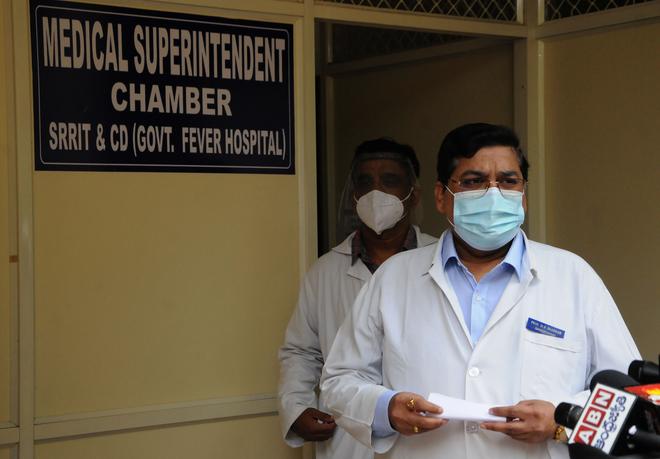
Superintendent of the Fever Hospital K. Shankar said that the patient has lesions on face, neck, chest and palm. “His condition is stable. Symptomatic treatment as per ICMR guidelines is being provided to him,” said Dr Shankar, adding that if new guidelines are issued advising use of antiviral drugs, immunoglobulins that were used for smallpox, the hospital will administer them. Since the patient has travel history, it is suspected that he has monkeypox.
Six people who were in direct contact with the suspected case were identified and isolated. Director of Public Health G. Srinivasa Rao said on Sunday that none of the direct contacts had reported any symptoms.
Allaying people’s fears about monkeypox, he said that it is not airborne and people need not fear it as they did about COVID-19.
Contact transmission
World Health Organisation (WHO) has stated that monkeypox virus is transmitted from one person to another by close contact with lesions, body fluids, respiratory droplets and contaminated materials such as bedding.
Dr. Shankar said that it could spread if a person spends prolonged time with a person having the infection, and not by meeting for a second. “It could spread when you touch body fluids, have sexual contact, kiss, or if bed, clothes, bathroom, bedsheets used by the patient are shared,” he said.
The Superintendent has urged people to take symptomatic treatment immediately after identifying the infection as neglect could lead to death because of secondary complications. The neglect could cause pneumonia, affecting the brain leading to seizures.