To make a great pan sauce you need just a few simple ingredients. One of those ingredients are shallots.
When I am working with shallots, I always think back to Anthony Bourdain's famed book "Kitchen Confidential: Adventures in the Culinary Underbelly," in which he refers to shallots as "essential for sauces, dressings, sautes."
"Shallots are one of the things _ a basic prep item in every mise-en-place which make restaurant food taste different from your food," Bourdain wrote.
So why do restaurants use them? Shallots, a member of the onion family, look like big cloves of garlic and are milder and sweeter than a red onion or cooking onions. They have a papery tan outer skin and root ends like onions. Under that tan skin, shallots are light purple. You can buy them in netted bags or in bulk at most grocery stores.
Choose shallots with dry skins that have no soft spots and no sprouting. Shallots should be heavy for their size.
They're pricier than regular onions, but you don't need to buy a lot. Today's recipe calls for two small shallots. My idea of a small shallot are ones about the size of a golf ball.
While they are used in many sauces, shallots are best known for being used in the classic French beurre blanc. The shallots are sauteed and then wine and vinegar are added. The mixture is then reduced.
When using shallots for pan sauce, you want to saute them slightly. Don't let them brown too much or burn because that flavor will get into the sauce. You want to let them gently release their flavor.
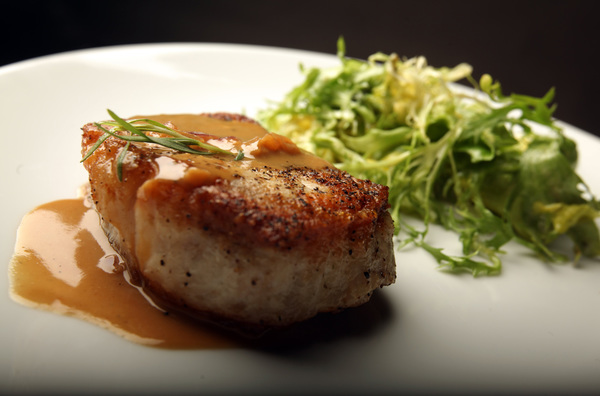
The rest of this pan sauce, is well, gravy. Having a pan sauce is a good way to spruce up any meal. Although you can make a pan sauce in a separate pan, I like making it in the same skillet in which I cooked the meat. It gives the sauce extra flavor. And there's no need to dirty another skillet.
Plus, there's added flavor from the concentrated juices in the pan. And if there is any browned bits _ called fond _ on the bottom of the pan, these are scraped up and add even more flavor to the sauce.
With this recipe you'll need an ovenproof skillet. The pork chops are first seared in the skillet and then finished in a 400-degree oven. If you don't have an ovenproof skillet, skip the oven and just continue cooking the chops in the skillet. Once they are thoroughly cooked, transfer to the platter and make the pan sauce.
When I originally made this, I used fresh tarragon. But you can use any herb. Sage would be a nice addition, but use it sparingly because of its strong flavor. With this sauce, the goal is a bit of sweetness from the shallots, an herbaceous tone from the sage and tanginess from the Dijon, which also acts as an emulsifier.