Sage is a powerful herb that's popular in fall dishes.
Its pungent flavor is described as bitter when eaten raw. Uncooked sage should be used sparingly to ensure the right balance of flavor. Like other strong herbs, sage can easily overpower a dish.
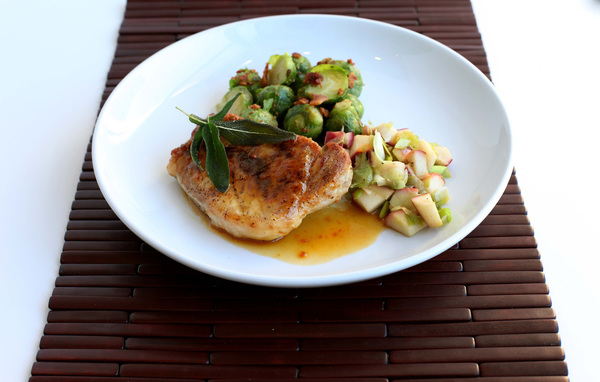
But once cooked, sage's velvety soft leaves, which are slightly thicker than most herbs, mellow in flavor. For today's dish _ Skillet Pork with Crispy Sage and Sauteed Apples _ I fried fresh sage. It takes just 20 seconds to fry the leaves; this also flavors the oil.
The fried leaves make for a fancy garnish. Or, you can crumble them and sprinkle over the pork and apples.
Sage is just one of the highlights of this one-skillet dish that also features pork loin chops, sauteed apples and a pan sauce that takes a few minutes. Pork and apples are a natural match, and this savory dish is a great way to put Michigan's bumper crop of apples to use.
For the pork, you can buy precut pork chops, or pick up a pork loin and cut it into chops. I prefer the latter because it lets me control the portion size of the chops (plus, it's also cost-effective). For skillet cooking, I cut them about }- to 1-inch thick. If I want to make a pocket for a stuffing, I cut them thicker.
To season the pork, I used a dried rubbed sage, which also is soft to the touch. Again, use this sparingly because it can be strong.
The pan sauce is a mix of apple cider, apricot preserves and Dijon. The preserves give it a silky consistency, and the Dijon adds a tangy flavor that balances the sweet tones.
This pork dish pairs nicely with a side of pan-sauteed Brussels sprouts. To prepare them, trim their ends and remove any wilted, yellowish leaves. Cut up (use scissors because it's super easy) 4 slices of bacon and add them to a skillet. When the bacon is crisp, cut the Brussels sprouts in half (or leave them whole) and add them to the skillet. Saute the Brussels sprouts until crisp-tender.