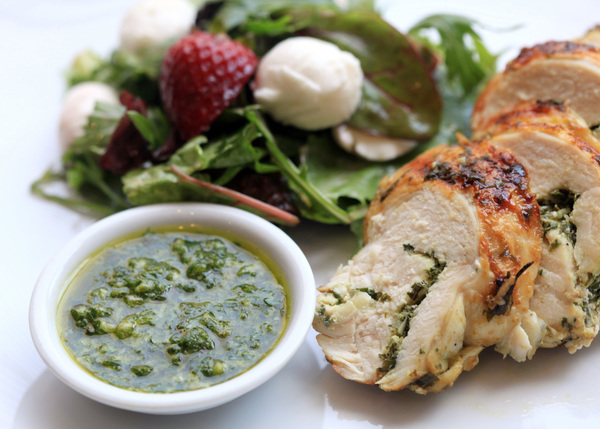
Having a variety of fresh herbs in pots on the deck is one of the coolest things about summer.
Fresh herbs make it so easy to add an herbaceous tone to any salad, side or main dish. Softer herbs like basil and tarragon are especially nice additions to salads and vinaigrettes. Herbs like rosemary, sage and thyme lend themselves to meats like pork and lamb.
One highlight in my herb garden is basil. Typically, I have an abundance of it. So the first thing that comes to mind when using it is making pesto.
Today's recipe is one of my summertime grilled chicken recipes. And it makes great use of basil pesto. What's different about this recipe is it takes a traditional pesto into three different directions. A version is used as the marinade, sans the cheese. You use another version for the stuffing in the chicken. A final version is used as a finishing sauce to serve on the side. It has a few steps, but it comes together using a food processor so it doesn't take long.
While this recipe doesn't call for the traditional pine nuts, you could add them if you like. You also can use walnuts. Because basil darkens when it's cut, I added some fresh parsley so the pesto keeps its vibrant color. You could also use spinach, which will help with the color. If you have pesto leftovers, store them in the freezer to keep.
Although most store-bought pesto typically has cheese in it, if you don't have basil readily available to make your own, you can use it. My favorite store-bought pestos are those from Sam's Club and Costco. They cost about $8 for a good-size jar and are worth it. Once you open the jar, they too don't last very long. Freeze leftovers in small containers or in ice cube trays. Once frozen, pop them out of the trays and store in freezer-quality bags.
This recipe calls for skin-on and bone-in chicken breasts. You can remove the skin if you like. I like keeping it on because it helps keep the chicken moist during grilling. Try to buy chicken breasts that are not too huge and are uniform in size. If you buy the breasts with the bone-in, remove the bones and save them for making stock.
You'll need to cut a deep horizontal pocket in the thick side of the chicken breast; just make sure you don't cut it all the way through. Having the chicken really cold helps making the pocket easier.
Finally, carry over that herbaceous taste and serve the chicken with a baby greens salad with a few basil leaves mixed in, dressed with a light vinaigrette.