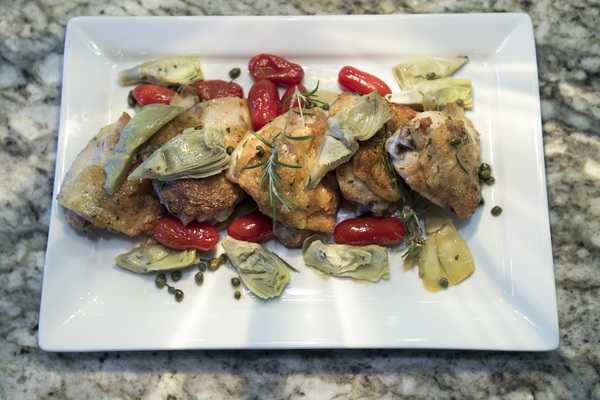
We all fall into a recipe rut at one point or another. Who doesn't? And chicken is one of the easiest ruts to fall into. The average American consumes 91 pounds of chicken per year.
When scouring magazines and other recipe sources, I am always on the look out for new ways to liven up chicken. Today's recipe comes from one I tore out and Food and Wine magazine a few months ago to add to the pile of recipes to try. Armed with plenty of chicken thighs tucked away in the freezer, this recipe would make good use of them.
The recipe also had me at "charred rosemary vinaigrette." Rosemary is a culinary workhorse in my kitchen year-round. In the summer, two neatly trimmed rosemary plants sit in pots on my deck. Once the cold hits, I bring them inside to a sun-room where they'll typically last until next season.
In the May issue of Food and Wine magazine, they wrote that, "to amp up oven-roast chicken with artichokes, Food & Wine's Justin Chapple drizzles it with a bright and mildly smoky charred-rosemary vinaigrette. The vinaigrette was inspired by chef John Manion at El Che Bar in Chicago."What makes this recipe really shine is it's method of charring the rosemary and that everything is made in one skillet. It makes for easy clean and a terrific pan sauce.
Charring the rosemary in the oven takes a few minutes. Once charred, the leaves are stripped from the stem, crushed and mixed with the other vinaigrette ingredients. What it does is give the rosemary a slightly smoky nuance.
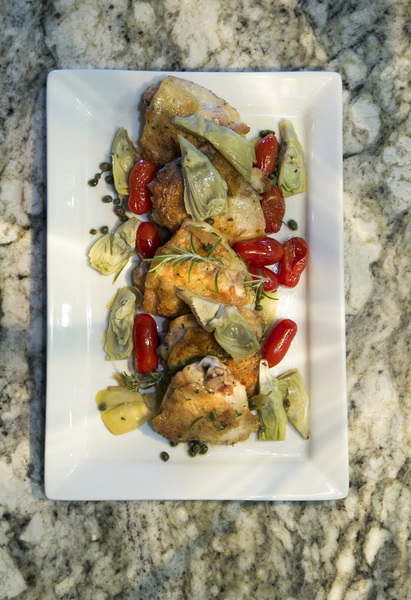
Before you cook the chicken, pat it dry well and let it air-dry in the refrigerator a good hour or longer. Drying the skin helps crisp the skin nicely. It's also a good idea to take the chicken out of the refrigerator at least 45 minutes before cooking. When cooking chicken with the skin on, I follow the rule of how I cook it on the grill. Turn the chicken skin side when it easily releases from the pan. Don't force it or you risk tearing the skin. Also, don't crowd the pan. If the chicken is crowded, it will steam more than it will crisp. With this recipe, it's a good idea to make sure you use chicken thighs on the small side.
What also makes this dish interesting is pairing the chicken with artichokes, cherry tomatoes and caperberries. Recently at a farmers market there was no shortage of some mighty fine heirloom cherry tomatoes that were deliciously sweet. While capers are a staple in my pantry, caperberries are not. And they're not the same thing, anyway.
Caperberries are the fruit of the caper bush and look like an olive with a long thin stem. They are used like olives and great for an antipasto or appetizer platter. Look for caperberries sold in jars near the olives, at specialty stores or on olive bars.
Capers are the unopened flower bud of a bush native to the Mediterranean and parts of Asia. They are bold and salty with a slight herbaceous tone.
They are usually sold in small jars in a brine of salt and vinegar; look for them near the olives at most grocery stores. Before using capers, drain them (reserve the brine) and rinse well to rid them of excess salt. Pour the reserved brine back into the jar to keep any remaining capers submerged. Once opened, capers should be stored in the refrigerator.