Tesla CEO Elon Musk envisions a near future where operating a steering wheel and pedals feels as antiquated as riding a horse does today. He’s repeated versions of that refrain for years, earning a deserved reputation for being the boy who cried self-driving. But his boredom with the conventional car business has never been more obvious.
Musk made his current thinking crystal clear in an off-handed comment on an April earnings call. “The reality is, in the future most people are not going to buy cars,” he said in response to an analyst’s question about how the company plans to grab more market share from BMW and Mercedes.
It was a classic Musk-ism—the kind of remark that would send Jim Farley or Mary Barra to an early retirement but just adds rocket fuel to Tesla’s stock price.

It wasn’t all bluster, either; you can feel that very attitude permeating Tesla’s product decisions. As Musk bets the farm on robots and robotaxis, it’s become abundantly clear that the company has little interest in making cars anymore.
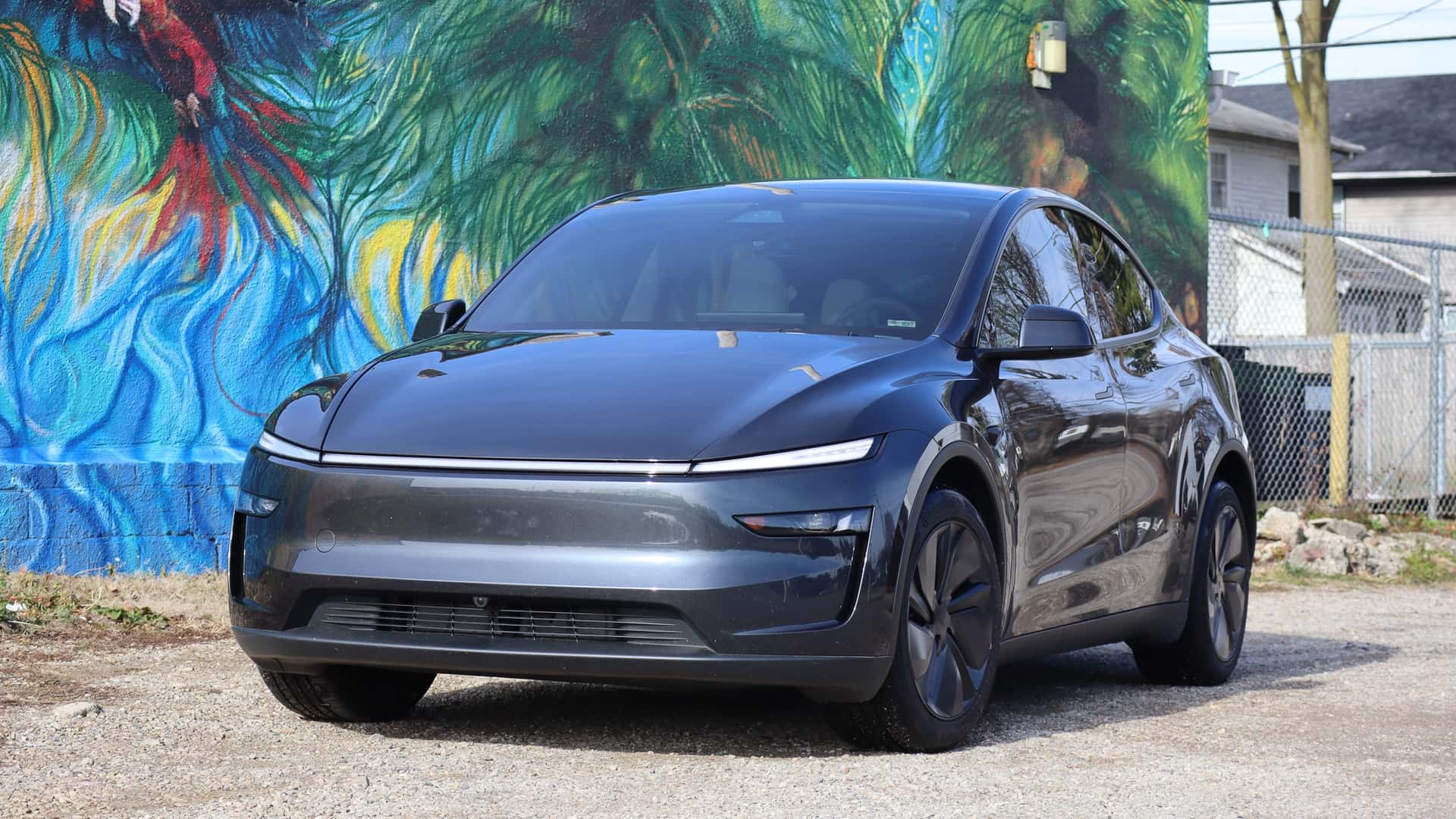
And that’s a real shame. Because, as a few days of testing the 2026 Model Y last month reminded me, Tesla makes some wonderful EVs. It should be making more of them—not abandoning the work that made it great in the first place.
To be clear, I don’t have a dog in this fight. I don’t have any Tesla stock, nor a financial stake in any company I cover. I’m just a guy who appreciates great technology and design and wants to see more of it in the world. I was delighted by the new Model Y, which recently got its first major update after about five years on the market. And I want to see more from this company, too.

What Makes The 2026 Model Y Great
Tesla gave the world the first car controlled by a big touchscreen, the Model S, and over a decade later it still sets the bar for what that user experience should be like. Could the Model Y use a few more real buttons and switches? Yes, I think so. But Tesla’s software is so powerful, cohesive and beautifully designed that you don’t really miss them.
There are apps like video games and YouTube, plus a laundry list of interesting settings to explore. Dog Mode keeps the air on for your pet, while Sentry Mode monitors and records any fishy activity near the vehicle. Camp mode lets you run the climate control and power outlets all night. It boggles my mind that these features haven’t become standard across the industry.
Tesla also nails the regular, everyday stuff. Navigating somewhere, using voice commands or finding a Supercharger are all painless. The Tesla app lets you control or monitor things from afar much more seamlessly than other automaker offerings.
Many decry the screen-ification of cars as the overcomplication of an experience that already works. But you can also think about the trend in another way: Tesla is bringing the satisfying and capable software everybody loves in their iPads and iPhones to a four-wheeled form factor. And it’s doing that better than just about anybody else.
Full Self-Driving (Supervised) blew me away, too. Tesla’s flagship driver-assistance system still isn’t perfect, but it's improved dramatically in recent years and generally did a fantastic job navigating city streets and highway interchanges all the way to a destination (under my watchful eye). Whether Tesla can make FSD truly autonomous is still up in the air, but even now, it sets a new standard for driver-assistance tech.
Tesla gets flak for its sparse interiors, but I think they feel notably open, airy and distinct. Other cars can feel busy by comparison. The 2026 version has grown up, too, featuring a sturdier overall build, more premium-feeling materials and some extras like ambient lighting.
Plus, two decades in the EV business mean the company is a leader in packaging, an underrated yet critical part of building great electric cars. The Model Y uses space efficiently, offering a roomy interior, a frunk large enough to actually use and a cavernous sub-floor bin in the rear. By and large, legacy car companies can’t get this quite right even in their latest EVs.
This all comes in a car that’s also nice to drive. Pre-refresh, the Model Y’s punishing ride quality dominated the experience. The 2026 edition is a little easier on the rear, and its quick steering makes it fun to dart around in. It’s more efficient too, lifting range up to a more-than-healthy 357 miles in the rear-wheel-drive variant and 337 miles for all-wheel-drive models. That’s excellent for an EV that costs less than the average new vehicle.
The Model Y is the whole package, and I’m not alone in that assessment. Over 1 million Model Ys were sold last year, making it one of the top-selling cars of any kind on the planet. Today, there are something like 60 EVs for sale in America from over a dozen brands. Still, about a quarter of all EV buyers choose a Model Y, and another 15% go home in a Model 3.
What’s Next For Tesla?
I’d love to see that Tesla fairy dust scattered across a whole assortment of cars, instead of just two that overwhelmingly carry the company’s sales. And, judging by the sales numbers, lots of other people would love that too.
Where’s the Toyota Tacoma-fighting midsized pickup? Or a smaller lifestyle truck to battle the popular Ford Maverick? What about a burly off-roader to step up to Rivian or the Ford Bronco? The Model S and Model X are practically hitting puberty at this point. Why not give them the glow-up they deserve?
New models would provide a platform on which to experiment and offer brand-new capabilities—rather than the incremental tweaks we’ve seen on the existing lineup.
Who wouldn’t love a $25,000 or $30,000 compact Tesla crossover? As one of the world’s only profitable EV makers, Tesla is in a prime position to deliver a low-cost electric car without compromises. But instead of leveraging its lead to expand its lineup and delight more buyers, Tesla is stagnating.
After advertising plans to roll out “new products, including more affordable models” for over a year, the company launched the wholly disappointing Standard Model Y and Model 3 in October. They weren’t “new” at all, and landed with a thud. Even the company’s die-hard fans couldn’t get excited about a Model Y but with cloth seats, no FM radio and no Autopilot.
Tesla shelved a longstanding project to make an actually new $25,000 car, redirecting those efforts toward a steering wheel-free robotaxi called the Cybercab instead. Last year, Musk doubled down on the move, saying it would be “pointless” to make a $25,000 EV that people can actually drive.
To be fair, Tesla did launch a new product in 2023: the polarizing Cybertruck. It introduced some new technologies, but—as many predicted—it hasn’t been a commercial success.
Looking forward, Tesla’s official product roadmap consists of moonshots and halos. The Roadster supercar is apparently still in the cards. But it’s $250,000 and several years late. The Cybercab is slated to start production in April. Some Tesla fans are latching onto the theory that Musk will decide to add a steering wheel and pedals to make the $30,000 two-seater a real car. But he has flat-out denied that notion.
It makes me sad that we can’t look forward to new Teslas. The good news is that rivals aren’t sitting still. The $45,000 Rivian R2 arrives in early 2026 as potentially the best Model Y rival yet, followed by fellow startup Lucid’s midsize crossover later in the year. Slate is assuming the mantle of the electric disruptor, developing a highly customizable small pickup that should cost around $25,000.
Old-school automakers are making strides, too. The BMW iX3 and Mercedes CLA launch soon in the U.S. with 400 miles of range and ultra-fast charging. The reborn Chevy Bolt and Nissan Leaf bring a new level of affordability and value to the EV space.
Despite all the progress that's happening, I can’t help but imagine how much better the options could be if Tesla hadn’t walked away at its prime.
Contact the author: Tim.Levin@InsideEVs.com