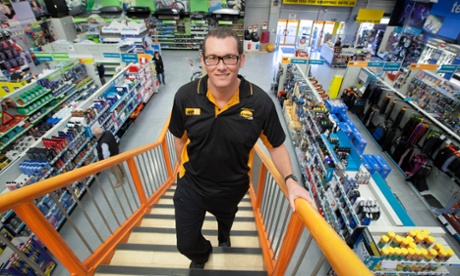
Matt Davies, the new head of Tesco’s UK and Irish business, starts work on Monday. Davies joins the troubled supermarket group after two years at Halfords. He’s widely accepted to have turned round the fortunes of the cycling and car parts chain by improving service and identifying growth markets. Already a multimillionaire, Davies made his money after eight years at the helm at Pets at Home, during which time the chain more than doubled in size to 300-plus stores.
As the amiable Mancunian gets settled at Welwyn Garden City, what should be on his to do list?
Trading
Tesco put on a good show over Christmas, outperforming expectations by placing thousands of extra staff on the shopfloor and tempting shoppers back from the discounters with special offers on basics such as favourite vegetables for the big day.
The latest industry figures suggest momentum has slowed as rivals such as Aldi and Asda have both cut prices further.
One of Davies’ first priorities will be to work on where and how Tesco should be cutting prices or using its Clubcard and advertising to get shoppers back through its doors.
Morale
One of the first moves by Tesco chief executive Dave Lewis, who arrived in September, was to put more staff on the shop floor in an attempt to improve service. But Tesco has also been going through a brutal process of cost-cutting, with tiers of management removed from stores and thousands of jobs going at its head offices. The group is also dumping its final-salary pension scheme and changing the way it calculates staff bonuses.
If Tesco wants to win back shoppers, then its army of shop staff have a key role to play and Davies needs to lift morale following the job cuts and remotivate staff.
Improving service
In his previous roles at Halfords and Pets at Home, Davies oversaw training programmes which rewarded staff for improving their skills and helped the business lift sales by having more informed shop assistants.
He’s likely to bring that approach to Tesco. He will have to adapt it for Tesco’s shop floor as grocery retailing is inherently more self-service than the businesses Davies has previously worked in.
Tesco has spent millions of pounds installing self-service tills. Some shoppers love them, but others detest being lectured by a mis-functioning machine. Davies will have to decide how to get the balance right.
Big stores
Lewis believes big out-of-town supermarkets are not the dinosaurs they have been portrayed as. With sales continuing to slump, it will be Davies’ job to ensure Tesco’s vast collection of behemoths don’t become extinct. Now that shoppers are buying TVs, music and film over the internet, Tesco’s biggest stores have got space to spare. Persuading shoppers that driving to a large store is more convenient than a trip to Lidl and other high street discounters is not just about cutting prices but also finding the right mix of services. Whether that’s putting in opticians or mobile phone shops or renting out parts of the store to soft play areas, gyms or Sports Direct, Davies will have to decide.
Click & collect, opticians, beauty counters and hot-food takeaways will also surely play a central role in giving Tesco an edge over competitors. Davies must turn supermarkets into lively town squares offering colour and interest as well as convenience.
Cafe culture
Phil Clarke, Lewis’s predecessor, thought that cafes and restaurants were an important part of Tesco’s service mix. He bought Giraffe and a stake in Harris + Hoole.
Davies will have to work out the future of those brands and whether Tesco needs to own its cafes or is better off working with a broader and more flexible list of partners tailored to different locations.
With eating out and takeaway food growing faster than grocery sales, how to cater to that trend without disrupting big-trolley shoppers represents another challenge.
Rebuild the brand
British shoppers have fallen out of love with Tesco. Davies needs to work out the detail of how the Tescopoly can turn into a consumer champion. That can’t just be about advertising and PR, although both tools will be important.
After last year’s £263m accounting scandal, Davies will have to show that Tesco has changed its ways. Deals with suppliers are already being overhauled.
Davies must identify ways that Tesco can use its vast size for the benefit of its shoppers and their communities – and that doesn’t just mean 5p off a tin of beans.