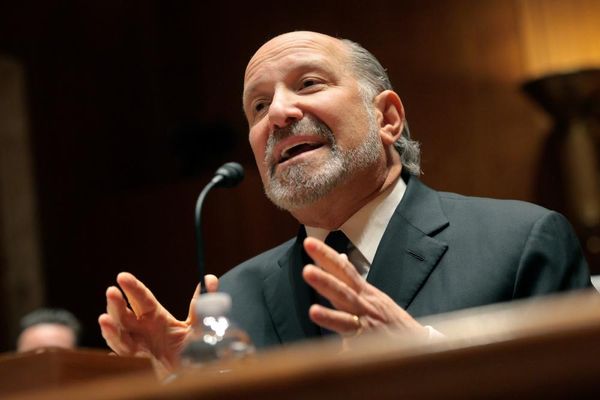
And - appropriately given its effect on global markets - back to Greece where Stavros Dimas, the government’s candidate for president has made statements following prime minister Antonis Samaras’s nomination of the veteran politician for the ceremonial post. Helena Smith reports from Athens:
In a carefully calibrated statement, made hours after his candidacy was announced, Stavros Dimas thanked the government for the nomination “and all those who, irrespective of whether they will vote for me, have said kind words about me.”
Appealing for unity amongst a populace that has become increasingly polarized with Greece’s worst economic crisis in modern times, the 73-year-old former EU commissioner said the country and its people were facing critical times.

“This national unity … is the only safe route to exit the crisis and enter a new era of progress and dignity,” he told reporters as he emerged from his parliamentary office in Athens. “The honour I feel is multiplied by the positive comments that have been made by the opposition about me. I thank them and praise them for their stance …. I want to assure MPs and all Greeks, in the most categorical way, that my sole concern will be, as it has always been, the interests of our homeland and our people. I call upon all to surpass whatever may divide us with courage and a feeling of responsibility.”
Ultimately, much may depend on Greece’s two smaller parties - the Independent Greeks, which has 12 MPs and Democratic Left which has 10 MPs – to ensure that the opposition does not come up with the 121 seats to block the vote. Already, speculation is rife that the governing coalition will attempt to win over MPs by offering them potentially lucrative posts in a government that is expected to emerge after the ballot.
And on that note it’s time to wrap up for the evening. Thanks for all your comments, and we’ll be back tomorrow.
Updated
European markets slump on Greek worries
Markets were already concerned about a slowdown in the global economy, with disappointing trade figures on Monday and a steeper than expected recession in Japan. So the idea of further turmoil in the eurozone as Greece brought forward its presidential elections sent investors scrambling for the exit. The continuing weakness in the oil price did not help matters, while the UK market was hit by the shock profit warning from Tesco. The final scores showed:
- The FTSE 100 finished down 142.68 points or 2.14% at 6529.47
- Germany’s Dax dropped 2.02% to 9812.31
- France’s Cac closed 2.38% lower at 4271.44
- Italy’s FTSE MIB fell 2.81% to 19,390
- Spain’s Ibex ended 3.12% lower at 10,468.2
On Wall Street the Dow Jones Industrial Average is currently down 169 points or 0.95%.
With Greek bonds under pressure, in contrast German and UK government debt is benefiting.
The UK 30 year gilt yields have hit a record low of 2.638% while German 10 year government bond yields are also at new lows at just 0.688%.
The Athens stock market has now closed, and has recorded its biggest one day fall since 1987.
Following Monday’s surprise decision to bring forward a presidential vote to next week - which could trigger early elections if prime minister Antonis Samaras fails to get his candidate chosen - the market has plunged more nearly 13% to 902.84..
The political gamble could allow far-left party Syriza - which opposes the austerity measures brought in as part of the country’s bailout agreement - to gain power.
Meanwhile Greek 10 year bond yields jumped above 7% to stand at 7.729%. As we said previously, 7% is the classic ‘danger zone’ where a country’s borrowing costs aren’t affordable.
Greek stocks slump 13%; ASE index falls most since 1987. #Greece pic.twitter.com/EqsiaaT3Rr
— Holger Zschaepitz (@Schuldensuehner) December 9, 2014
Updated
Here’s Reuter’s take on the NIESR forecasts:
British economic growth held steady at a quarterly rate of 0.7% in the three months to November, on track for a robust end to the year, an estimate from the National Institute of Economic and Social Research showed on Tuesday.
NIESR’s estimate follows official data showing an unexpected drop in factory output for October, which economists largely played down, saying it did not suggest the economy as a whole was slowing.
“Growth for 2014 as a whole remains robust and consistent with our most recent quarterly forecast,” NIESR said.
The academic think tank forecast last month that Britain’s economy would grow 3% this year and 2.5% in 2015.
“There do remain risks around this forecast, both on the upside, in the form of reduced global oil prices, and on the downside, most notably weakness in demand from the euro area,” NIESR said on Tuesday.
Here’s the latest UK GDP estimates from the National Institute of Economic and Social Research, and they are unchanged:
NIESR sees UK GDP up 0.7% in three months to November (+0.7% in three months to October)
— Markit Economics (@MarkitEconomics) December 9, 2014
Wall Street has opened, and the US market has followed the rest of the world lower.
The Dow Jones Industrial Average is currently down 154 points or 0.87% and the S&P 500 has lost 16.9 points or 0.82%. as the recent plunge in the oil price and the new political turmoil in Greece sent investors fleeing.
Back to Tesco’s profit warning... and this chart shows how earnings will probably tumble 60% year-on-year.
Jon Copestake of the Economist Intelligence Unit reckons the situation is unlikely to improve soon:
Tesco is seeing its margins increasingly corroded by a damaging price war with discounters who are ramping up their UK presence, squeezing mid-market retailers further. Additionally the online spending on Black Friday, Cyber-Monday and yesterday’s Manic Monday in the UK indicate that a rising number of UK shoppers are moving online during the crucial Christmas shopping period.
If Tesco is reporting diminished profit following the chaotic store scenes of a few weeks ago then it would seem that, despite the crowds and web traffic, November sales did not pan out as the retailer might have hoped.
Greek stocks having worst one day drop since 1987! #iwasntevenborn #Greece
— annmarie (@AnnmarieHordern) December 9, 2014
Charles Robertson, chief economist at Renaissance Capital, reckons the markets will be glued to events in Athens for the coming weeks.
“Greece in the next 6 weeks may prove to be more important for global markets than Russia/Ukraine was in 2014,”
“A possible Syriza election victory may force the Eurozone to choose between a fiscal union (debt write off for Greece) or the first Euro exit.”
The Greek market continues to be routed, down a staggering 11%.
Nick Fletcher’s market report has more details of the selloff, which has also pushed the gold price higher.
Randgold Resources and Fresnillo buck FTSE fall as gold moves higher
Updated
European stock markets fall further
The selloff in Europe’s stock market is deepening, driven by Greek election fears, Tesco’s profits warning, and concerns over China.
In London the FTSE 100 is now down 105 points at 6568, a drop of 1.5%. It’s being led by Tesco (-10%), rival Morrison’s (-4.9%), and Coca Cola Hellenic [Greece’s largest company] (-5.7%).
Other European indices are also down, as investors wonder whether Greece is heading for an early general election:
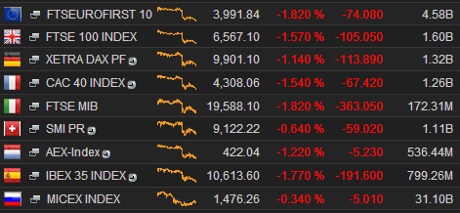
Wall Street is expected to fall at the open too, in around 90 minutes time.
Traders are looking nervously at China, where the stock market suffered its biggest fall in five years today:
US stock futures lower as biggest 1-day loss in China since Aug 2009 & political uncertainty in Greece weigh More --> http://t.co/QiSmeiYjDx
— RANsquawk (@RANsquawk) December 9, 2014
Daniel Sugarman, market strategist at ETX Capital, explains how the Chinese market turned tail today:
What a difference a day can make; Monday’s session saw the Shanghai Composite reach the 3,000 mark for the first time since 2011. By contrast, Tuesday saw the index plunge, falling 8% from its intraday high and closing down by 5.43% this morning.
Q: Why is the Greek stock market in such a rout today?
A: Because the radical left-wing Syriza party holds a substantial lead in the opinion polls. And if the Athens parliament rejects Stavros Dimas as their next president, early general elections are inevitable.
Syriza supports Greece’s membership of the eurozone, but argues that its national debt must be cut to a ‘sustainable’ level. It also opposes the austerity measures, such as cuts to wages and pensions, implemented under Greece’s austerity programme.
Here's what the stock markets think of an early presidential election in Greece (h/t @jsblokland) pic.twitter.com/jnP9uSmU40
— Megan Greene (@economistmeg) December 9, 2014
Over the weekend, the FT reported that City investors were spooked by Syriza officials on a tour of London two weeks ago. Here’s a flavour:
A salesman at Bank of America Merrill Lynch, which hosted a client event with George Stathakis, Greece’s shadow minister for development and Syriza’s economic affairs spokesman, sent a memo to clients after the meeting entitled “Greek Tragedy”.
The memo summarised the party’s economic programme, which includes ending privatisation, renegotiating Greece’s debt with the troika of the European Central Bank, International Monetary Fund and European Commission, and increasing the minimum wage and state pension to pre-crisis levels.
“The notes are quite clear and worrisome for Greece and the [eurozone] going forward. Expect much higher volatility in the months ahead,” the memo read.
Eleni Papoula, an analyst at Berenberg, added: “The economic policies of the opposition party did not seem credible.”
Greek gamble has "50:50 chance" of paying off, say insiders
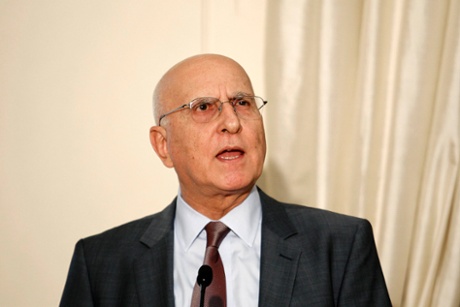
Greek officials reckon that there’s a 50:50 chance that the government’s candidate, Stavros Dimas, will be elected as the country’s new president next week, avoiding snap general elections:
From Athens, Helena Smith reports:
Governments officials saying Stavros Dimas is the “perfect choice” to replace the nation’s outgoing president as he is a moderate with wide-ranging appeal across the political spectrum.
Although wholeheartedly identified with the centre-right New Democracy party as its vice-president, the 73-year-old Dimas was a highly praised EU Commissioner for the Environment and away from the hurly-burly of quotidian politics in Athens was seen to have done a good job of representing Greece abroad.
His nomination is a calculated risk that he will be backed by independents (currently 24 in the 300-seat parliament) as well as opposition MPs with the Independent Greeks party, the small Democratic Left party and perhaps even the hardline KKE communist party. These are early days, but in private officials are saying that they believe the government’s high-stakes gamble has a 50-50 chance of paying off.
The main opposition Syriza party say any support for Dimas, as the government’s nominee, will be tantamount to endorsing the loathed “memorandum of understanding” signed between Greece and the troika of creditors propping up its debt-stricken economy. Syriza’s leader Alexis Tsipras, who was as startled as anyone when the election was announced.
The Athens stock market continues to sink, though, after Dimas was named as the government’s candidate earlier today. Banks are leading the rout:
#Greece #ASE -11.12%, banks -15.41% #keep_drinking
— Efthimia Efthimiou (@EfiEfthimiou) December 9, 2014
Helena adds that she was at an event Tsipras was attending last night, and saw him immediately flee the amphitheatre when handed a piece of paper with the news that the presidential election had been brought forward to next week.
Tsipras has just told a conference in Athens that the government was forced to make the move because of “the catastrophic impasse” in which it finds itself as a result of austerity.
Updated
Fitch puts Japan on rating watch negative
Breaking: Credit rating agency Fitch has just taken the first step towards downgrading Japan.
It has put Japan’s A+ rating (th 5th highest) on rating watch negative, citing Japan’s “high and rising” government debt ratio, and the absence of a plan to address it.
Fitch puts Japan on watch for downgrade, cites the tax-increase delay and "lack of a clear, credible medium-term" deficit-elimination plan.
— Kevin Kingsbury (@KevinKingsbury) December 9, 2014
Updated
Greece’s stock market is on track for its worst day in over four years:
#Greece equities now down nearly 9%, biggest drop since the dark days of May 2010, when it got 1st bailout http://t.co/I6UNEFLZy3
— Peter Spiegel (@SpiegelPeter) December 9, 2014
Greek government names presidential candidate
Back to the eurozone...and the Greek government has just named its candidate for next week’s snap presidential election.
<drumroll.....>
It’s Stavros Dimas; readers may remember he was European Commissioner for the Environment from 2004 to 2009.
@YanniKouts who wouldve expected such a strong pro EU-candidate..
— Kos (@Kos_) December 9, 2014
Parliament will vote on whether to approve Dimas on 17 December. If a two-thirds majority isn’t achieved (and the government controls just over 50% of MPs), then there’s a second vote on December 22, and then a third on the 29th (where a three-fifths majority will do).
If Dimas is rejected three times, early general elections are likely.
Mujtaba Rahman of Eurasia Group explains:
The government is still shy 25 seats, and while 17 MP’s are leaning towards supporting the coalition we still think early elections and a Syriza government are probable next year.
That’s why the Greek stock market has tumbled 9% today.
#Greece politicos I talk to think #Samaras might pull off presidential elex gambit. Market seems to think otherwise. pic.twitter.com/BE79WekXX2
— Peter Spiegel (@SpiegelPeter) December 9, 2014
Updated
Tesco conference call, the key points.
The problems at Tesco are even more deep-seated than we realised.
The more Dave Lewis talked about rebasing its relationship with suppliers, focusing more on staple products that customers buy every week, or avoiding short-term measures that boost profits for a quarter but hurt the business, the more I wondered how the situation had possibly got so bad.
The Tesco CEO marked his 100th day in charge with a three-pronged pitch during today’s conference call (highlights start here).
His message to consumers is that Tesco will offer a decent service all year round, with ‘selective’ price cuts on the stuff we buy the most and 6,000 extra staff among the aisles.
Dave Lewis going back to the roots of Tesco -each store has a greeter for Christmas with top 400 stores getting bag packers, from next week.
— Steve Dresser (@dresserman) December 9, 2014
Lewis is trying to clean up the murky business of supplier relations, to make more money when a customer buys a product, and less money for simply putting it on the shelf.
Tesco boss Dave Lewis personally led retraining of Tesco's team who deal with suppliers. Says ‘did not like where we got to’ with suppliers
— Mark Broad (@markabroad) December 9, 2014
And as Tesco’s share price staggers back from hitting a 14-year low, Lewis is urging investors to show patience and trust. Not always the City’s core virtues.
Bottom line. Tesco needs an acceptable Christmas, and then Lewis needs to give some proper detail about his plans at its trading statement on 8th January.
Tesco's Dave Lewis talked sense this am but scale of profit fall is jaw dropping. Backing him will require leap of faith from investors.
— Zoe Wood (@zoewoodguardian) December 9, 2014
Incidentally, it’s also never a great sign when the Financial Times’s retail expert accuses you of talking ‘double Dutch’, as happened when Lewis tried to explain how relations with suppliers will change.
Tesco CEO deep in jargon. FT's @AndreaFelsted calls him out: "What does that actually mean in plain English? It's all double dutch to me."
— Andrew Clark (@clarkaw) December 9, 2014
And here’s Reuters news snaps:
- TESCO CEO SAYS “QUIETLY OPTIMISTIC” ABOUT WHAT FIRM IS DOING
- TESCO CEO SAYS HAVE STARTED TO “RE-BASE RELATIONSHIP WE HAVE WITH SUPPLIERS”
- TESCO CEO SAYS “NOT WALKING AWAY FROM REBATES WITH SUPPLIERS”
- TESCO SAYS SEEING “ENCOURAGING SIGNS” FROM SELECTIVE PRICE CUTS
- TESCO CEO SAYS REVIEW OF GROUP PORTFOLIO CONTINUING, NO UPDATE TODAY
- TESCO CEO SAYS “INCREDIBLY DIFFICULT” TO PREDICT TIMEFRAME OF TURNAROUND
- TESCO CEO SAYS UK HEAD LIKELY TO BE RECRUITED WITHIN THE NEXT FEW MONTHS
- TESCO CEO SAYS HAS RECEIVED “VERY POSITIVE” REACTION FROM SUPPLIERS
Tesco CEO Dave Lewis trying to catch a falling knife. 100 days on the job = stock down 26%. pic.twitter.com/uBrprQtjQu
— Jonathan Ferro (@FerroTV) December 9, 2014
Updated
Lewis: This is a fantastic business
The press call ends, with Dave Lewis insisting that he can turn Tesco around.
Here’s the gist of it:
This is a fantastic business, it has a fantastic group of people working across it. We have got into a difficult position , particularly financially, but I can see a way out.
It means taking difficult decisions now, and it will have an impact on the value of the companuy and the share price.
This is a management team that is doing the right team for the business, recruiting 6,000 people.
Our future depends on our relationship with our customers, and our long-term relations with our suppliers.
There are signs of encouraging feedback......I am deeply minded of the impact I am having on shareholders as I reform this business, but I hope they understand that this is the best way to create medium and long-term shareholder value.
And with that, he’s off. Snap summary to follow.....
Updated
Why did you promote Robin Terrell to become head of customer relations at Tesco?
Because he has a track record of running companies which put customers right at the heart of their business, Lewis replies. Terrell’s job now is to link up Tesco’s various offerings, like Clubcard and Tesco Bank.
(Terrell has previously run John Lewis Direct, and House of Fraser’s “multi-channel” division)
Did Tesco lose its way by becoming so reliant on rebates from its own suppliers?
Relations with suppliers did become ‘bent a little’, Lewis replies. We’re now looking to build a new relationship with them - both big suppliers and small ones. The early response has been very positive, he says.
[some background: Tesco had been receiving large sums from suppliers in return for giving their products a prominent spot on the shelves, or for hitting sales targets.]
Lewis has also suggested that there could be job cuts at head office and back office, even as Tesco bulks up its stores operations.
Tesco's Lewis says has employed 6,000 store staff since October but "elsewhere in the group we can be more effcient".
— Adam Parsons (@AdamParsons1) December 9, 2014
Are you worried about the slide in Tesco’s share price?
I’ve got to be worried about the share price. I really do understand the City’s concerns, says Lewis.
The Times’ Andy Clarke sums up Lewis’s message:
Tesco's Dave Lewis will stop staff cuts, cost cuts in Jan/Feb to meet year-end targets at detriment of customer experience
— Andrew Clark (@clarkaw) December 9, 2014
Lewis declines to say what profit margin he’d like to see at Tesco. The ‘critical thing’ is to reset the company, and to look at everything we do to se if we can do it better and more efficiently.
It won’t be a smooth journey, but we’re up for it.
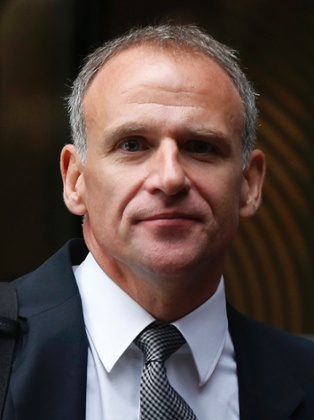
Dave Lewis confirms that some seasonal staff, such as students, will only work for Tesco over Christmas and then depart. But the 6,000 people hired since late October are needed to deliver his long-term plan.
How long will this turnaround take?
Everyone asks me that, Lewis replies. But I don’t have a crystal ball, so I don’t know how long customers will take to react to the progress we’re making. You’ll have to bear with us.
It’s “incredibly difficult” to predict the timeline of a turnaround.
How long are you planning to run the UK business yourself?
I’m running Tesco UK on a temporary basis, Lewis replies, and indicates that he’ll look to get a permanent leader in the next few months.
Updated
My colleague Zoe Wood asks if Tesco can get back to its glory days, or is this the new reality?
Lewis: What we are doing is definitely better for customers. That’s a foundation to build a new company that is good for shareholders.
But yes, the environment has changed, so we are ‘resetting’ the company, and we’ll give you more information on January 8th.
Lewis also won’t comment on rumours of asset sales.
Tesco has concluded its own investigation into how its profits were over-stated, and is now co-operating with the Serious Fraud Office.
Why should anyone invest in Tesco?
Lewis: We have nearly 30% of the grocery market. There’s a lot that we can do to drive innovation.
If we get Tesco firing, we can generate medium and long-term value for shareholders.
The decisions we are taking will have a short-term impact on shareholders, and I regret that, Lewis adds.
Shares are currently down 10% today.
How is morale in head office, asks Simon Neville of the Evening Standard and the Independent.
Pretty good, Lewis replies.
Really? Despite many senior executives being suspended over its profit over-statements earlier this year?
We’ve had to take some tough decisions involving people who are “near and dear” to Tesco, Lewis concedes, but there is an understanding that we are doing the right thing for the business.
We’ve hired 6,000 extra staff since late October.
And we have also put 6,000 existing head office staff into stores for 10% of their time, to reconnect them to the company. It’s been “hugely valuable”.
Updated
What are you really doing different with your suppliers, in plain English?
We are taking any incentives that exist between us and the supplier, and moving it to between us and the customer, Lewis replies.
That still doesn’t make much sense, Andrea Felsted of the FT responds....
Morale among colleagues in store is really very high, Lewis insists.
And what do you mean about not artificially boosting performance in the final quarter of the financial year?
There are ways of running the machine slightly leaner in the final quarter, but that would have a detrimental impact on customer service, Dave Lewis replies.
For example, you could cut your staff levels after the Christmas rush. But we’re not going to do that.
More details about the investment in availability please, Dave.
Lewis: If you walk around a Tesco store, you’ll see that we have invested in availability and price in “The thousand lines that people most value”. The staple good that people buy, basically.
And we’ve seen volume growth on the back of that.
Tesco has made five key changes since Lewis took over, he says.
1) Changing the way it deals with suppliers
2) invested in service - with an extra 6,000
3) invested in availability - “i can see that in the customer feedback”
4) We’ve invested ‘selectively’ in price.
5) Offering a consistent performance over the year, rather than ‘artificially’ boosting performance in the last quarter of the year.
And the cost of that is “a little bit north of £500m”.
Tesco: We're 'resetting' our relationship with suppliers
Onto questions.. What changes have been made to Tesco’s relationship with suppliers. Has it abandoned its policy of seeking rebates from suppliers in return for selling their stock?
Dave Lewis explains that “We have started to rebase our relationship with suppliers”.... to create long-term sustainable value together.
We have reset our guidelines for supplier relations, and retrained 900 people, he says.
We are looking to make more “front-margin not back margin”; IE, making profits on what Tesco sells, rather than what it buys. It’s a more efficient model for everyone.
But we’re not walked away from rebates altogether, he adds.
Updated
There are reasons to be “quietly optimistic” about what we’re doing, says Lewis.
And we have taken a very deliberate decision not to take short-term measures that would close the profitability gap in the short term, but would not improve relations with customers and suppliers.
And we’re off. Dave Lewis says he wants to give some context to today’s profit warning.
We weren’t in a position to give full profit guidance back in October, when we began to outline our plans. But now we have much more visibility about the impact that our plans will have on short-term profitability, he says.
Tesco conference call
Tesco is about to hold a conference call with journalists to explain today’s profit warning. I’m dialled in - there’s some very soothing classical music (Vivaldi I think)
Europe’s stock markets are all in the red this morning. The FTSE 100 now down 80 points or 1.2%, dragged down by retailers and oil firms.
Greek stock market hit by political fears
Breaking away from Tesco, the Greek stock market has tumbled by over 6% in early trading.
Investors are spooked by the news of a presidential election next week; and the possibility that it could trigger an early general election.
Greek bonds are also falling, pushing up the yield (or interest rate) on its 10-year debt to 7.7%, from 7.4% last night.
7% is the classic ‘danger zone’ where a country’s borrowing costs aren’t affordable.
#Greece - Athens market terrified by early presidential election news. Opens down -5.84%
— Yannis Koutsomitis (@YanniKouts) December 9, 2014
Updated
Here’s the Telegraph’s Graham Ruddick’s take:
Tesco's annual results next April likely to be grim - the fall in sales and profits means huge, ie billions, of property writedowns likely
— Graham Ruddick (@GrahamtRuddick) December 9, 2014
Analysts forecast that Tesco profit margins in the UK now just 1.2pc - down from a peak of 6pc in Sir Terry Leahy days
— Graham Ruddick (@GrahamtRuddick) December 9, 2014
Tesco says it has made changes under Dave Lewis, including taking on another 6,000 store staff, and ‘invested in price’.
The early feedback from customers is encouraging, it says.
But Mike Dennis, analyst at Cantor Fitzgerald, predicts that reviving Tesco’s fortunes will take years:
We believe the CEO needs to simplify the business via UK and International asset sales, then reconnect with suppliers by changing payment terms and lowering his cost of goods and then start on the long road to rebuilding the Tesco brand with shoppers.
And it may not get much help from its suppliers....
All this could take several years and suppliers are not going to be disposed to Tesco given the negative industry volumes and poor performance of Tesco over the last two years.
#Tesco shares now at key long term support levels. will it hold? pic.twitter.com/DTgcE271Gt
— Joshua Raymond (@Josh_CityIndex) December 9, 2014
How the mighty have fallen....
The decline of a giant. Tesco now valued at just £12.8bn, down from almost £40bn in 2007. http://t.co/RAM9KQG4Em pic.twitter.com/bLuTNGM1rd
— Robin Wigglesworth (@RobinWigg) December 9, 2014
Tesco could be forced to tap its shareholders for cash in a rights issue, suggests Marc Kimsey, senior trader at Accendo Markets in London:
A fire sale of assets is almost nailed on and a rights issue cannot be ruled out.
Traders are clearing the decks of what remaining stock they had, and that of sector peers.
Supermarkets and energy companies are dominating the list of biggest fallers on the FTSE 100, as Tesco’s profit warning and the sliding oil price hit shares.
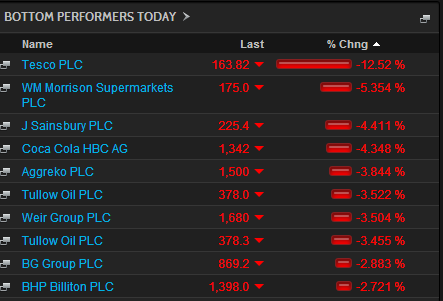
Morrison’s and Sainsbury’s shares have both been hit, down around 5%.
Analyst Nick Bubb reckons they’re vulnerable to a Tesco price war:
If Sainsbury, Asda and Morrisons thought that Tesco would delay any aggressive price-cutting until after Xmas, Dave Lewis has upset the apple-cart today...
Around £2bn has been wiped off Tesco’s value this morning, reducing its market capitalisation to around £13bn.
Tesco price graph so far today. About £2 billion wiped off market value. pic.twitter.com/Lx0vAGRVtc
— Ian Guider (@ianguider) December 9, 2014
Updated
Today’s profit warning is “brief and patchy on detail”, and gives Tesco’s critics plenty more ammunition, says Richard Hunter, head of equities at Hargreaves Lansdown Stockbrokers.
If there had been hope that the market would be immune to yet another profit warning, this quickly evaporated as Tesco has provided profit guidance which is nearly 30% shy of an already lowered estimate.
The company partially attributed the lower figure to increased investment in the business, but amidst the accounting mishap, the revolving door in the boardroom and an unforgiving attack from the discount retailers, investors have simply lost interest in waiting for a recovery story which still seems some way off.
Retail analyst Nick Bubb says Tesco has shocked the sector with a ‘huge’ profit warning:
Just when the market thought Tesco were prepared to tough it out for Xmas they go and announce a huge profit warning, flagging that full-year trading profits will not exceed £1.4bn, some 20-30% below recent expectations, because of unspecified actions to improve UK competitiveness...
Tesco’s share price just touched a new 14-year low of 155.4p, a level not seen since early 2000, as this chart shows:
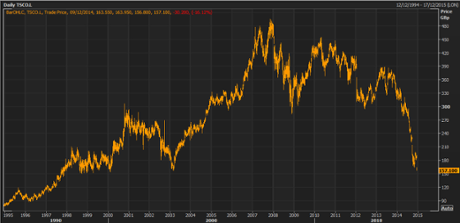
Tesco is being absolutely battered, says Bloomberg’s Jonathan Ferro. He’s not wrong
Tesco shares tumble 14%
Crumbs! Tesco shares have plunged by over 14% at the start of trading in London, to 161p, as this morning’s profit warning triggers a wave of selling.
Updated
Shares in rival supermarket Sainsbury’s have tumbled 4% at the start of trading in London, as Tesco’s profit warning ripples through the sector.
Tesco hasn’t actually traded yet, suggesting shares are going to slide....
Tesco’s latest profit warning comes hot on the heels of an eventful Black Friday, which exposed some of its failings.
Police were called to 15 stores to restore order, after crowds scuffled over bargains. And its website was offline for hours, unable to cope with the surge in demand. Dave Lewis can’t have been impressed....
I reckon this is the fifth time this year that Tesco has warned the City that profits will be below expectations.
The first profit warning came in January after a weak Christmas; a second in July which cost CEO Phil Clarke his job; a third in August when Tesco also slashed its dividend; then the shock news in September that profits had been misreported by around £250m.
Tesco is actually admitting that this year’s profits could be a billion pounds lower than its own estimate back in August, as FT deputy news editor Tony Tassell flags up:
actually Tesco warning is worse than last tweet suggested.The £1.7-2.2bn range was analyst forecasts. In Aug, Tesco had forecast £2.4-2.5bn.
— Tony Tassell (@TonyTassell) December 9, 2014
Cut-price forecasting from @tesco: 14/15 profits £1.4bn - down £1bn on prev guidance (City f'casted £2bn) due accounting/poor performance
— Dharshini David (@DharshiniSky) December 9, 2014
Tesco CEO: We will restore Tesco to health
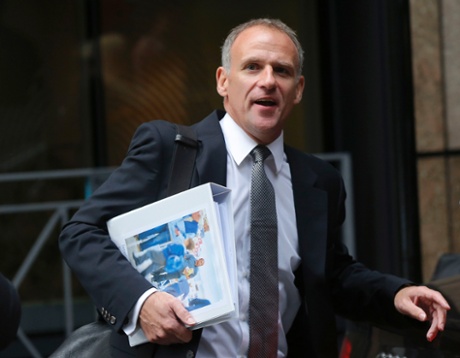
What a way for CEO Dave Lewis to mark his 100th day in charge at Tesco!
Today’s profit warning includes a pledge from Lewis to restore Tesco’s competitiveness in the UK, protect and strengthen the balance sheet and rebuild trust and transparency.
Whilst the steps we are taking to achieve this are impacting short-term profitability, they are essential to restoring the health of our business. We will not engage in short term actions that compromise in any way our offer for customers.
Lewis was lured from Unilever to turn around Britain’s biggest retailer this summer after a series of profit warnings and falling sales figures. He then had the shock of his corporate life when he discovered staff had been overstating profits by pulling forward revenue from suppliers, and delaying payments, to flatter its profits.
100 days at Tesco - Do you think that Dave Lewis is having second thoughts #tesco
— Guy Johnson (@GuyJohnsonTV) December 9, 2014
Tesco shares are set to tumble when the stock market opens in half an hour - perhaps by as much as 10%.
Market watchers expecting #Tesco shares to drop around 10% when they open this morning due to that profit warning
— Joanna Partridge (@JoannaPartridge) December 9, 2014
Tesco closed at 187p. Expected to open below 180p
— Brenda Kelly (@BrendaKelly_IG) December 9, 2014
Tesco rocks City with big profit warning
Tesco, Britain’s supermarket giant, has hit the City with another profit warning.
And it’s a whopper.
In an unscheduled trading update, Tesco announced that group trading profit for the current financial year will be no higher than £1.4bn.
City analysts had been expecting the company to make a trading profit between £1.8bn and £2.2bn. A year ago, it made £3.3bn.
Chief executive Dave Lewis, who was parachuted into Tesco in September, told shareholders this morning that he’s been making changes at the company.
This includes retraining staff on how to deal with suppliers, following the revelations that Tesco had overstated its profits in the first half of this year.
Tesco insists that progress is being made:
We have invested further in service, with more than 6,000 new colleagues in store, increased product availability on key lines and invested in price - all aimed at enhancing our customer offer. The early feedback from customers is encouraging.
But the cost of turning the company around is even larger than expected:
On the 8th January we will share more detail about the measures we plan to take to improve the competitiveness of the UK customer offer and to strengthen the balance sheet. On the basis of the changes and investments made to date we now anticipate group trading profit for the financial year ending February 2015 will not exceed £1.4bn.
That’s a massive miss, frankly. Reaction to follow.....
Tesco to undershoot profit targets by c30% as they revise FY profit estimate down to £1.4bn #tesco
— Guy Harding (@GuyHardingSky) December 9, 2014
Updated
The Agenda: Greek presidential election looms over the eurozone
Good morning, and welcome to our rolling coverage of the financial markets, the world economy, the eurozone and business.
Coming up today....
We’ll be tracking events in Greece after the government brought forward the vote to choose its next president, and also secured a two-month extension to its bailout.
That presidential battle could potentially trigger early elections, with the opposition Syriza party in poll position to win:
Full story: Antonis Samaras brings forward date of presidential poll in Greece
There’s lots afoot in the markets....
The oil price is under renewed pressure this morning, touching new five-year lows.
China’s currency, the yuan, is sliding too -- on track for its biggest fall in several years. And this is helping to drive shares down on the Shanghai stock market too
And in Europe, new trade data from Germany and France this morning which give an insight into the state of Europe’s economy.
I’ll be tracking all the main events through the day....