MINNEAPOLIS — Friction between Minnesota Secretary of State Steve Simon and the last Republican to hold his office was on display Tuesday, as state lawmakers parsed and scrutinized the integrity and results of the 2020 election.
Declaring Minnesota's election as "a great big success on multiple levels," Simon said that a state Senate hearing on the outcome of the vote was "taking place in the middle of a national tidal wave of disinformation, politically inspired lies designed to mislead and manipulate people."
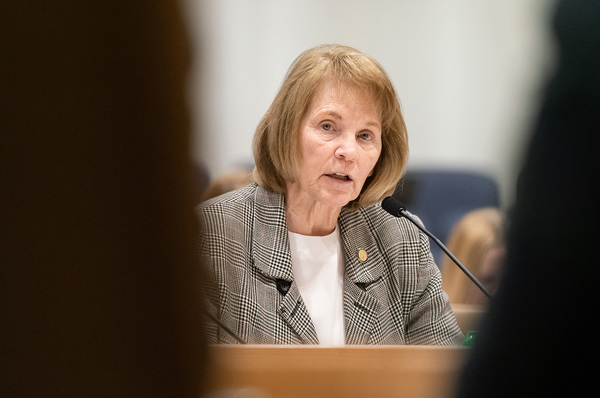
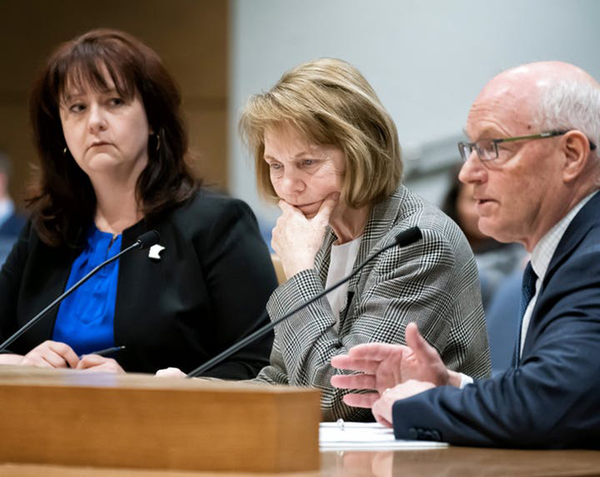
Sen. Mary Kiffmeyer, R-Big Lake, chairs the Senate's committee on election and served as secretary of state from 2003-07. A critic of her Democratic successor, she opened the hearing by decrying "accusations and disrespect" she said he met questions from her and other Republicans over the election's administration.
"The best way to get Minnesotans to have confidence in the result and the outcome is to respect those questions transparently and without accusation," Kiffmeyer said. "Just simply answer and give us the information we ask for."
Kiffmeyer took issue with reports that contextualized questions over the election's validity by noting that accusations of fraud or irregularities have so far been made without evidence.
Kiffmeyer billed Tuesday's hearing as a routine and necessary accounting of questions raised in Minnesota and around the country over absentee voting, voting equipment and suggestions of fraud.
But Simon countered that his office has fielded no credible evidence that fraud or manipulation affected the outcome of last month's general election. The Democratic secretary of state reminded Kiffmeyer that U.S. Attorney General William Barr recently stated that no credible evidence existed that pointed to widespread election fraud.
"So I will not at this hearing amplify or dignify conspiracy theories," Simon said. "They're not just wrong, they're dangerous. And they have to stop. And they're dangerous in the short term because I think someone might get killed. I think someone in this country, maybe in this state, is going to get killed."
In Minnesota and nationally, subsequent court challenges from Republicans seeking to invalidate certification of the Nov. 3 election results have been rebuffed. Minnesota Supreme Court Chief Justice Lorie Skjerven Gildea, appointed by GOP Gov. Tim Pawlenty in 2006, last week rejected a Republican challenge filed just hours before the state canvassing board met to approve the results.
More than 3.2 million Minnesota voters turned out for the general election, Simon noted, a rate that led the nation and smashed previous records for absentee voting. Simon hailed counties for staffing polling places with enough election judges to stave off the long lines, delays and rates of infection that marred other states' presidential primaries last spring.
Simon linked the state's "sky-high turnout" with Minnesotans' confidence in the state's election system. But he warned that ongoing efforts to cast doubt over this year's election results would further erode democracy while putting election officials at risk. Simon said his own family has been targeted for harassment online.
"Any member regardless of party, or any testifier regardless of viewpoint who indulges that kind of recklessness, who tolerates it, who encourages it or even hints at it is, I must say, coating themselves in a shame that will never ever wash off. Ever," Simon said in his opening statement.
Kiffmeyer's inquiry began with a Nov. 18 request for information that telegraphed a continued challenge of state court consent decrees agreed to by Simon's office that extended by one week the counting deadline for mail ballots and waived the witness requirement for absentee ballots.
That agreement came in response to lawsuits from Democratic-aligned groups that alleged existing rules would disenfranchise potential voters who otherwise wanted to limit personal contact amid the coronavirus pandemic.
Republicans have assailed the agreement as an illegal end-run to change election law without approval from the Legislature.
Tuesday's hearing also promised to underscore the gulf between Simon and Kiffmeyer that has persisted over election-related legislation. Simon needs approval from Kiffmeyer's committee for any bills to stand a chance of passing the divided Legislature. The two spent all of the 2019 session embroiled in a bitter dispute over federal election security money that approved by Congress but that needed sign-off from the Legislature under state law.