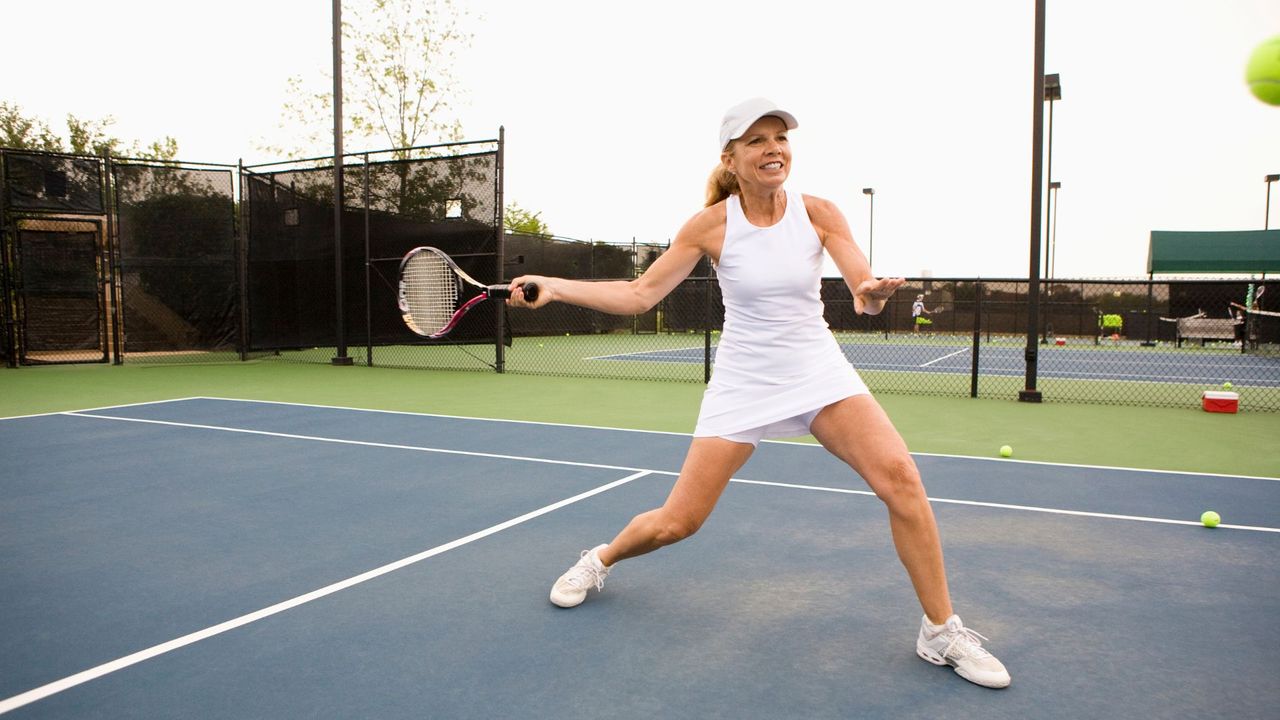
With Wimbledon rolling around again and more people enjoying sports like padel and pickleball, racket sports have never been more popular. They're fun, social, and a key driver of longevity, according to a study published just last year.
You might think you need a strong upper body for smashing all of those aces over the net, but strong legs and core are just as important when on the court. Isla Smith, Les Mills global assessor and LTA coach education tutor, says tennis “requires excellent connection between lower and upper body”.
“We use our legs to power upwards from the ground, our core to rotate the hips and our shoulders to ultimately wield the racket through the air using a combination of momentum, technique and sheer power to optimise performance," she says.
Some strength training exercises can help with this. While these are more complex than your basic dumbbell workout at home, all of this equipment you'll find in your local gym - or you can top up your home gym with a few must-haves.
Gym exercises for tennis
1. Medicine ball throws
A medicine ball is a firm, weighted ball which Isla says can be used during a tennis warm-up or during a conditioning session. They can range from 2kg up to 10kg.
Here's how to do a medicine ball throw:
- Hold the medicine ball in two hands.
- Bracing yourself, throw it as if hitting a forehand and backhand, either to a partner or against a wall.
- Make sure you choose the right medicine ball for your strength and ability.
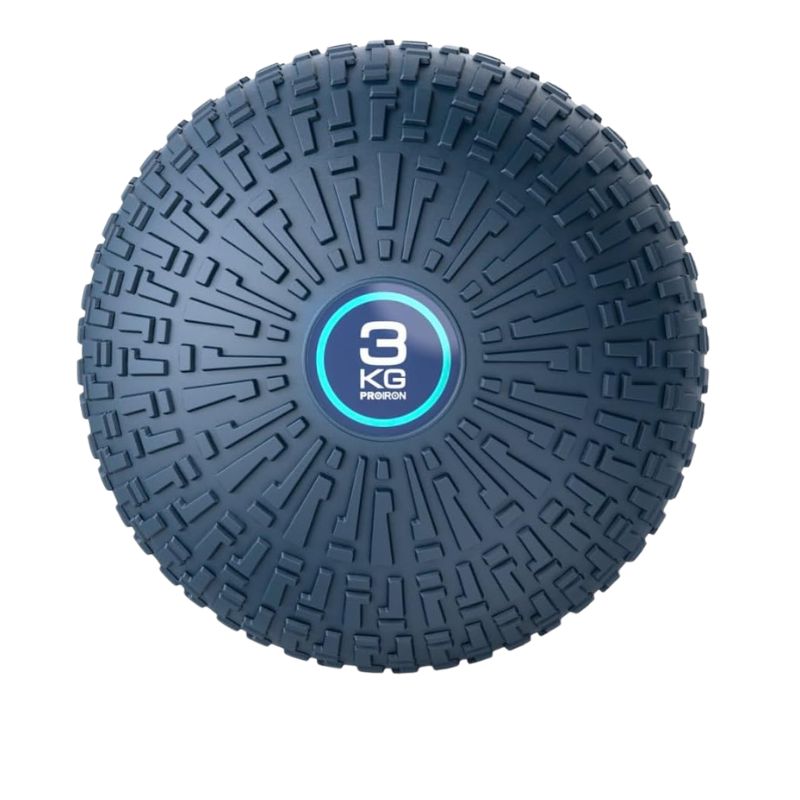
The ProIron Medicine Ball, which goes up to 10kg, is filled with sand and other materials that prevent bouncing and enhance balance.
2. Squats
“When playing tennis we are often forced to play off one leg, or certainly overloading one, so it's important each leg is strong and functional,” says Isla. She says squats can be a great way quadriceps exercise to build leg strength.
Single leg variations can also be beneficial, although these are quite advanced moves. “Plyometrics (also known as jump training) is big for tennis,” she explains. “So where squats and lunges can also be done as single leg plyometric exercises this will be very beneficial.” This could involve squat jumps, box jumps or split squats. Always make sure you land softly to protect your knees and ankles.
How to do a squat:
- Stand shoulder-width apart, holding a pair of dumbbells comfortably by your shoulders or by your sides.
- Slowly squat down as if you were sitting on a chair behind you.
- Come down so you are sitting parallel to the floor.
- Push through your feet to come up to standing.
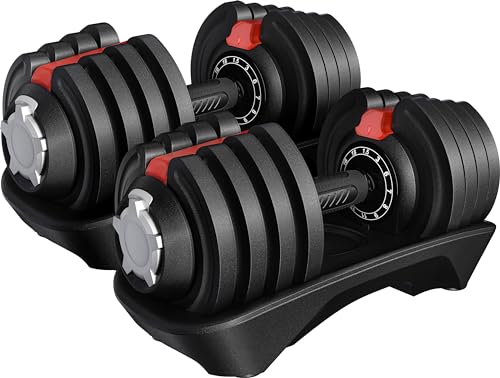
A good pair of dumbbells is a must-have in a home set-up. I like adjustable dumbbells because you only need one pair for upper- and lower-body exercises. Plus, you don't have to get a new set when you get stronger as the weight can increase.
3. Lunges
Isla suggests trying all types of lunges including “multi-directional, especially sideways and diagonally” to improve your quad, hamstring and glute strength.
“Play with tempo here, slow into the depth then explode up. This mimics what we require on a tennis court,” she explains.
How to do a lunge:
- Stand shoulder-width apart, then take a manageable step forward, sideways, or backwards.
- With or without weights by your sides, drop your back knee to the floor, until it sits a couple of inches off the floor. If you are doing a side squat, sit back and down into your lunge on your chosen leg.
- Push through your foot and return to standing.
4. Skaters
Skaters are “great for balance, core and individual leg strengthening,” says Isla, and they primarily work your hamstrings and glutes.
You need to propel your body sideways, landing on one foot, with the other hovering above the ground. You can also use your arms for extra momentum.
Here's how to do them:
- Stand with your feet shoulder-width apart on a smooth surface, like tile or hardwood floor. One foot should stand on the slider and the other stands on the floor.
- Keeping your chest up and core braced, push your hips back.
- Press your weight into the stationary foot, slide out the leg on the slider until it's fully extended.
- Bring your slider leg back in to the starting position.

A simple set of core sliders can help challenge your balance, core strength, hamstring and glute strength.
5. Hip openers
Isla says many people who play tennis struggle to loosen tight hips, so she recommends they include some stretching exercises into any gym routine.
To finish, poses such as swan, pigeon or runner’s lunge can help any aches and give your hip flexors some extra flexibility.