Hey, everyone …
• Here’s this week’s Served podcast:
• Trivia: Which former WTA stalwart ran the Boston Marathon?
Alan Shipnuck’s Rory: The Heartache and Triumph of Golf's Most Human Superstar .
Onward ….
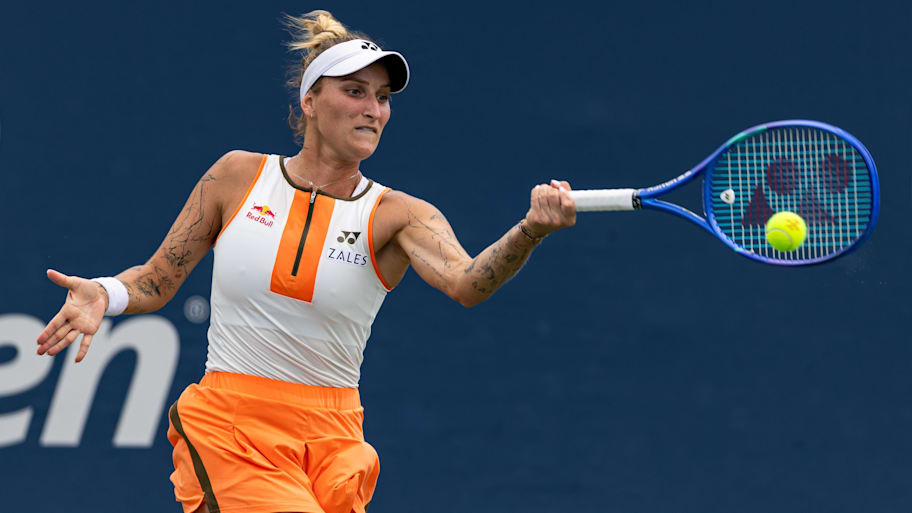
There were several questions about Markéta Vondroušová being charged by the ITIA with refusing a doping test. The 2023 Wimbledon winner could face up to a four-year ban after missing an out-of-competition drug test in December.
A few quick points:
A) When I saw the news on X, I scanned my emails, as the ITIA usually issues releases detailing the claims and circumstances. There was nothing. This was an unusual chronology, as the player preemptively announced the allegations. Then the agency found itself in an awkward position, seemingly forced to confirm a player’s assertion.
B) I have great sympathy—as we all should—for tennis players and their mental health challenges and strains. “The recent doping control incident happened because I reached a breaking point after months of physical and mental stress,” Vondroušová wrote in an Instagram post.
Tennis is a brutal sport. Some injuries don’t just derail careers (and finances), but ask players some existential questions. (If I’m not a tennis player, who am I?) There are colleagues, but not teammates. There is travel and all the destabilizing that goes with it. There is social media and all the ugliness that goes with it. We’ve seen the vile messages that losing gamblers send players. In this specific case, Vondroušová referenced Petra Kvitova and her knife attack from 2016. Understandably, a Czech player might be wary of a knock at the door.
C) And yet, there appear to be some inconsistencies in Vondroušová’s retelling. Surely, there were other potential solutions and strategies besides refusing to let the collector in. Could an agent not have intervened? Could the player not have contacted the ITIA to request help or clarification?
D) And there is a larger issue that always surfaces when these anti-doping objections are raised. Do you or don’t you want a brutally rigorous anti-doping program? The answer could be no. And one could make a case here. This level of intrusiveness, vigilance and stress isn’t worth it. Tennis in the Olympics—a catalyst for the rigid WADA standards—isn’t worth it. Better a cheater escape the net than we all deal with the collateral damage, from “whereabouts violations,” to bad beef triggering false positives, from missed test sanctions to Iga Świątek getting popped for taking jet lag medication.
E) If the answer is yes—utmost integrity of competition matters—then there must be penalties for missing tests. There must be random, unannounced, knock-on-the-door testing. There must be low thresholds for triggering positives. Attention must be paid to potential masking agents. There must be penalties for nonanalytic findings, such as transfusions. It’s impossible to have a rigorous anti-doping policy without a penalty for players who fail to provide samples when asked. Otherwise, imagine the loopholes, the bad precedent, the double standards—it would destroy all credibility.
F) In Vondroušová’s case, a four-year ban as a potential penalty seems unreasonably harsh and wildly disproportionate to what is being alleged.
G) Your reminder that—unlike in other sports—this policy was not collectively bargained. The players have no say. The players have no real recourse. This program has caught (and, no doubt, deterred) so many who tried to subvert competition. But there must be an acknowledgment that it has also caused untold collateral damage.
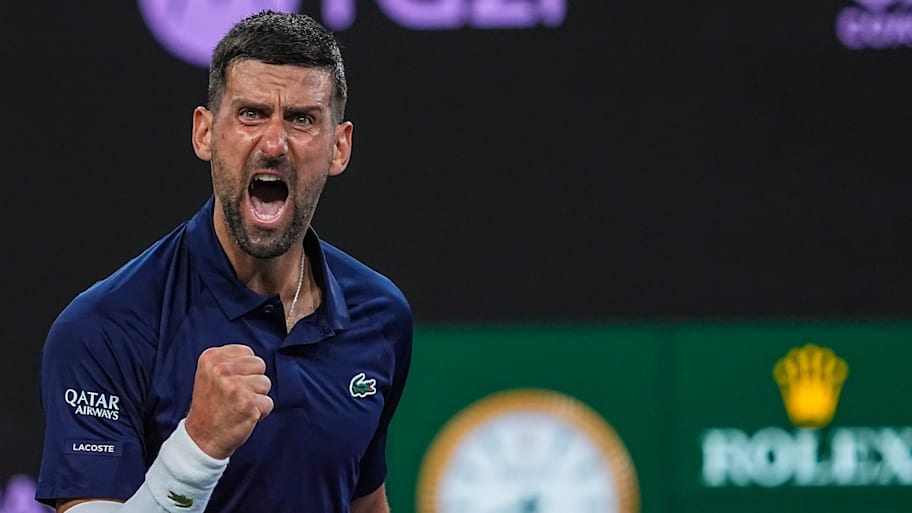
Jon, I appreciate you and Andy being honest about tennis right now and how it’s [Carlos] Alcaraz and [Jannik] Sinner and then everyone else. But it’s obvious to me that the player most likely to break their stranglehold is still Novak Djokovic. Just look at Australia. Not only did he beat Sinner but people forget he won the first set in the final against Alcaraz. He is not afraid of the big moment either.
TP, Spain
• I think we arrived at that conclusion as well, no? Rankings be damned, Djokovic is the No. 3 player right now, and the most likely candidate to break Alcaraz and Sinner’s nine-major streak. (He also won the last major—the 2023 U.S. Open—before the new guys arrived.)
I would offer this hot take: In one winner-take-all match, I would pick Djokovic. If you have to go through both Sinner and Alcaraz, I might be inclined to pick someone else. Someone with fresher legs. Someone who will not be 39 at the time of the next major. As we saw in Australia, Djokovic—for all his unrivaled historic excellence—makes this so hard. With little prep work, he rocks up to best-of-five tennis. He has to beat five opponents, some of whom are half his age. He then has to beat Romulus, then Remus back-to-back.
Again, can he beat Alcaraz in a big match? Yes. See the 2024 Olympics. Can he beat Sinner in a big match? Yes. See the 2026 Australian Open. Can he beat them both in 48 hours, having already logged at least 15 sets to get there? Yikes. Maybe in that kind of shootout, you’re better off with a player armed with great power and reckless abandon. Ben Shelton? Arthur Fils? A João Fonseca type?
Hi Jon,
Love the podcast, your TC work, and especially the mailbag! My question: Now that we’re roughly five years removed from the accusations against Sascha Zverev, I am curious how you think it has affected his standing, both with fans and in the locker room. Is there a lingering negativity, or has he been able to put all that in the rearview mirror? And, more importantly from a sporting perspective, how do you think the controversy and backlash have affected him as a player? He has been No. 3 in the world much of that time, but seems increasingly unlikely to compete with Alcaraz and Sinner at the majors or the top ranking. Do you and others on the tour attribute this at all to a negativity he brings to the court or that the crowds aim at him? My theory is that he plays a risk-averse brand of tennis because he’s afraid to make mistakes—read into that what you will.
Jay
• Hey thanks. It’s an interesting—and I think fair—question.
There are some tennis fans for whom Alexander Zverev remains irredeemable and always will be unsupportable, if not entirely unwatchable. Others cite presumptions of innocence and due process.
Especially in a sport without teammates, it’s tough to gauge work relationships. I know of players who were disturbed by the allegations and believe the accusers. (One female player once told me she was particularly disturbed that the two accounts of alleged domestic abuse made against Zverev were so similar.) Does that mean they avoid all contact and freeze him out? That, I don’t know.
As to how this has impacted Zverev, he, of course, is best (singularly?) positioned to answer that. Though perhaps even he doesn’t know or can’t/won’t articulate it. Without suggesting he warrants pity (or commensurate trauma to an assault victim), facing those accusations has to have some impact on any sentient, feeling human being. You read these public allegations against you and hear references to them at major final trophy ceremonies, and it has to have an effect. That could express itself in any number of ways. Defiance. Anger. Guilt. Self-loathing. But this is a pivotal event.
And yet, I’d caution against breaking down Zverev’s game or any on-court shortcomings through this prism. The correlation between a specific off-court ordeal and negative performance is shaky.
We see this again and again in sports and life. In 2004, Kobe Bryant was in court, facing charges in a sexual assault case, and then flew to a game and scored 42 points. Again and again, athletes face serious circumstances or are embroiled in controversy in their personal lives, yet it doesn’t seem to affect performance.
To use pop psychology vernacular, they “compartmentalize.” Inevitably, there are references to the courts and fields as “sanctuaries,” times and places where players can escape the chaos in their lives. This is true for all of us. There is much research and social psychology to suggest we are more resilient than perhaps we think, and trauma or distress that, objectively, should incapacitate us, do not.
Hi Jon.
I have a mailbag question for you please.
On the ATP and WTA tours, how do the players handle hotel reservations? They don't know if they are going to be in the city for one day or 10— do they book a room for 10 days and if they lose in the first round pay for an extra day because they didn’t cancel on time (like the rest of us) or are there arrangements made with the hotels ...
Appreciate your insider knowledge on this!
Joel G.
• Thank you.
The tournaments usually provide lodging or the in-kind equivalent. In some cases (the majors), there is a per diem if players choose to stay in an Airbnb or another hotel. Some families occasionally lodge players. (I gather Peyton Stearns’s family, for instance, often hosted players in Cincinnati.)
It’s still an interesting question. Pick Charleston. Does the event reserve a block of rooms and ask the hotel to release half of them midway through the tournament, in keeping with the draw whittling? But what if a losing singles player is still in the doubles draw? I imagine it varies event to event.
The more complicated variable is airfare. Like so much in life, there seems to be a tiered system. The very top players often fly private. The next tier flies business class and has the ability to change seats or book refundable flights. But I’ve seen other players on their phones, madly trying to find Expedia flights or deciding whether connecting flights are worth the cost savings.
So it goes in an individual sport.
HAVE A GREAT WEEK, EVERYONE
More Tennis from Sports Illustrated
- Carlos Alcaraz’s Attempt to Defend French Open Title Could Be in Jeopardy
- Tennis Mailbag: Meet Michael Antonius, the American Teen Who Just Made History
- Carlos Alcaraz Withdraws From Barcelona Open With Injury Days After Loss to Jannik Sinner
- How Jannik Sinner Defeated Carlos Alcaraz at Monte-Carlo to Regain World No. 1 Ranking
This article was originally published on www.si.com as Tennis Mailbag: What Markéta Vondroušová’s Anti-Doping Charge Reveals About the Sport.