Hey everyone …
• Here’s the latest Served podcast:
• Pity this guy didn’t pick tennis (more on that below). For the Barcelona crowd, it’s Lamine Yamal:
• Why was Indiana the last college basketball team to go undefeated?
• A tennis capital raise: SportsAI raised $3 million in new funding.
Onward …
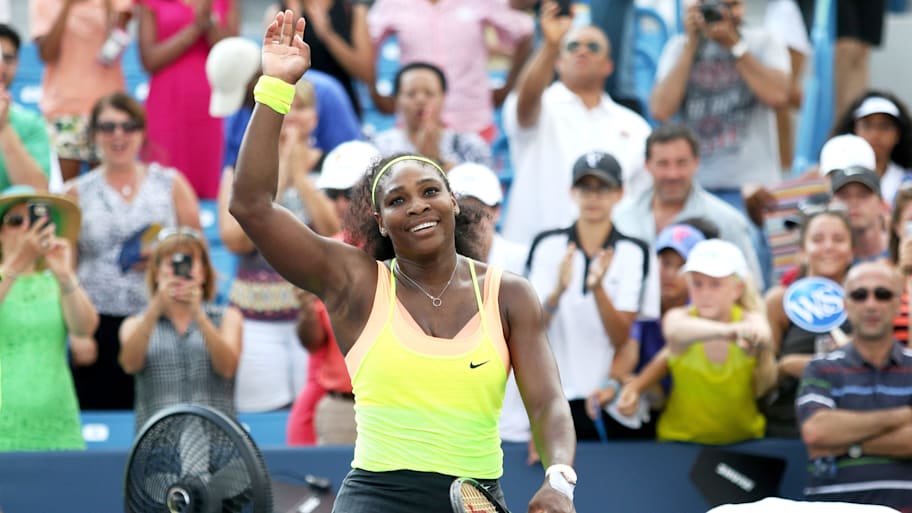
Any hunch why Serena has been added (as of October) to the testing pool?
Hope you had a nice Thanksgiving, JW!
Bill
• Good catch. Upon seeing this over the weekend, I reached out to Serena Williams’s camp for comment. I was not favored with the courtesy of a reply. (As a wise head once said, “No response is a response.”) Then came this tweet denying a comeback.
Omg yall I’m NOT coming back. This wildfire is crazy-
— Serena Williams (@serenawilliams) December 2, 2025
Just to be clear: The International Tennis Integrity Agency’s registered testing pool (i.e. the players who have to provide whereabouts in keeping with anti-doping protocol) is approximately 300 players, broadly the top 100 in the men and women’s game, plus top doubles players and wheelchair players. Speculate at your peril, but Serena’s decision to include her name is … interesting. (Not that the 2028 Los Angeles Olympics is only two years away.) At a minimum, by putting herself back in the pool, she is giving herself the option to play again.
Related …
Serena Williams has been a prominent spokesperson for GLP-1 medications like Ozempic and Mounjarno. With her just recently re-entering the ITIA registered testing pool (sparking rumors of a comeback), it made me wonder if GLP-1’s were ever under consideration for being classified as performance enhancing in tennis or any other competitive sports? I’m sure many recreational tennis players that use these drugs feel that they are performance enhancing in their ability to more easily maintain a higher level of fitness, but would WADA or ITIA ever come to the same conclusion and consider it a competitive advantage?
Brian U., New York City
• It’s an interesting debate topic, no? Are GLP-1 drugs performance-enhancing? Or do they just take the athlete to a baseline level—imagine corrective vision surgery—in which case they likely would be permitted. This is a fluid situation, as they say. But I put this to the ITIA, and here’s the response:
“In terms of the weight loss drugs, this is something WADA is monitoring—there was an article about it last weekend in the Times. Currently, the substances themselves are not on the prohibited list but on WADA’s ‘watch list’ so may well be at some point depending if they feel it meets their criteria. Hope that helps.”
• Most of the questions were about the Hall of Fame voting. Here are some thoughts:
A) Andy Roddick was kidding when he said he didn’t vote for Roger Federer. And there is no indication that Federer was Jeter-ed, i.e. there were any holdout voters.
B) Unlike baseball, the Tennis Hall of Fame does not reveal which players received how many votes.
C) I suggested that the Hall recognize the extraordinary circumstances and perhaps consider giving Federer his own day. Again, having him share the stage with one- or two-time major winners would be like inducting Mozart into the Classical Museum Hall of Fame alongside, say, Erik Satie. (“Before we get to Robert De Niro, a few words from this year’s other honoree, Adrian Grenier!”)
The problem: We have a backlog coming. If Federer gets his own day, doesn’t Serena? And Rafael Nadal? And then what happens to the Juan Martín del Potro revote or Ash Barty or Andy Murray?
D) Mary Carillo is the perfect foil for the inevitable Federer-lovefest. This will be a fun weekend.
E) One of you wrote to me (repeatedly) about why Federer was eligible this year. The rules leave some squishiness—as they perhaps should—for when the clock starts ticking. Their last match? Or their last match as an effective player? There are tennis scandals. This is not one of them.
F) Credit to Ben Rothenberg for raising an interesting point: Peng Shuai would be eligible next year. What if the Hall of Fame did what so many other tennis institutions fail to do and called attention to what is, at best, a strange and disturbing set of circumstances? Yes, this would be a form of grandstanding. But also an implied acknowledgement that tennis has not forgotten her. And look at her credentials. She is the first Chinese player to reach No. 1 (in doubles in 2014), an absolute A-lister in doubles (including multiple major titles), and a top-15 singles ranking with nearly 500 wins? A pioneer figure in Chinese tennis—now a major WTA market—and women’s sports. Putting her on the ballot would be a legit move.
G) The Hall of Fame marketing department deserves a raise. Not long ago, this was a little-known institution, perhaps best known for hosting a July grass-court event with, per the ranking cutoff, the softest field on the ATP Tour. Until the last decade or so, we seldom got questions about the Hall of Fame. Players were seldom asked about it. Fans rarely got exercised.
Now, Hall of Fame worthiness and likelihood are major discussion topics in tennis salons (and saloons), and tennis fans debate HoF as fervently as fans in other sports.
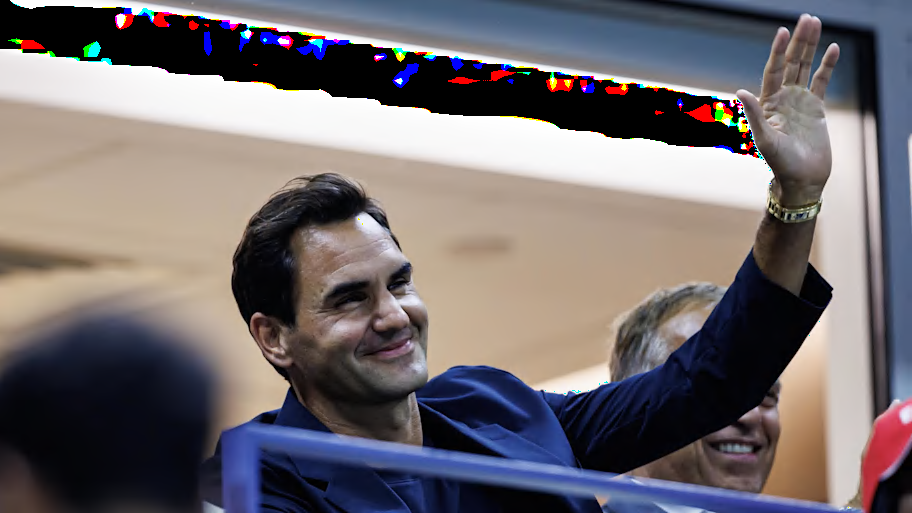
Jon, you mentioned [during the U.S. Open] about the changes to the ESPN broadcast team. I’m curious if you can tell us more.
Eric, NY
• I’ve been wrestling with this. It’s an open secret that there are changes afoot at ESPN, and the roster behind and in front of the camera has been jostled. I’ve heard of a few additions. I’ve heard of a few subtractions. The Australian Open lineup will be different from the U.S. Open lineup. But inasmuch as this is “news,” someone else can break it.
There are some basic rules in media. Be fair. Be right. Traffic in truth. Be a human being whenever possible. After the basics, there are not really “rules” but rather a series of judgment calls and balancing of interests.
The balance here: I think the potential for harm and/or embarrassment outweighs news value. We’re not talking about a new Monday Night Football broadcast crew—people making seven figures replaced by people making eight figures—or bad behavior being covered up or a brewing scandal. This is just business decisions and a network seeking younger talent to serve a (hopefully) younger audience. We’ll take a pass on the clicks and engagement and let those people affected make announcements at a time, place and manner of their choosing. Or not at all.
Proof that we need to pay attention and develop all players no matter rank or if they play singles or doubles—two of the nicest guys and former players are now the powers behind US tennis a decade after both retired—Brian Vahaly heading the USTA, Eric Butorac now the US Open tournament director. That 60th ranked player or doubles semifinalist out there right now could be running Wimbledon in 2045.
Bob Richter, Green Bay
• One of the first tennis events I ever covered for Sports Illustrated? I flew to Milwaukee for a 1998 Davis Cup tie between Italy and the U.S. Italy won in a mild upset—though celebrated decidedly un-mildly at the Pfister Hotel that night. And the hero was a grinder who released tension by speaking to the ball. His name? Andrea Gaudenzi.
It sounds like so much trite boilerplate, but all this “sport of a lifetime” and “skills that translate to life”? To quote tennis lover David Foster Wallace, “Clichés earned their status as clichés because they’re so obviously true.”
Maybe I’m biased as a Filipino-American tennis fan. And maybe I’m caught in the algorithms. But it seems like Alex Eala is the victim of numerous click-bait articles of either sponsorships with eye-popping amounts or her giving equally eye-popping amount of money to charities.
Sponsorship hoaxes:
• “Alex Eala signs $45 million deal with Wilson” (she’s with Babolat)
• “Emirates Airlines offers her private jet sponsorship”
• “Yonex gives her custom rackets engraved ‘Philippine Icon’”
• Rolex, Lacoste, Adidas mega-deals that never happened
Charity hoaxes (these are the most cynical):
• “Alex quietly donates $10 million to children’s hospital after WTA title”
• “Eala gives P3.9 million to homeless elderly in Quezon City”
• “P500 million donation to typhoon victims”
• “Turns down endorsement money to fund underprivileged kids’ tennis programs”
My question: Is this level of fabricated “feel-good” misinformation common for young players from emerging tennis nations, or is Eala an outlier? It feels uniquely Filipino in flavor—the narratives always center on extreme humility, rejecting personal wealth, and “giving back” in impossibly large amounts. Her genuine personality (soft-spoken, disciplined, visibly grateful in every interview) seems to make her an easy mark for these engagement-farming operations.
• I suspect that Eala is an outlier, primarily because of the engagement she generates. Here is a young, ascendant player from a sports-mad country with a population of 120 million. By dint of algorithms alone, she is bound to generate engagement and traffic.
This is a good example of a point we try to make periodically. Players today have opportunities that their forbears didn’t. They also have to confront a host of new challenges—many of them wrought by technology. Chris Evert, for one, is very eloquent on this, wondering how she would have reacted as a teenager to strangers from all over the world commenting on her game, looks, personality, clothes … and perhaps basing internet scams around her. Social media has given Eala exposure and opportunities (and wealth) well beyond what she would make as the world’s No. 50-ranked player. It also comes with its perils.
HAVE A GOOD WEEK, EVERYONE!
More Tennis on Sports Illustrated
This article was originally published on www.si.com as Tennis Mailbag: Making Sense of the Serena Williams Comeback Rumors.