1. Get organised
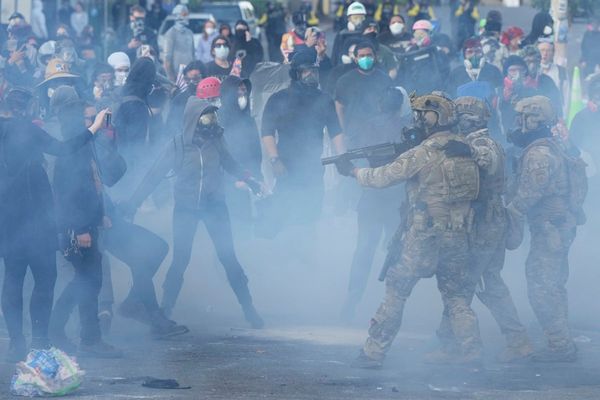
Poverty and inequality are political, so tackling them is political. And yet we are increasingly told not to engage in politics and to instead focus on service delivery. Being more organised is the bottom line here. We need to get far more organised to deal with the threat of repression that is facing civil society. Laura Sullivan, regional director, Europe and Americas, ActionAid International, @Laura_Sullivan.
2. Be inclusive – don’t overshadow national priorities
There’s a risk that global goals could overshadow national priorities and needs. We must be aware of the danger within both NGOs and civil society organisations that the elites are well represented and others are not. The voices of marginalised groups and those who don’t speak mainstream languages are limited in civil society. We need to support the broadest possible definition of civil society to be inclusive. Carol Morgan, head of communications, Making All Voices Count, The Hague, Netherlands. @AllVoicesCount.
3. Have shared values
It’s important for any global civil society movement to be loosely structured, but also to have shared values. This can help ensure that advocacy efforts complement and build on each other. We need genuine partnership, as well as resource mobilisation and respect – especially for southern and small groups. This is a must if we are to have a sustained movement. Nelson Muffuh, head of outreach and stakeholder engagement in the Post-2015 Development Planning team, executive office of the secretary-general, United Nations, @UN.
4. Learn from grassroots activists
Reshaping the relations between social movements and NGOs is central to building a global civil society. NGOs have to disconnect from an institutional agenda and reconnect to values and people. They should support social movements, and not the other way around. There’s a lot to learn from grassroots activists. Tobias Troll, project manager, Concord/Deeep, Brussels, Belgium, @CONCORD_Europe.
5. Make the most of our resources
Coalition takes effort and resources. Coalitions need to be clear about what they are trying to achieve, and the best way to achieve it. Instead of thinking about creating global coalitions of coalitions, we should talk about how to better utilise the resources from the networks that already exist. This may be a more effective way to get those networks the help they need to remain in the fight and make a change. Katerina Hadzi-Miceva Evans, executive director, European Center for Not-for-Profit Law, Cambridge, UK, @enablingNGOlaw.
6. Listen to women and young people
There’s a lack of women’s voices in the conversation in many places around the world. It’s critical that women’s voices become part of the conversation and action around global change and implementation of the sustainable development goals (SDGs).
The participation of young people is also more critical than ever – there are 1.8 billion now entering their reproductive years. The real question is how will they form coalitions? And what can we learn from what they are already doing? Asha Curran, director, innovation and social impact, 92nd Street Y, New York, USA. @RadioFreeAsha.
7. Influence funders
We need to influence what counts to funders and alter their preoccupation with the things that can be counted. There is a big need for breaking the current prevailing wisdom that measurable “results” are the same thing as sustainable impact. Zohra Moosa, director of programmes, Mama Cash, Amsterdam, The Netherlands. @mamacash.
8. Look beyond the internet
Half of the world’s people do not have access to the internet. So we need to think beyond the very attractive, but ultimately limiting, tools of social media. The individual activist, change maker, mobiliser, community organiser, organisational development supporter, whatever we call them, is key. So when we think about networks, both organisations and individuals need to be part of the effort. Michael Hammer, executive director, International NGO Training and Research Centre (INTRAC), Oxford, UK, @Intrac_uk.
9. Promote movements led by the global south
It’s important to unpack the assumptions often made about civil society, especially around the importance of heterogeneity. We need to go beyond organised civil society and find ways to promote bottom-up and southern-led movements, rather than grand committees. Danny Sriskandarajah, secretary general, Civicus, Johannesburg, South Africa. @civicussg.
10. Know that there are no easy answers
There are no easy answers to organising the appropriate coordination of national alliances with global movements. Nor to how local alliances can obtain funding while maintaining the ability to choose their issues and methods. We need to be flexible and find innovative ways to support national work, while being in touch with global movements. The global movements need to take their cues and build on the issues that are important to the national alliances, not the other way around. John Ruthrauff, director of international advocacy, InterAction, Washington, DC, USA. @JohnRuthrauff.
Read the full Q&A here.
Is there anything that we’ve left out? Leave your thoughts in the comments below.
Join our community of development professionals and humanitarians. Follow@GuardianGDP on Twitter.