Scottish Labour is in big trouble
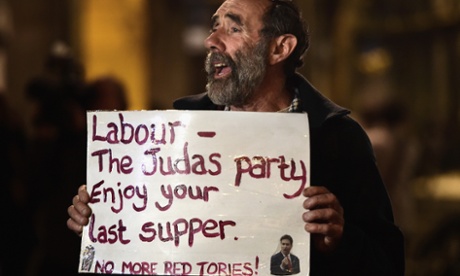
The Scottish Labour party received a blow after Johann Lamont decided to stand down as leader, after describing some of her Westminster colleagues as dinosaurs who do not understand the politics they are facing since the referendum. She also accused colleagues of trying to run Scotland “like a branch office of London”.
Since then, Ed Miliband has admitted that his party must “fight for every hour and every day” to hold on to its Scottish MPs after a shock poll predicted Labour could be almost completely wiped out by the Scottish National party next year.
Closure of the Al-Aqsa mosque for the first time in 14 years

Tensions are rising as Israel on Thursday ordered the first full closure of the Al-Aqsa mosque compound in Jerusalem’s Old City in 14 years, in a move denounced by Palestinian president Mahmoud Abbas as “tantamount to a declaration of war”. The mosque was closed to all visitors as a security precaution. The Al-Aqsa mosque compound was reopened before Friday prayers.
It came as anti-terrorist police shot dead a 32-year-old Palestinian man on Thursday morning who was suspected of having tried to kill a far-right Jewish activist the night before.
Far-right rabbi shot and seriously wounded in attack on Jerusalem
Israel closes Al-Aqsa mosque compound to all visitors
100 years on, UK to pay back part of £2bn WW1 debt
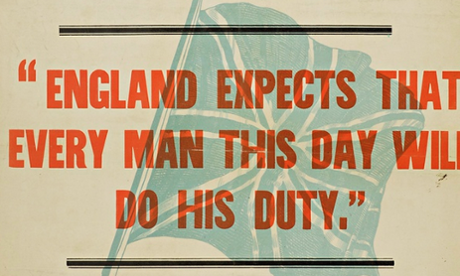
We learned that around £2bn of the UK’s first world war debt remains, and the government said it is looking into the practicalities of repaying it in full.
The Treasury said it would pay off £218m from a 4% consolidated loan next February, as part of a redemption of bonds stretching as far back as the eighteenth century. These bonds also relate to the South Sea Bubble crisis of 1720, the Napoleonic and Crimean wars and the Irish potato famine that began in 1845 and lasted for six years.
“4% consols” was issued in 1927 by Winston Churchill, then chancellor, to refinance national war bonds originating from the first world war. The Debt Management Office estimates that the nation has paid £1.26bn in interest on these bonds since 1927.
The chancellor, George Osborne, said: “The fact that we will no longer have to pay the high rate of interest on these gilts means that, most important of all, today’s decision represents great value for money for the taxpayer. We will go on working through our plan that is gripping the public finances and delivering a brighter economic future.”
He tweeted:
We'll redeem £218m of 4% Consols, including debts incurred because of South Sea Bubble. Another financial crisis we're clearing up after...
— George Osborne (@George_Osborne) October 31, 2014
80% don’t know how many calories in a glass of wine

People have no idea how many calories their alcoholic beverage has, and public health experts say beer, wine and spirits should be labelled with the calories they contain to tackle the country’s obesity epidemic.
A large 175ml glass of 13% ABV (alcohol by volume) wine contains 160 calories, a bottle of alcopop contains 170 and a pint of 4% ABV beer contains 180. Yet the vast majority of drinkers are unaware of the calorific value of their drinks, says the Royal Society for Public Health (RSPH).
“I don’t think they think about it,” said Shirley Cramer, chief executive. “We go out at lunchtime and look at the sandwiches on display. We know and understand what the labelling means. We pick the sandwich or salad on the basis of the calories. But people don’t think about that when they go out on a Friday night.”
The RSPH polled 2,000 people to find out what they knew about the calories in alcohol and found that the vast majority had little idea.
More than 80% did not know, or incorrectly estimated, the calorie content of a large glass of wine. And almost 60% did not know how many calories there were in a pint of lager.
In England about two-thirds of adults are obese or overweight, which is a risk for serious life-shortening diseases including heart disease, stroke, cancer and type 2 diabetes.
World Bank is now investing $100m to deal with Ebola
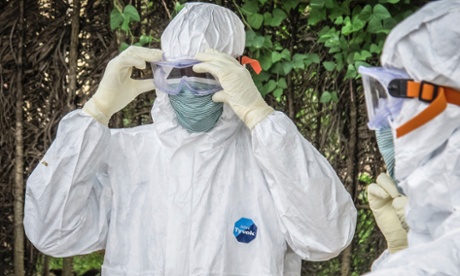
The World Bank is to invest $100m (£63m) in an attempt to increase the number of foreign health workers heading for west Africa to care for people with Ebola.
Treatment centres in the three countries at the heart of the epidemic – Liberia, Sierra Leone and Guinea – are being built but the biggest need is for doctors, nurses and other healthcare workers to staff them.
The United Nations says around 5,000 international personnel are needed, including up to 1,000 foreign health workers.
This brings the World Bank’s total Ebola contribution to $500m.
Visualised: ebola cases over time
4G+ five times faster than average broadband
Finally, more people in the UK will get advanced mobile internet speeds comparable with South Korea and the US, with the launch of EE’s next generation 4G+ network.
EE’s chief executive, Olaf Swantee, said:
The UK is now back to being a world leader in mobile networks. Just two years since we were behind every developed market from the US to Japan, we’ve invested in innovation, driven competition and given people in London a mobile network that’s as faster than almost any other in the world, and even faster than most fibre broadband available here.
The new technology to be rolled out, called carrier aggregation or LTE-Advanced (LTE-A) allows devices to connect to two different 4G mobile signals at the same time, doubling the capacity in the most densely populated areas. That means even on packed trains the data network remains strong, removing frustrating overcapacity issues as commuters all attempt to access the internet at the same time.
EE has the largest 4G network in the UK covering 300 towns and cities and 75% of the population and with six million subscribers. O2 and Three have yet to confirm plans to follow EE and Vodafone.
There are 83.1 million mobile phone subscribers in the UK, according to data from Ofcom, while 61% of adults have a smartphone.
15,000 have gone to Syria and Iraq to fight alongside Isis
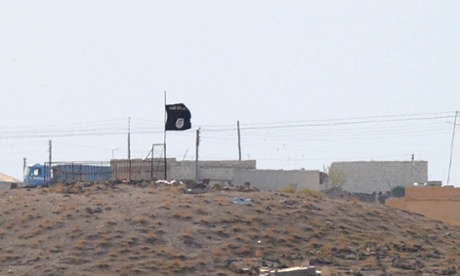
Foreign jihadists are flocking to Iraq and Syria on an ‘unprecedented scale’ says the UN. With the decline of al-Qaida, there is now increased enthusiasm for groups such as Isis among foreign jihadis, fighting in the twin Iraq and Syria conflicts.
A report by the UN security council, obtained by the Guardian, finds that 15,000 people have travelled to Syria and Iraq to fight alongside Islamic State (Isis) and similar extremist groups.
They come from more than 80 countries, the report states, “including a tail of countries that have not previously faced challenges relating to al-Qaida”.
The UN’s numbers bolster recent estimates from US intelligence about the scope of the foreign fighter problem, which the UN report finds to have spread despite the Obama administration’s aggressive counter-terrorism strikes and global surveillance dragnets.
“Numbers since 2010 are now many times the size of the cumulative numbers of foreign terrorist fighters between 1990 and 2010 – and are growing,” says the report, produced by a security council committee that monitors al-Qaida.
Voilà! British food is winning over the French
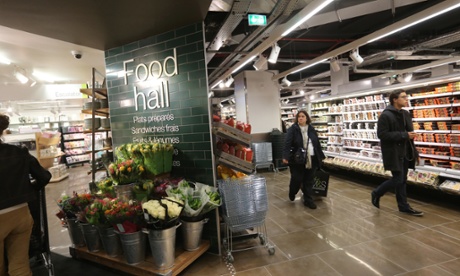
France became Britain’s second biggest food export market after Ireland in the first half of this year, with a 9% year-on-year increase to £748m.
Increasingly popular in France are posh crisps, known as “English crisps”, from companies such as Tyrrells. In Paris, Marks & Spencer’s British classic chicken tikka masala is the bestselling ready meal.
Even British cheese is doing well in the home of camembert and brie: Defra figures show exports of cheese to France growing to 22,118 tonnes in 2013, worth almost £71m, from 19,673 tonnes worth £55.5m in 2010.
One of the reasons is increased foreign travel and the vast French population resident in London – said to be France’s sixth biggest city. Shorter lunch breaks also mean good food on the go is increasingly in demand among younger workers. Pret A Manger is capitalising on the growing fashion for lunch “al desko”, opening its 11th store in Paris last month and hoping to more than double its business there in the next two to three years.
John Gleave, senior trade adviser for agri-food, fashion and retail at UK Trade & Investment in Paris, said:
Anything to do with snacking and ready-to-go is growing very quickly in France and a lot of British manufacturers are very good at that.
The FA has made £350,000 in Twitter fines since 2011

Looks like footballers tweeting their thoughts can provide the Football Association (FA) a considerable amount in fine money. Since 2011, the FA has collected a staggering £350,000 and has investigated 121 cases in the last three years.
Rio Ferdinand, former England captain and now QPR player, is the latest to be hit with a penalty for overstepping the mark for a recent tweet calling the mother of a Twitter user a “sket” – a Caribbean slang term which means promiscuous girl or woman. He has been fined £25,000 and suspended for three matches. He has previously been fined for referring to Ashley Cole, former Chelsea left-back, as a “choc ice” on Twitter – a derogatory term implying that someone is black on the outside and white on the inside.
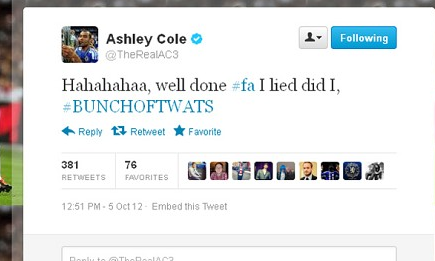
Ashley Cole has also had a Twitter fine, and had to pay £90,000 in 2012 after he described the FA as a “bunch of twats”, after they had questioned the evidence he gave on behalf of John Terry.
During the 2010-2011 season Ryan Babel, who was at Liverpool at the time, became the first player to be censured after he posted a photograph of the referee Howard Webb mocked up in a Manchester United shirt.
Google developing cancer and heart attack-detecting pill
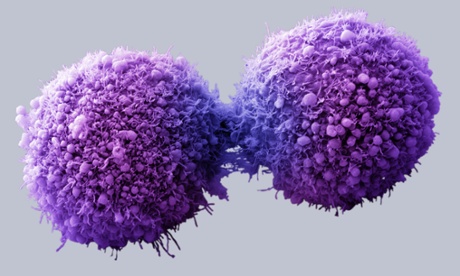
We’ve learnt that the internet giant is moving into the health industry and is developing a pill containing tiny magnetic particles that could identify cancers, heart attacks and other diseases before they become a problem.
Andrew Conrad, head of life sciences inside Google’s “moonshot” X research lab told the WSJD Live conference in California on Tuesday:
Essentially the idea is simple; you just swallow a pill with the nano particles, which are decorated with antibodies or molecules that detect other molecules.
Google’s latest move is significant as nanotechnology is a new field in medical science, and the lucrative health market is worth around 10% of the economy of developed nations.