
The CIA’s programme of torture is ‘more brutal than people were led to believe’
The extent and nature of the CIA’s use of torture in the years after the September 11 terror attacks was revealed in a report released by the Senate intelligence committee on Tuesday. The report committee chair, Dianne Feinstein, concluded that the agency’s use of torture “regularly resulted in fabricated information”, was “morally, legally and administratively misguided” and “far more brutal than people were led to believe”.
The report detailed torture methods used in secret prisons run by the CIA across the world, including rectal rehydration, rectal feeding and sleep deprivation. Feinstein called the torture programme “a stain on our values and on our history”.
- The key methods used in the CIA’s torture of detainees
- Stop believing the lies: America tortured more than ‘some folks’
- CIA torture report: how the world’s media reacted
Jean-Claude Juncker feels his reputation has been damaged by tax allegations

The president of the European commission, Jean-Claude Juncker, admitted this week that his reputation had been damaged by revelations that Luxembourg made deals with multinationals to minimise their tax when he was the country’s prime minister. Juncker vehemently denies that he was personally involved in the deals.
Juncker told the Guardian’s Ian Traynor: “I don’t feel damaged subjectively because I know what I did and I did not do. But I am not naive, not a village idiot, and I have to objectively take on board that many people in Europe now have doubts about the honourable side of the new commission president. I have to live with that.”
-
Luxembourg tax files: how Juncker’s duchy accommodated Skype and the Koch empire
-
Can Jean-Claude Juncker weather the storm?
- Time for the EU to tackle Luxembourg over tax
Ofsted chief thinks secondary schools are failing
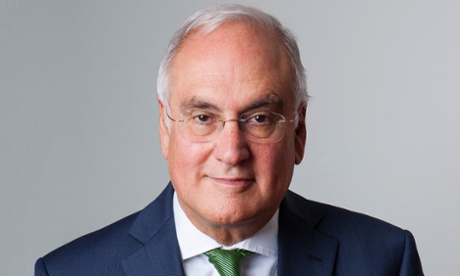
On Tuesday the chief inspector of schools, Sir Michael Wilshaw, warned that there are increasing levels of failure in British secondary schools, blaming it on a lack of good leadership. Launching his annual Ofsted report, he said that good teachers were in short supply in areas that needed them the most and that there was a growing divide between the nation’s primary and secondary schools.
“In too many cases, pupils are leaving their primary schools with good literacy and numeracy skills … But the culture they encounter at too many secondary schools often demotivates and discourages them,” he said.
Natasha Bolter is accusing Roger Bird of sexual harassment
The UK Independence party suspended its general secretary Roger Bird after Natasha Bolter, a former Ukip candidate, accused him of sexual harassment. Bird claimed he and Bolter had a brief relationship, something which Bolter denies. Bird later released 10 text messages that he claims he received from Bolter between September and November this year and demonstrate that the pair were in a consensual relationship.
However, Bolter, who has ruled herself out of the running as Ukip’s parliamentary candidate for South Basildon in Essex, denied on BBC2’s Newsnight that she had ever slept with Bird, saying: “If I had slept with him, I would have probably had an easier time than I have had in Ukip.”
Ed Miliband will not set ‘an arbitrary date’ on deficit reduction
In a keynote speech on Thursday the Labour leader, Ed Miliband, set out his party’s economic plans. He pledged that the party would cut the country’s deficit year on year, but refused to give “an arbitrary date” for when it would be achieved. He said that there would be no extra borrowing for Labour manifesto pledges, but that this wouldn’t apply to capital investment.
Miliband said: “We will build a strong economic foundation and balance the books. We will cut the deficit every year while securing the future of the NHS. And none of our manifesto commitments will require additional borrowing.” He said a Labour party review of government departments had found £500m in potential efficiency savings.
-
Ed Miliband’s economic plan for Britain still lacks clear vision
-
Six key lines from Ed Miliband’s economy speech
Sony hit by embarrassing email hack

Embarrassing email exchanges between executives at Sony Pictures were revealed when the company was the target of a cyber attack this week. In one exchange co-chairman Amy Pascal joked about what films Barack Obama might like, mentioning films with African American themes or stars.
In another exchange between producer Scott Rudin and Pascal, Rudin called Angeline Jolie “a minimally talented spoiled brat who thought nothing of shoving this off her plate for 18 months so she could go direct a movie [Unbroken].”
Sony has acknowledged that a large amount of data was stolen, but has declined to confirm specific documents.
-
A ‘spoiled brat?’ No way. Angelina Jolie’s success wasn’t handed to her
- What the monumental Sony email hack tells us about Hollywood
- Hackers demand Sony cancel release of Kim Jong-un-baiting comedy
A Palestinian minister died after a confrontation with Israeli soldiers
A senior palestinian government minister died on Wednesday after a violent confrontation with Israeli troops during an olive-tree planting ceremony in a West Bank village near Ramallah. Ziad Abu Ain reportedly died on his way to hospital after being struck in the chest and inhaling teargas fired by Israeli security forces.
The Palestinian president, Mahmoud Abbas, described the attack as “a barbaric act which we cannot be silent about or accept” and announced three days of national mourning. Palestinian foreign minister Riyad al-Malki said that “Israel will pay” for the “murder”.
Israel’s defence minister, Moshe Yaalon, released a statement expressing “sorrow” at the news of Abu Ain’s death and said: “The event in which Ziad Abu Ain died is under investigation by the IDF.”
The state can appeal Pistorius’s sentence
This week a judge granted prosecutors the right to appeal against the verdict in the trial against Oscar Pistorius. The paralympic athlete was given a five-year prison sentence earlier this year for the culpable homicide of his girlfriend, law graduate and model Reeva Steenkamp, and was acquitted of murder.
Judge Thokozile Masipa said she was satisfied that another court could interpret the case differently when considering Pistorius’s intentions in shooting dead Steenkamp. “I cannot say … that the prospect of success at the supreme court of appeal is remote,” Masipa ruled at the high court in Pretoria.
Oil is getting cheaper

The Organisation of Petroleum Exporting Countries (Opec) said this week it expected global demand for crude oil to fall to its lowest level in more than a decade next year, with surplus supplies putting pressure on prices. The price of benchmark Brent crude oil dropped another 4% on Wednesday towards $64 a barrel.
BP announced it would spend $1bn (£636.8m) on making hundreds of job cuts over the next year in response to the global slump in oil prices.
-
It’s the cheap oil, stupid: how petrol prices could decide the 2015 election
- Falling oil, rising cucumber prices: how much trouble is Russia in?
Alan Rusbridger will stand down as editor of the Guardian

And finally, some news about us. Alan Rusbridger announced on Wednesday he would stand down as editor-in-chief of the Guardian next summer, after 20 years at the helm. He will leave the news organisation, six years short of its 200-year anniversary, to become the chair of the Scott Trust in 2016, which oversees Guardian Media Group, replacing Liz Forgan.
• Read Alan Rusbridger and Liz Forgan’s emails to Guardian staff