1) Local government is being taken seriously by Whitehall – and it’s enjoying that
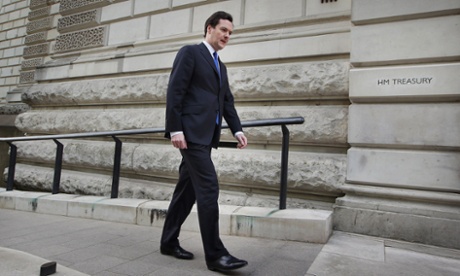
Under the previous government, councils in England came under relentless attack from ministers. Now, according to Chancellor George Osborne, they are seeing the biggest transfer of power in living memory from central to local government. The true sign of change this week was not that Melanie Dawes, permanent secretary of the Department for Communities and Local Government (DCLG), came to the annual conference of local authority chief executives and told them they were great. Words are easy. The real sign came when she stayed on for the evening dinner, and was happy mingling with the council bosses.
2) But there’s no longer a single strategy for local government. Policy is being made through deals
Andrew Haldenby, director of the Reform thinktank, pointed out at the Solace conference that Osborne has not made a single speech since 2010 about public service reform and that there is little sense of an overall vision for public services. The way the Treasury and the DCLG are doing business with local government is to invite individual bids for devolution powers. It’s not about a single vision for English councils.
3) This isn’t true devolution – there’s no ability to raise new taxes, for instance
Local authorities have welcomed the chancellor’s announcement that they will be able to retain 100% of business rates locally by 2020. But they are now looking closely at the many ways in which this apparent offer is circumscribed. They won’t be able to raise rates unless they have a mayor, and even then there is a cap of 2%. Worse, there is little flexibility in, for instance, their ability to offer discounts to specific businesses and there is no ability for them to raise new local taxes.

4) Councils are cautious about the ultimate financial outcome
Council officers are poring over their spreadsheets and calculators. Many are going to be hit hard by the need to sell off their most valuable homes under the extension of the right to buy to housing associations, and by the withdrawal of government grant. Keeping their own business rates won’t compensate for this double whammy. Amyas Morse, the comptroller and auditor general of the National Audit Office, told delegates at the Solace conference to keep a very close eye on when it is not possible for councils to deliver their statutory services. “Efficiency can co-exist with rationing and that can flip over very quickly, because of the pressure on resources. It’s very important to evidence that,” he said.
5) They fear they will have to compete for scarce resources – and they worry about the impact of that on the poorest places in the country
The devolution deal on the table is for those areas that can get together into combined authorities or regions. There will be places that don’t have businesses to bring in valuable rates. They will struggle and there are real concerns about what that will do to local services in different places. Tony Travers, director at the London School of Economics, told the Solace conference that business rates reform would exacerbate inequality. “It’s not a winner takes all system, but it’s a winner takes more,” he said.
6) Devolution deals aren’t a true negotiation between equals
Mark Rogers, president of Solace and chief executive of Birmingham city council, pointed out to Dawes in a session on devolution that this isn’t about a conversation between equals. It’s about local government bidding to central government – that’s an unequal power relationship.

7) If even Westminster is unsure it can make its books balance, there’s no hope for Lewisham
Everyone thinks of the big London boroughs, such as Westminster, as huge powerhouses. But many councils, even those the size of Westminster, are too small to achieve real economies of scale. And poorer places, such as the borough of Lewisham, just down the road from Westminster, cannot become self-sufficient. How will they cope?
8) There’s real concern about the democratic deficit
Several speakers have voiced concern that the changes in local government, which are potentially profound, are not being debated with local people. Integrating health and social care, for instance, has had very little discussion. Similarly, business rate increases will only need to be ratified by local enterprise partnerships, which are not elected bodies.
9) Councils need to be clear with central government on what they can, and cannot, do
Morse gave a clear message to council bosses. While they will now have more powers, they will need to be clear on how cuts are affecting their ability to delivery statutory services, such as social care.
10) There are still a lot of middle-aged white men running councils, but that is changing
Yes, there were a lot of men at the conference. But there are plenty of great, female chief executives in local government. And it was great to see one all-female panel debating devolution. No, we shouldn’t even have to remark on it. But after the Conservative conference, it was refreshing.
Sign up here for your free weekly Guardian Public Leaders newsletter with news and analysis sent direct to you every Thursday. Follow us on Twitter via @Guardianpublic