One thing TV executive producer Nitipat Uahwatanasakul aims to accomplish in his work is to change our society for the better.
In his latest family drama, Wai Saeb Saraek Khad 2 (Broken 2), now showing on Channel 3, we see a continuation from the 2016 award-winning lakorn that focuses on a child psychologist dealing with troubled schoolchildren from broken homes, starring Jittapa Jampatom and Teeradetch Metawarayut. Now the sequel has arrived, and it is packed with more social issues to tackle than ever.
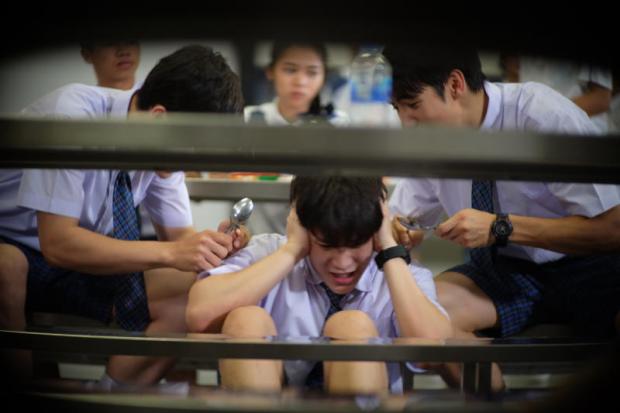
What are some of the issues experienced by Thai children today? Nitipat and his team of writers, led by screenwriter Nuttiya Sirakornwilai, who also conceived the plot of the drama, selected five main topics to discuss in their storyline: perfectionism, autism, gender creativity, temper tantrums and game addiction.
"When we completed the first season, we got pretty good feedback. But at the same time, people began to share their problems with us and we were astonished at the severity of cases they brought up. It was so much worse than those we presented in our lakorn. So we felt we had to do it. We have to talk about these issues," said Nitipat, 33.
"We finally narrowed it down to five issues under one key concept, which is to listen to each other's inner voices in order to understand one another more. In many problems faced by children these days, they don't always speak about it. Kids who work hard at school may not tell everyone they're pressured and stressed out. Those with autism may not talk about what they experience. Sometimes, it takes those surrounding them to listen and pay attention."
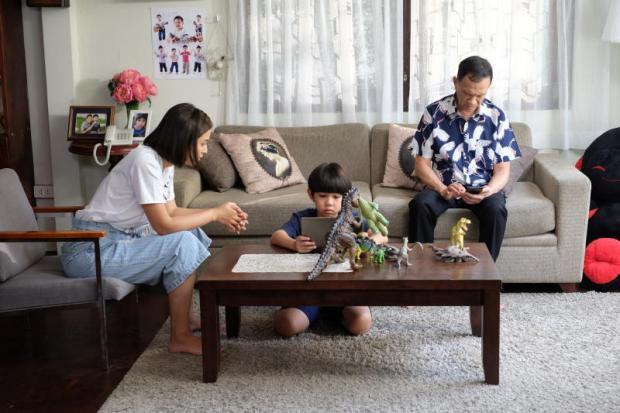
Some behaviours portrayed may just be a product of how children are raised, he added. In the case of a teenage boy addicted to gaming, the drama sees him attacking his father for pulling the plug on his computer. It is seen that his father usually gave him whatever he wanted with seemingly no restrictions. It is similar in the case of a boy throwing temper tantrums. His grandparents always dote on him, again always giving him what he wanted, and he would start screaming the minute things don't go his way.
"Behavioural issues in adolescents can be born from those who raise them and surround them. So part of understanding kids is understanding their caretaker," said Nitipat.
Another topic that got many viewers interested deals with a gender-creative girl. We don't often see the topic of gender identity and expression discussed through an adolescent, female character, as that's more common in male characters. Nitipat also acknowledged this, which is why a gender-nonconforming female character was chosen for this storyline to present a dimension people don't always get to see.
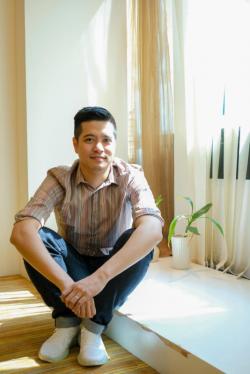
Executive producer Nitipat Uahwatanasakul. Photo: Melalin Mahavongtrakul
"'Gender creative' is a term recently coined overseas. I feel it rather covers the story we're trying to tell. Being LGBT is not as confusing as some may think. For many, they already know what they're doing and who they are, but they're just exploring," he said. "I feel that gender itself is not a problem. The problem is rather those around gender creative people who don't understand them. And so we want to present this topic so that people can understand that, in coexisting with one another, none of us is really the same. So why do we have to tell everyone to act all the same way?"
In order to portray these topics as accurately as possible, a big team of writers conducted research from both local and international sources. They also sought advice from academics and medical professionals. In the end, all information is consolidated and established in the main storyline.
Nitipat added that he hopes his lakorn can open up conversation about different topics in our society, as well as for people to gain better understanding and awareness of them.
"People do ask if we're hoping for awards and high ratings. Deep down, we do. It's a motivation for us to keep going. But at the same time, my main goal is to see changes happening in our society. If after watching our story, people can understand kids with autism more, or they realise the impact of game addiction, or how stress may be driving adolescents to depression and self-harm, if we can reduce the severity of these issues, I'd be very happy."
While he hopes for a positive impact on society, he's not losing sight of how his lakorn could survive, and how he can keep making drama with a message.
"Ratings is still an indicator. If the ratings are bad, we can't continue," he said quite matter-of-factly.
Our television today is cluttered with rom-coms and over-the-top melodramas that often turn into big hits with the people, regardless of the messages they're sending. Serious lakorn that addresses social issues may not always strike a chord with viewers who only seek entertainment. Even in Broken Season 1, Nitipat said some of the feedback he got was that the story became too stressful at certain points.
Upon working on the sequel, he said it's about finding a balance to attract both viewers who watch lakorn and those who don't. He revealed that, even as he produces soap operas, he doesn't really watch Thai dramas himself, but is instead a fan of shows like Criminal Minds, CSI, ER and Grey's Anatomy.
"I have to figure out why I myself don't watch it, and how we can pull those who also don't watch it back to watch our lakorn. At the same time, we also have to consider those who already like watching these soap operas and find a middle ground so our story can find a place in both groups," he said. While the story remains tense, there's also the romance and relationship of the main characters to balance it out.
Nitipat, who began his career producing rom-coms before coming into a more serious genre, also feels that Thai lakorn aren't addressing social issues enough. He hopes one day different channels can make it their policy to tell more stories for society.
Watch Wai Saeb Saraek Khad 2 (Broken 2) on Channel 3, Friday until Sunday, starting at 8.20pm. Visit facebook/brokench3.