Yoga may boast 4,000 years of venerable tradition, but it’s now a thoroughly modern way to get fit and chill out. Yogic teachers are combining simple breathing exercises and meditation with sport techniques to create workouts that are challenging, but fun. And contrary to popular belief, you don’t need to be flexible to do yoga – nor is chanting obligatory.
Here are six contrasting yoga styles, from the everyday to the esoteric.
Ashtanga yoga
Ashtanga links the postures of hatha – the generic term for yoga and the most familiar style in clubs and community centres up and down the land – together in a sequence. The constant flow of movement and dynamic breathing has earned ashtanga the nickname “aerobic yoga”. Enhanced muscular tone and all-round strength are just two of its benefits.
Hot yoga
Devised by Indian yoga teacher Bikram Choudhury, hot yoga classes are practised in a room heated to exactly 37C/108F. It follows the same 26 hatha postures used in India for centuries to heal chronic ailments. While sweating in a room full of strangers isn’t for everyone, the heat means you can stretch far more easily than at room temperature.
Yogalates
Yoga and pilates share many similarities, including a focus on movement, controlled breathing and strengthening the core postural muscles – what Joseph Pilates termed “the girdle of strength”. A decade ago, Australian Louise Solomon brought the two disciplines together in a class that’s suitable for all ages and levels of fitness. Visit yogalates.com.au to find out more.
Anti-gravity yoga
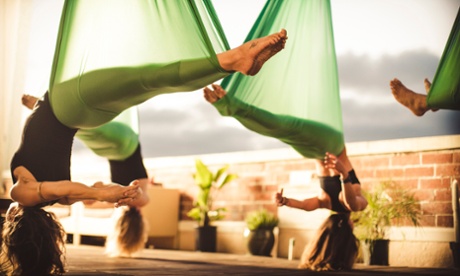
Being suspended upside down in a sling while performing yoga stretches is more than just a novelty. Anti-gravity yoga helps decompress the spine and enhance core strength. But seek guidance before taking a class if you suffer from high or low blood pressure.
Boxing yoga
Boxing yoga offers athletic, aligned, whole-body patterns of movement to enhance sporting performance. The stretches and breathing techniques are great for fighters seeking to keep their adrenaline under control and stay focused.
Laughter yoga
Everyone knows the benefits of a chortle. Indian doctor Madan Kataria developed laughter yoga in 1995. It’s not about telling jokes: what may start out as forced laughter soon turns into the real thing, with yogic breathing exercises further boosting the psychological and physiological benefits. No sniggering at the back...