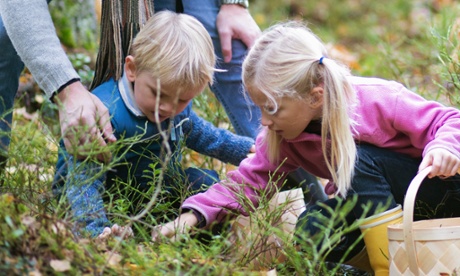
According to some, golf is a good walk spoiled. By that reasoning, foraging is a good walk immeasurably improved. Exploring the fields, paths and woods in your local area is all the more rewarding when you’re led by your appetite.
A search for wild plants, fruits, funghi and even seaweed may draw you towards natural corners of an urban landscape or take you into wild countryside. Wherever you find yourself, there will be something to harvest – carefully and responsibly, of course.
Foraging for food is, by its very nature, different every time. What you find will depend on the terrain, time of year and what the weather has been doing.
Jesper Launder, a forager and medical herbalist, says that late May and early June is a particularly rewarding time to forage. “Even if the weather isn’t great, everything’s alive,” he says. “There’s that rich vibrant greenness to everything.” A favourite – and profuse – find at this time of year is elderflowers, which are easy to identify with their creamy masses of tiny flowers. They can be used to make fragrant cordials, sorbets and elderflower “champagne”, or made into hot, sweet fritters to serve with Skyr.
Launder also heads into woodland to look for chicken of the woods – a fungus, which, as its name suggests, has tender, almost meaty flesh – and to the coast for seaweed, such as kelp and laver, cockles and mussels.
Sweet cicely also makes good quarry. A member of the carrot family, it releases an aniseed aroma when bruised. The central flowering stalks can be peeled and gently cooked with vanilla and sugar to make an unusual compote, or added to fruit crumbles to impart a sweet aniseed flavour. The prospect of a really wild pudding is one more reason to turn a good walk into a good forage.
Basic Foraging
- You’ll need to identify your finds. Wild Food by Roger Phillips, Food For Free by Richard Mabey and Miles Irving’s The Forager Handbook are good guides.
- Only harvest enough for your needs and remember it’s illegal to dig up any plant without the landowner’s permission. You can’t collect wild plants or funghi on nature reserves or sites of special scientific interest.
- It’s fun to discover new corners of countryside, but take precautions to avoid getting lost. Be careful in bad weather and have drinks, snacks, sun or rain protection with you.
Recipe to try
Elderflower Fritters
Harvest clean elderflower heads for this sweet early summer treat; washing elderflowers is not advisable, as much of the flavour is lost.
Serves 4-6
-
40g plain flour
-
1 egg
-
150ml water or milk
-
8-12 elderflower heads
- Vegetable oil, for frying
- Honey, to serve
- Skyr, to serve
1 Sieve the flour into a bowl and make a well in the middle.
2 Add the milk and egg and gradually mix in the flour until you have a batter with a smooth consistency.
3 Pour the oil into a deep-sided skillet or frying pan to a depth of about 2.5cm and place over a moderate heat. To test the temperature, drop a small amount of batter into the pan. If it begins to sizzle, the oil is ready.
4 Holding the elderflowers by their stalks, dip into the batter and drop into the hot oil. After a minute the fritters should take on a golden colour. Remove with a slotted spoon and drain on kitchen paper.
5 Serve hot with Skyr and a drizzle of honey.