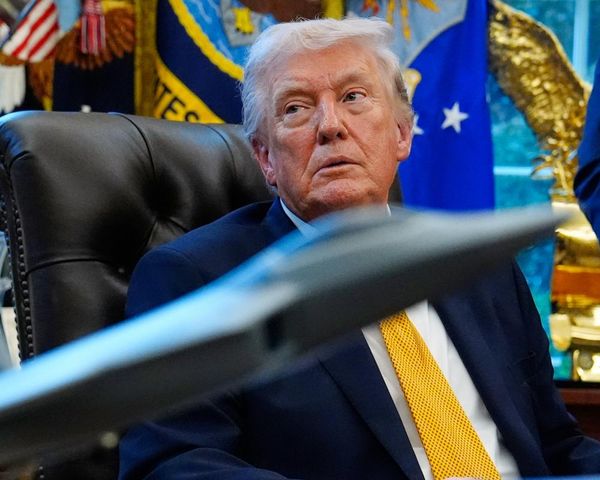
Feb. 02--REPORTING FROM CLIVE, Iowa. -- Sen. Ted Cruz of Texas surprised national front-runner Donald Trump in the Iowa caucuses Monday, galvanizing evangelical Republicans with his arch-conservative message.
Cruz's victory in the first nominating contest over Trump, the reality star and real estate mogul who is leading in most national polls, broadens the fight for the Republican presidential nomination.
Trump remains the favorite but will now see his self-made image as a persistent winner take a hit as the primary season shifts to New Hampshire as a three-way race.
The billionaire businessman barely edged out Sen. Marco Rubio of Florida, who surged to a particularly strong third-place finish. That sets Rubio up as the chief establishment rival against the outsider campaigns of Trump and Cruz.
The remainder of the large Republican field finished in the single digits.
There were signs of a robust turnout despite a threat of snow and icy roads in parts of Iowa, suggesting the hold the tumultuous campaign has had in a state that has witnessed much of the drama firsthand.
Iowa Republicans have a middling record of picking their party's nominees. Only twice since 1980, when the caucuses gained import within the GOP, have voters here picked a candidate who went on to represent the party in the fall.
Still the Republicans candidates -- as many as 17 at one point -- spent hundreds of days and tens of millions of dollars lavishing attention on the state and its expectant voters.
In the hours before the vote, candidates engaged in the time-honored practice of lowering expectations, the better to claim victory no matter how they finish.
Cruz, who led in polls before slipping behind Trump in recent surveys, insisted he was pleased to even be in the fight for the top spot.
"If you had told me a year ago that two days out from the Iowa caucuses we would be neck and neck, effectively tied for first place in the state of Iowa, I would have been thrilled," Cruz said.
The front-running Trump wrapped up his caucus campaign with a pair of rallies, telling Iowans he loves them, "win, lose or draw."
In Cedar Rapids, he emphasized his plan to crack down on illegal immigration and build a wall along the nation's southern border.
He also urged Iowans to show up -- at all costs -- and cast ballots for him at the caucuses.
"I want to win Iowa," he told the crowd. "It's going to send such a great message that we're not going to take it any more."
In his final pitch, former Florida Gov. Jeb Bush railed against Trump at a Des Moines rally, questioning his readiness to serve as president. He noted that Trump was asked about the nuclear triad during a debate and appeared flummoxed. (It is the three ways the U.S. can deploy its nuclear arsenal: by air, sea and land.)
"There are some threshold questions a candidate should be able to answer to give you a little comfort -- that would be one of them," Bush told a few hundred people in a hotel ballroom.
Soon after, Bush departed Iowa for New Hampshire -- a tacit admission that he expected a disappointing caucus night and felt no need to wallow in the results.
Two others expecting a less-than-stellar showing, Govs. Chris Christie of New Jersey and John Kasich of Ohio, were already in New Hampshire, campaigning ahead of the state's first-in-the-nation primary on Feb. 9.
To a great extent, the Iowa campaign was a fight between two political upstarts, Trump and Cruz, neither of whom were considered serious contenders last year when they launched their presidential bids.
Trump had talked about seeking the White House several times before, but never followed through. His disapproval rating among Republican voters was extraordinarily high and his verbal strafing of opponents, women and minorities as well as refusal to campaign in the intimate style to which Iowans have grown accustomed all seemed to weigh against his efforts.
But for many, his trampling of social and political niceties was not seen as reckless but rather signs of his independence and strength. Republican voters came around to Trump, making him the leader in both national and Iowa polls.
Cruz, a freshman senator, has put off many fellow Republicans in Washington with his ideological crusades and refusal to collaborate. He was not even the sole Texan running on the GOP side.
But he outlasted the state's former governor, Rick Perry, who quit the race in September, and others vying for the support of the GOP's sizable conservative Christian wing, including Scott Walker, Wisconsin's governor and a leader in early Iowa polls. Walker also quit in September.
As rivals fell away, Cruz emerged as the favorite of evangelicals, doing so the time-tested Iowa way by visiting all 99 counties -- he hit the final one Monday -- and carefully building an organization on the ground designed to maximize turnout and ensure his supporters caucused on Monday night.
The inevitable collision between Cruz and Trump, who had been nothing but complimentary of one another, came early last month when Trump began raising the issue of Cruz's Canadian birthplace. Most legal experts seconded Cruz's statements that his birth to an American citizen -- his mother is a native of Delaware -- automatically made him eligible for the presidency.
But some voters began echoing Trump's concerns, especially after two other Republicans running, Rick Santorum and Mike Huckabee, took up the attack. Cruz, after first brushing off the issue, responded by assailing Trump's "New York values" and pointed out his previously more liberal stands on issues like abortion and healthcare.
The sniping between Trump and Cruz afforded Rubio an opportunity to capitalize on in Iowa after largely skirting the state. He spent the final days of January on an extensive tour and polls showed him gaining ground at a healthy clip.
Others in the field made passing feints at competing in Iowa or, in the case of Bush -- who campaigned hard and had the support of a free-spending political action committee -- simply failed to connect.
For most finishing at the bottom, Iowa spells the effective end of their campaigns, though they may not quit right away. For others -- including Bush, Kasich and Christie, who expect to face a friendlier, less conservative electorate in New Hampshire -- the Feb. 9 primary will be the test that determines whether they stay in the race.
mark.barabak@latimes.com
Follow @markzbarabak for national California politics
Staff Writers Michael Finnegan in Cedar Rapids and Seema Mehta in Des Moines contributed to this report.