Making a fashion statement with computer keyboards
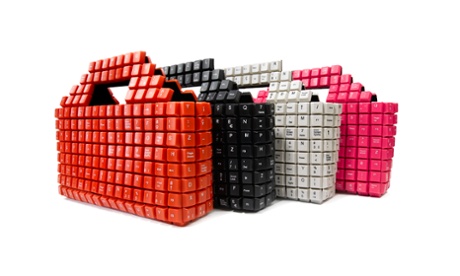
Portuguese designer João Sabino has created these colourful “keybags” using 393 computer keys for each handmade bag. Inspired by giving everyday items a new lease on life, João emphasises metamorphosis through the new shape and reordering of the keys, while retaining a clear visual connection to the original object. The bags have been displayed worldwide, including at the Museum of Modern Art in New York.
Seeing cassette tapes in a new light
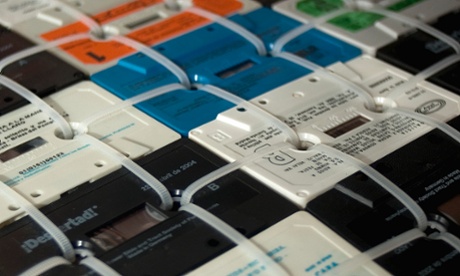
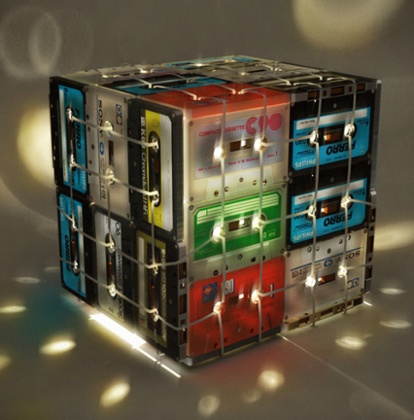
Now an obsolete technology, cassette tapes typically end up in landfill. But not if Spanish design studio OOO My Design has anything to do with it. Its playful, eclectic selection of lights is a tribute to this rapidly vanishing recording medium. Through the Cassette is not Dead project, the designers aim to give new meaning to the humble cassette, and encourage a culture of regeneration.
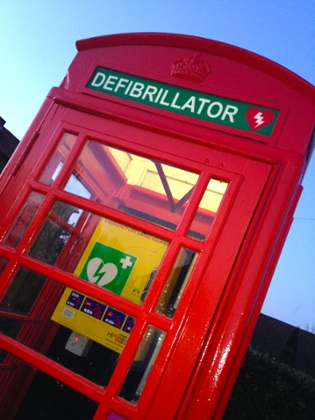
Keeping a British icon at the heart of the community
This decommissioned red telephone box in Bathley, Nottinghamshire, is now home to life-saving medical equipment. Through BT’s Adopt a Kiosk scheme, the Community Heartbeat Trust is helping communities across the UK to install public access defibrillators in their local red phone box, giving new purpose to this familiar British icon. Red telephone boxes have also been transformed into art galleries, coffee bars and flower stalls.
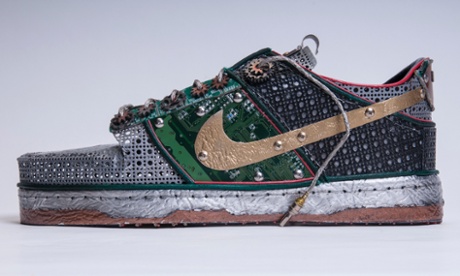
Creating shoes from e-waste
These “Junk Dunk” shoes were created by US upcycler and junk artist Gabriel Dishaw. They form part of his series of e-waste trainers and were crafted using materials including circuit boards, scrap metal and typewriter parts. Gabriel’s passion for breathing new life into e-waste has seen him create everything from birds to skulls, robots and Star Wars figures.
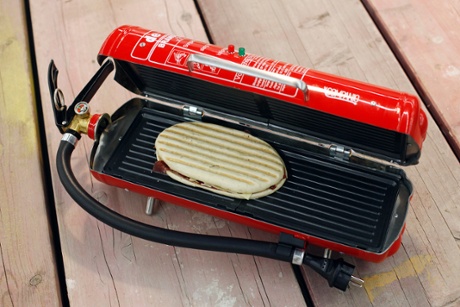
Grilling sandwiches with a fire extinguisher
This unique sandwich toaster, formerly a fire extinguisher, won a Young Creations Upcycling Award at the Heimtextil textile trade show in 2014. Students at the University for Applied Sciences in Aachen, Germany, saved the extinguisher from the scrap heap by transforming its interior with two grill plates and adding feet, a handle, lights and an electric cable and plug. The fully functional contact grill is known as Companio.
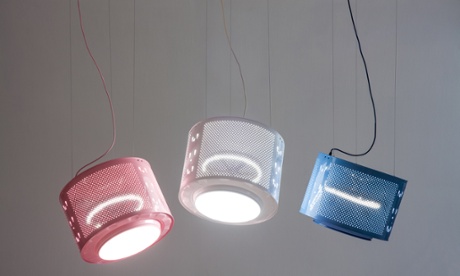
Washing machine drums become lamps
These characterful lamps are the work of Dutch designer Willem Heeffer. Using salvaged washing machine drums as lampshades, Willem sets out to use waste materials in an unexpected way, disconnecting them from their past. He focuses on creating design-led pieces with an interesting story below the surface. Some 90% of each lamp is made from recycled components. Even the circular light tube is housed by a washing machine drive wheel.
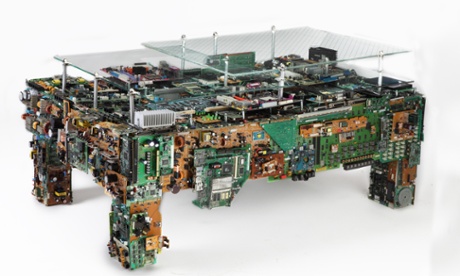
Computers take on new form as furniture
The idea for this bionic table first came to American furniture designer Benjamin Caldwell when he saw pallets of obsolete computers and electronics collecting dust in a local warehouse. The table’s metal structure, made from disused computer towers, is covered with a collage of motherboards, computer chips, LED screens and hard drive disks. The table is currently on display at the Industry Gallery in Los Angeles.
Content on this page is paid for and produced to a brief agreed with BT, sponsor of the technology and innovation hub