Children from the ages of four to 11 spend most of their school day in one classroom. They’ll go out to play and perhaps leave the room to go to a specialist lesson, such as music, art or sport. But most of their day is spent within the same four walls.
And so it has been for hundreds of years – children divided into groups of 25 or more, given chairs and desks, maybe a bit of carpet, a teacher and told to get on with it. The rationale being that this is how children need to be taught: ie on a chair, with somewhere to write, while they are listening, and listening… and listening. And, naturally, behaving.
Of course, the best teachers have always sought to do more than merely instruct their pupils and have created opportunities to learn in an individual way – be it in a kinaesthetic approach (ie a hands-on way of cementing the learning process in the mind) or by talking, reading and discovering for themselves.
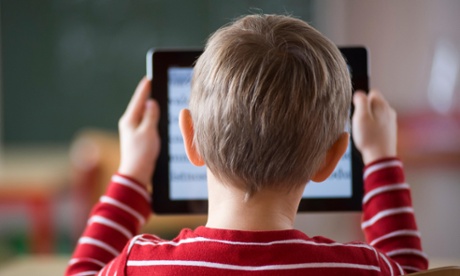
However, the widespread adoption of tablets – in around 70% of schools according to recent figures – might signal a step-change in the independence of pupils and their ability to take charge of their own learning. Whether it is iPads, Chromebooks or Lenovos, such devices allow a significant degree of flexibility in how pupils explore topics and respond to learning prompts.
They are ideal tools for problem-solving tasks, in which children can work both individually and collaboratively, and then share that work. Pupils can essentially be given a considerable amount of freedom to produce work how they want – which could be via an app that “explains everything”, making a keynote presentation, shooting a iMovie or creating an iBook to reflect on an idea and share it with their peers.
Yet the spaces surrounding these children are rigid and inflexible, reflecting centuries of containment and control. So, if we do want children to work more independently, to be more responsible for their own learning, shouldn’t we adapt their academic environment to reflect this? Does the classroom need to be so rigid, when the tools pupils are now using to learn are inherently so flexible?
What could such a new classroom space look like? Many children like sitting on the floor so comfortable floor space could be provided, with cushions or small stools; others like standing, so “perches” for them to cluster around and lean against with angled resting surfaces (for tablets or books); organic tables (at a child’s scale), that allow pupils to talk to each other close up; stackable chairs for those who prefer to sit; a blank screening wall to share work via mini-projectors; and easy access to the outdoors for inspiration and thinking space. A freer, more flexible environment. In other words, anything but desks in rows. The teacher is still there but hopefully not standing at the front and lecturing anymore.
Because space transmits culture so powerfully, classrooms need to reflect what skills and values schools aim to develop in their pupils. They need to become places in which pupils want to learn, in which such learning becomes “irresistible”.
Is there now enough momentum behind the new ways in which children learn and how they learn for there to be a real change in where they learn? The Italian teacher Loris Malaguzzi highlighted 70 years ago the importance of environment to learning, arguing that children learn first from their parents and teachers (adults), second from other children (peers) and thirdly from the space around them (environment) – yet this “third space” is often neglected in schools. Technology, though, might just provide the catalyst that allows schools to break out of a facilities straightjacket and focus on specifically designing the best possible spaces for learning to take place.
Will Wareing is the deputy director of education, innovation and learning at the Girls’ Day School Trust (GDST).