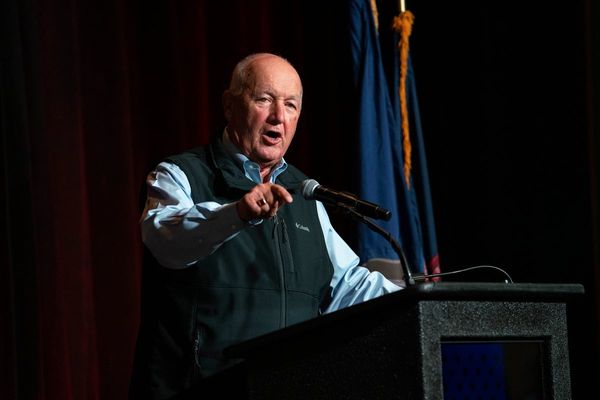

Global mining giant Glencore and Chinese state-owned enterprise Yancoal are seeking approval to create the Hunter's largest coal mine. If given the go ahead their joint venture, Hunter Valley Operations (HVO), is slated to ship 429 million tonnes of coal over the next two decades. The decision to approve the application is in the hands of three officers from Independent Planning Commission NSW. They are distinguished professionals: Simon Smith, a former departmental secretary; Janett Milligan, another experienced senior public servant, both pictured; and Michael Chilcott, an expert in environment impact assessment and natural resources.
The commissioners have an impossible task. There is no optimal outcome. There isn't a decision that can fairly balance the need to stop the planet cooking because of fossil fuel use and the need to provide economic certainty for the Hunter economy and secure jobs for coal sector workers. Add in, too, the extraordinary public statements in the last fortnight by NSW Premier Chris Minns, and NSW Natural Resources Minister Courtney Houssos calling on the independent commissioners to approve the HVO lease. It's easy to imagine the commissioners, tormented, exhaling, head-in-hands, wondering what poorly chosen turn along their career pathway landed them in this pickle.
Clearly, the commissioners are being asked to make a public policy decision that should be made by politicians, guided by the well-paid public servants in their employ.
The HVO debacle follows the Ashton mine closure debacle. A month ago, Yancoal corralled its Ashton workforce into the Singleton town hall and told them, summarily, their jobs will disappear by 2028 as a consequence of geological difficulties. Hunter Valley mayors looked to the federal government's Net Zero Economy Authority (NZEA) to step in with a workforce transition plan. Not our job, the NZEA responded, citing a technicality in federal legislation that took most by surprise.
Like the HVO decision, assistance to the Ashton coal miners is a public policy decision that should be made by politicians guided, in this case, by the NZEA. Has it occurred to federal Labor MPs to get the technicality sorted?
The task of exiting coal in the Hunter over the next two decades is easy to describe: 12,500 jobs (based on counts in the last census) will disappear -- and, therefore, new labour market opportunities will be needed as replacements. It's straightforward, sure, but a massive task to pull off. I've done detailed analysis of the 152 job types that the census says make up the Hunter's 12,500 coal-sector jobs. The standout finding is that 59.3 per cent, or 7432, of coal jobs are held by workers without transferable skills. These are workers who are employed as labourers, machinery operators, truck drivers, and so on -- the workers actually at the coalface.
These workers earn big money, many pocketing more than $200,000 annually once you include bonuses. What to do with these workers and how to replace their jobs with well-paid alternatives is the primary public policy issue for the transition out of coal in the Hunter.
Given proper notice, skilled workers retrenched from the Ashton coal mine, like the skilled workers exiting BHP's Mt Arthur mine by 2030, are likely to find suitable jobs in local labour markets. Electricians, plumbers, fitters, mechanics, and the like, are always in demand. So too, there is local demand for qualified professionals and white-collar workers exiting the coal sector.
For workers without transferable skills, however, there is no obvious pathway to alternative jobs. It's hard to imagine how the Hunter economy in the 21st century will absorb 7500 displaced coal-sector workers who lack transferable skills, no matter how long the lead time might be.
The only labour market solution is to retrain these workers en masse. This will take time and money, and fulsome public policy commitment.
Give the IPC commissioners a break, Mr Minns, and get started on the challenge our region now confronts. And tell federal Labor MPs you need their help.