An LGBTQ asylum seeker described their tears of joy when a judge said they could stay in Liverpool after fleeing murder, police brutality and discrimination in El Salvador.
The artist, who now identifies as non-binary meaning they do not fully identify with either gender, came to the UK in 2017 from their native country after the murders of several LGBTQ friends.
*Alex (not their real name) was desperate to escape a miserable and fearful life in their home country, where they say gay and transgender people, including around five friends, were regularly kidnapped, tortured and killed - with bodies sometimes found with their genitals removed.
According to the charity Human Rights Watch, central American countries El Salvador, Honduras and Guatemala have all failed to address violence and discrimination against the LGBTQ community.
And the United Nations High Commissioner for Refugees found widespread discrimination in El Salvador including from police and fiercely "macho" criminals gangs - who display "virulent hatred and ill-treatment of persons based on their sexual orientation and/or gender identity."
Alex describes feeling like "one of the lucky ones" for escaping, despite constant harassment and abuse, including being beaten up by a group of police officers who said "now we will teach you how to be a man."
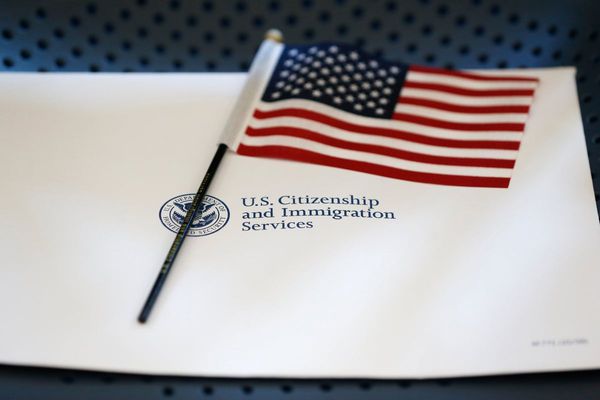
Even after his traumatic experiences, Alex faced a three year battle with the Home Office after claiming asylum in the UK in October 2017.
An Immigration Tribunal rejected Alex's claim in September 2019, but that decision was overturned by Upper Immigration Tribunal judge Gaenor Bruce this year in a moment that reduced Alex to tears.

Alex told the ECHO: "The judge turned to me and started speaking in Spanish, which is my first language. I didn't know she spoke Spanish.
"She told me she wanted to let me know in my own language that she accepted my asylum claim.
"She said I have the right to be in the UK, I have the right to be free and I have the right to be who I want to be.
"It was a highlight of my life, I started crying. Because that is when I knew I could have all the opportunities that were denied to me in El Salvador."
Alex says they could not understand why their initial claim was rejected - despite clear evidence of the hardships faced by gay and transgender people in their native country.
According to a written judgement, published by Judge Bruce, the lower tribunal failed to consider evidence of how Alex would be treated living as a non-binary person in El Salvador - where they would likely be considered a transgender woman.
The judge also criticised the ruling for not accepting evidence of discrimination Alex had already faced.
Describing their life back in El Salvador, Alex told the ECHO: "The thing is I identified as a gay man because I was not free to be who I was.
"I was trying to explore my gender identity, and I had had two modes. Most of the time I used to dress like a straight guy but there were times I tried to express who I was more, like I would dye my hair blonde.
"These were the moments when people looked at me. There was harassment, I was assaulted by the police, people would throw garbage and people threw urine at me."
One particularly terrifying incident occurred in 2015, when Alex was walking home from university and fell foul of a gang of violently homophobic police officers.
Keep up to date with coronavirus cases in your area by adding your postcode below:
They said: "It came from nowhere. I was walking on the street, I had my hair blonde, and I was with my bag from studying.
"I walked through the city centre and they were by the cathedral. There was a group of them, and they called me over, they said 'come here'.
"They said 'are you gay?', and I didn't answer. They used discriminatory language for LGBTQ people in Spanish. I didn't answer, but then one moment they started making fun of my hair.
"They asked why do you have your hair blonde? And then I answered 'because I like it'.
"Then they got really mad, one of them hit me in the chest with an open palm and it knocked my breath away. Then one of them said 'now we are going to show you how to be a man."
Alex says around five officers began attacking them, raining down punches and kicks as they adopted the foetal position on the ground.
But Alex said their experiences are far from the worst of the LGBTQ experience in El Salvador.
They said: "Before I decided to leave two consecutive friends were murdered, and it is like what is happening? I don't really know the details, but one of them just left his house one day and never came home.
"They found his body a few days later in a really bad way, like he had been tortured.
"The situation in El Salvador is really bad, there are murders every day in the middle of the street. But many murders are like a single shot, a clean killing.
"These hate crimes are different. They are taken away and tortured, they will be [sexually assaulted] with sticks and things, and a message against the LGBTQ community is they will remove the genitals and place them in their mouths.
"I did a lot of activism over there, but I knew that the next time it could be me."
Alex arrived alone in London on October 9, 2017, with very little grasp of English, and sought help from charity UK LGBT International.
The charity helped them lodge their asylum claim, and within a few days the Home Office provided emergency accommodation in Liverpool - a city Alex now considers home.
Alex describes the three years fighting for the right to stay as "stripping me of my humanity" and led to them seeking counselling due to anxiety.
But during that time they were connected with LGBTQ support groups in Liverpool, which enabled Alex to realise that they did not want to become a woman or live as a man.
The court heard how Alex has been heavily involved in various activities in Liverpool including an event to mark the International Day Against Homophobia, Bi-phobia and Transphobia, Liverpool Pride, and various campaigning and arts events.
Alex told Judge Bruce: "I refuse to change myself. I am who I am I would rather take my life here in the UK and die with dignity than go back to El Salvador where I will be without liberty, forced to hide who I am in fear of being mistreated, and ashamed to be the real me.
"In El Salvador I will have to hide everything about who I am. In the UK I have been involved in many public activities where I have not had to hide my sexual orientation; I could never do this in El Salvador.
I feel really anxious because with my current appearance I feel scared to go back to El Salvador."
In a scathing judgment, Judge Bruce said: "I mind that the Appellant has already left El Salvador once because they could not tolerate the treatment that they endured there; now that they believe themselves to be far more vulnerable to attack it seems likely to me that they would feel compelled to modify their behaviour, including their political and social activism, to live 'discreetly'."
Alex told the ECHO the UK is now "my country."
He said "I can finally live how I want to live and be who I know I am."