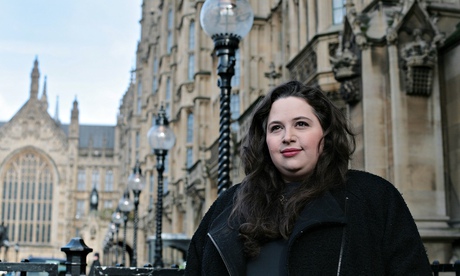
Sitting alongside her mother in the public gallery of the House of Commons, Rachel Kean, 26, was among those waiting most anxiously for the outcome of Tuesday’s vote. When the result came in, the scene was one of jubilant whoops and tears of joy.
“This is the light at the end of the tunnel,” said Kean, who discovered that she had a family history of defective mitochondria five years ago when her maternal aunt died of complications linked to the disease. “This has changed all our lives for the better. Just like that, things have changed.”
Kean, a postgraduate student at Manchester University, said that knowing she could pass on the risk of serious illness to her own children had been a great burden to live with.
However, that weight had always been lightened by the knowledge that a scientific solution was on the horizon, she said.
“Finding out my family history was incredibly difficult, but the silver lining was that at the time this [research] was going on. Now, for the first time, there’s hope.”
She was “absolutely ecstatic” that parliament had listened to the voices of patients, who for the first time would be able to spare their own children the potentially devastating impact of mitochondrial disorders.
“Seeing first hand the suffering that mitochondrial disease causes, I think this is bigger than just the next generation,” she said.
“These are horribly cruel diseases with no treatment and no cure, which we could prevent.”
Until this point, Kean and other affected women had faced the agonising choice of either adopting children, or having children naturally knowing that they could be severely affected by the disease.
The complex nature of the disorder means that even this risk is difficult to quantify: some carriers of defective mitochondria, such as Kean’s mother, are completely asymptomatic, while others die in infancy or face a life of severe health complications such as muscle-wasting disorders, blindness and brain damage.
Rachel Kean dismissed claims this week by the Church of England that the advance was being rushed through.
“The scrutiny and fastidiousness has been on a scale that hasn’t been seen before. It’s been frustratingly slow for some of us.”
She agreed there would always be a leap of faith with any new technique, but believes the risks are “proportionate to avoiding the suffering”.
Her one regret is that the advance has come too late to help many of those affected by the disease.
“I’m thinking about my aunt and how she would have been the most wonderful mother,” she said.
“She lost so many children and if she’d been here today, she’d have had that chance.”