Four years after documenting one of Sri Lanka's most heartbreaking conservation tragedies, photographer Easa Lebbe Muhammed Jamsith (Muhammed) has once again been recognized on the international stage.
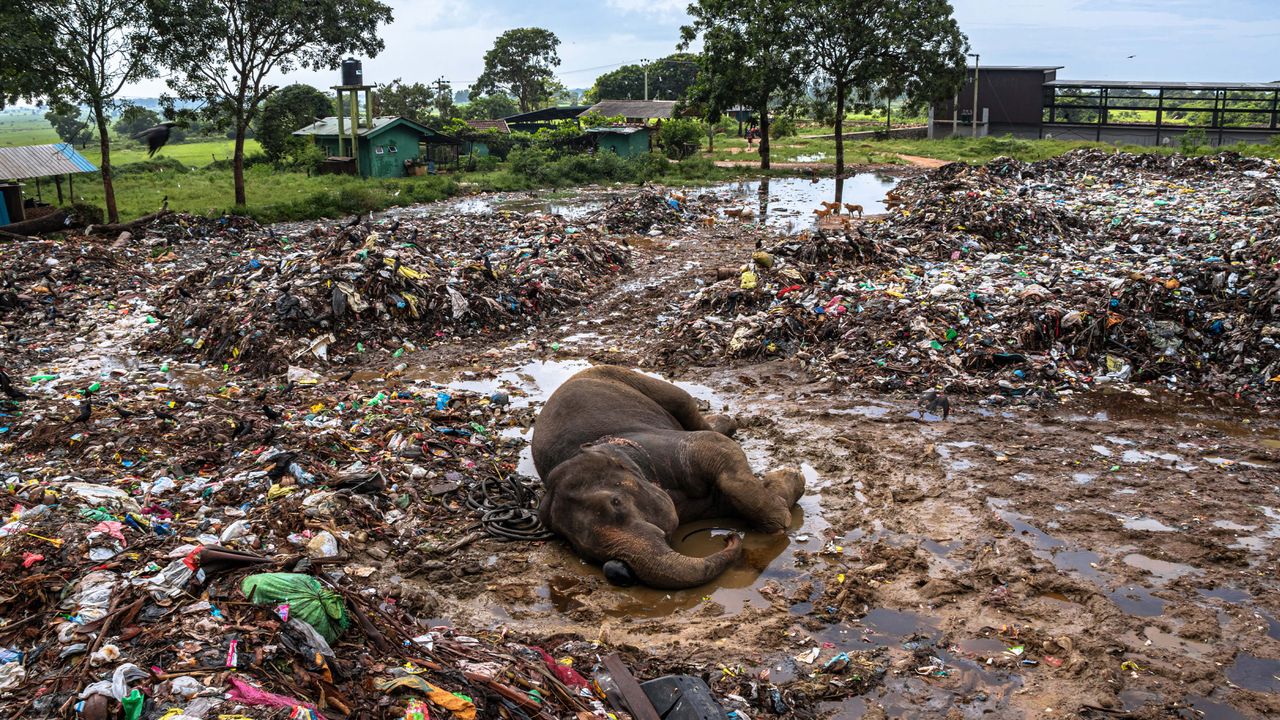
His photograph of a female Asian elephant dying after consuming plastic waste at a garbage dump received an honorable mention in the Last Wild Places category of the Patagonia Photo Contest. For Muhammed, however, this latest accolade is bittersweet.
"I kept pursuing this path because I believed this level of recognition could create real impact and eventually lead to a solution. That's why, even now, I continue to put this image forward,” he said.
“But it remains a deep sorrow to me that while the photograph itself continues to be recognized again and again, no actual solution has come from it.”
His photograph has already become one of Sri Lanka's most internationally recognized conservation images, in 2022 winning the Grand Prize at the Environmental Photography Award and coming runner-up in the Earth.org Photography Competition. Yet the environmental disaster it documents remains an ongoing reality.
Open garbage dumps are a deadly hazard for Sri Lanka's wildlife. Attracted by rotting food, elephants and other animals consume plastic bags, food packaging and hazardous waste, which can cause bowel obstructions, toxic poisoning and, ultimately, death.
Dogs, cats, birds and other wildlife are also regularly affected, but Asian elephants have become one of the crisis' most visible victims.
The photograph traces back to the morning of January 05 2022, when Muhammed rushed to a garbage dump on the edge of the forest in Oluvil (a village on Sri Lanka's eastern coast) after hearing reports that an elephant was dying there.
He had intended to help the stricken animal, bringing his camera only in case it was needed. Instead, he found himself documenting what would become one of the defining conservation photographs of his career.
“When I arrived and saw the scale of what she was suffering, and the scale of the dump around her,” said Muhammed. “I felt this had to be documented not as art, but as evidence of something that needed to be seen.”
A veterinarian later examined the female elephant and discovered her esophagus was blocked by plastic wrapped around food scraps she had eaten. Although she was still alive when Muhammed arrived, her condition was beyond saving.
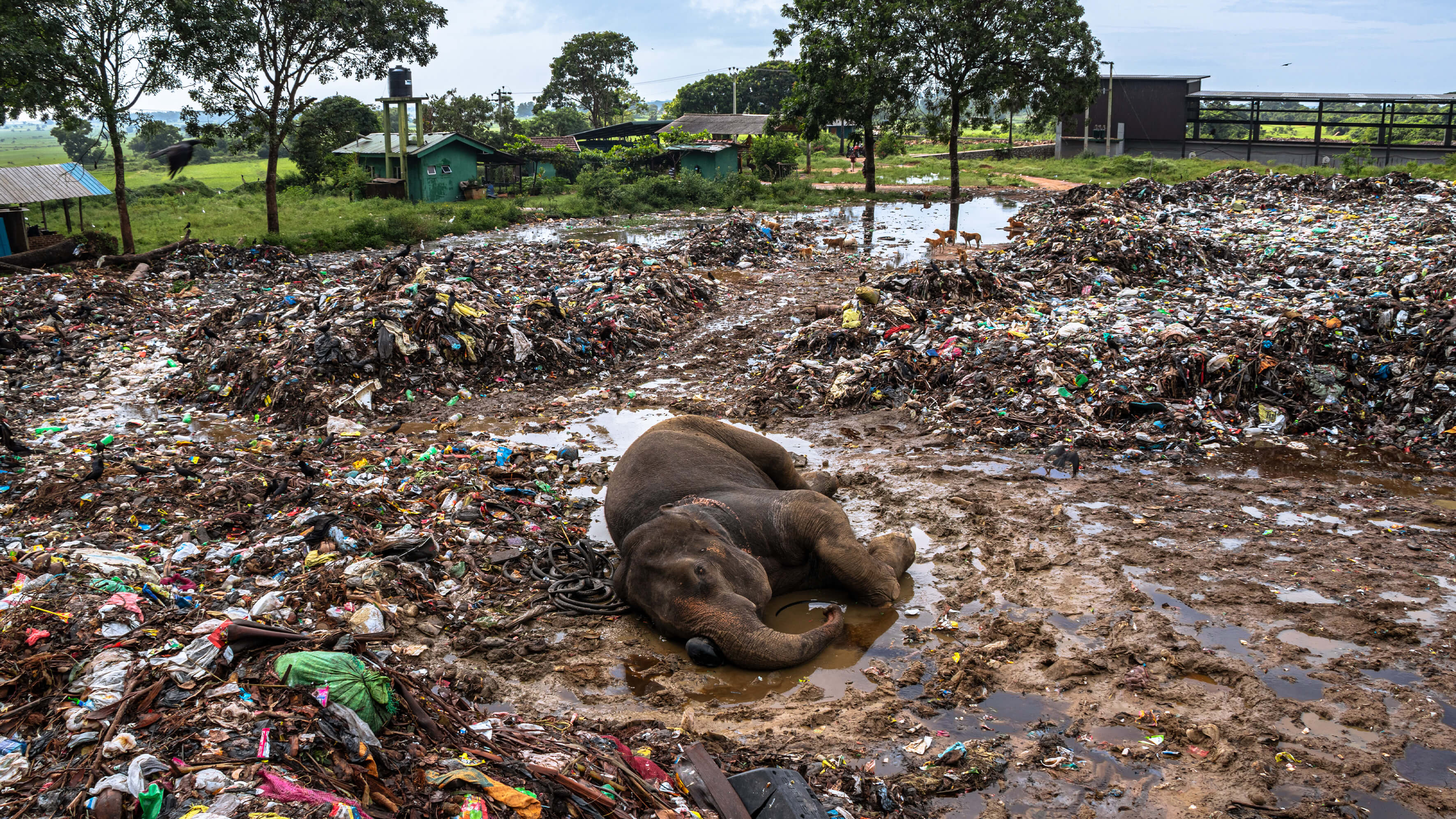
“I went closer, and in that moment she looked directly at me with tears in her eyes,” he recalled. “I remember feeling helpless. I had come hoping there was something I could do, but all I could do was be present and document her suffering.”
Three days later, despite receiving veterinary treatment, the elephant died, becoming one of around 20 elephants known to have died in Sri Lanka after consuming plastic at garbage dumps between 2016 and 2022.
Photographically, Muhammed chose to document the scene with a Canon EOS 80D paired with a Canon EF-S 18-135mm f/3.5-5.6 IS USM lens (f/8, 1/200 sec, ISO 100, 18mm).
By opting for a wide-angle perspective, he emphasized the overwhelming scale of the garbage surrounding the elephant, allowing the composition itself to communicate the imbalance between wildlife and human waste.
“That contrast – a living, suffering animal dwarfed by waste – became the composition without me consciously designing it,” he said.
Now, four years after it was taken, the photograph continues to resonate with judges around the world. Yet for Muhammed, the image's repeated recognition means little unless it ultimately contributes to meaningful action.
“If this photograph and its recognition can push authorities and communities toward better waste management near these habitats, then it will have done its job. More than anything, I hope that this, at last, brings about a lasting solution to this crisis – one that has taken far too many lives already.”
As the image continues to collect international awards, the crisis it depicts remains unresolved. For Muhammed, it was never meant to be remembered simply as an award-winning photograph but as evidence of a preventable tragedy – and a call for action that he still hopes will one day be answered.
You might also like…
Discover our pick of the best cameras for wildlife photography and the best lenses for bird photography and wildlife.