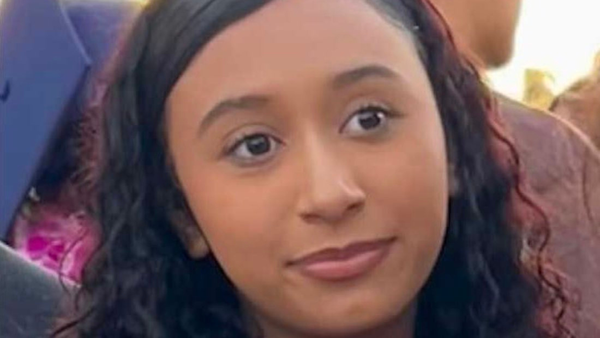
A schoolgirl lies bandaged and broken on a hospital trolley after being hit by a car at 50mph – but fortunately she is in the safe hands of London’s Major Trauma Network.
These are the top doctors working across four hospitals in the capital whose minute-by-minute decisions help save the lives of people like 12-year-old Lily Bannister.
Here, we follow her journey – filmed in TV series Emergency – from the scene of the accident to recovery...
July 23
At 3.55pm Kate Mellor, 42, answered the door to a policeman who said her daughter had been struck by a car.
Lily was crossing the road after leaving the park with friends when she was hit by a vehicle being driven at 50mph. She was flung around 200 yards due to the impact.
Kate, from Southampton, recalls: “Every emotion you could think of, I was feeling it. My heart was going a thousand miles an hour.”
Lily had two seizures at the scene, so she was airlifted to St George’s Hospital in South London for tests.
There she was put into an induced coma while medics tried to establish the extent of her injuries.
X-rays and CT scans revealed Lily’s skull was fractured and she had a small bleed on the brain, which had caused her seizures, as well as a badly broken left hip, shoulder and wrist.
At that point Kate did not know if Lily had brain damage – a “terrifying” possibility, she says.
She adds: “She was in a really bad way. Lily was taken to intensive care and there were so many tubes coming out of her, and she was covered in cuts and bruises. It was so scary.”
July 24
While Lily was in intensive care, a team of orthopaedic surgeons led by consultant Omar Sabri planned surgery on her broken hip and pelvis.
Lily’s small size and the placement of her injury meant the two-hour operation ended up being more complicated than the doctors had initially believed it would be.
Mr Sabri and his team wanted to treat her hip fracture by fixing screws to a plate to bring the bones together, but they had to go with the “Plan B” of using screws alone.

Dr Emmett O’Flaherty, one of the senior doctors involved in Lily’s operation, says: “She had a general anaesthetic, and then we made an incision over the side of her hip. The fracture was set and pinned in place and held with screws.
“Surgery was done using X-ray guidance so we could see that the screws were going into the bone correctly. This is important, as if you don’t get things back to exactly how they were patients can end up with one leg longer than the other.”
Lily spent one more night in intensive care before moving to another ward. Thankfully, doctors from the neurology department were able to tell her mum Kate and dad Clark Bannister that Lily was not suffering from brain damage.
July 31
A week after her successful operation, Lily started physiotherapy to get her moving again. Acute paediatric occupational therapist Amy Willis worked on Lily’s rehabilitation.
Amy says: “As she couldn’t bear weight yet, our goals were to get her up and out of bed to help her be as independent as possible.
“This mainly involved getting her to sit up from lying down, then transferring her to a wheelchair, a commode or shower chair.

“She was finding it painful due to her many fractures, and getting a lot of headache, dizziness and nausea, so we had to spend a long time getting Lily to practice sitting up in and out of our sessions.
“But once it clicked she just flew, and was discharged relatively quickly.”
A week after her first physiotherapy session, Lily left St George’s in her wheelchair. Proud mum Kate says: “Everyone was saying that Lily had just healed so incredibly well.”
October 31
Around six weeks after Lily was discharged from hospital her shoulder and wrist injuries fully healed.
Her hip was slowly getting better, and she only needed two further physiotherapy sessions at a local hospital. Instead of further sessions there, Lily had a routine of daily movement at home such as gently riding an exercise bike.
By the end of October Lily no longer needed to use her wheelchair.
And now, aside from some pain when she runs about, Lily is back to her normal self.
Kate describes it as a “miracle recovery”. She adds: “I can’t believe how lucky Lily has been – there’s so many things that could have happened to her which would have left her with lifelong problems.
“If she’d banged her head a different way, she could have lost the ability to walk completely.
“She’s absolutely fine now. It’s incredible. You wouldn’t know she’d had an accident that bad.”
Kate says Emergency showcases the “fantastic” work of dedicated NHS staff in our hospitals. She adds: “It’s a great show. I was really apprehensive about seeing Lily in that state again, but it’s been handled so well.
“Emergency shows how clever the NHS staff really are and what they can do. We are so grateful for everything they did for Lily.”
Emergency, Channel 4, 9pm, tomorrow night, with all episodes on All 4