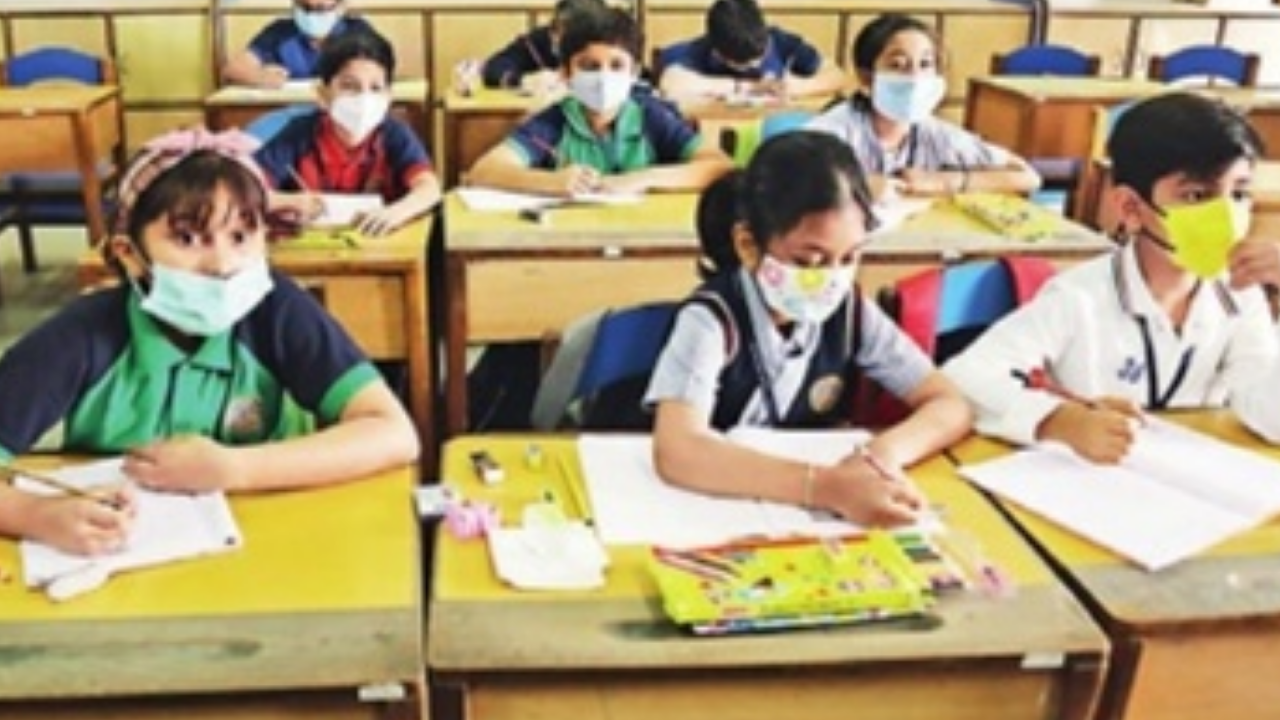
KOLKATA: As schools welcome students back to campus, class teachers encounter the pandemic’s emotional and psychological effects on the youngsters.
All of them had been confined to their homes for nearly two years, and some of them were found to be still grieving the loss of their loved ones to Covid. School heads and counsellors, who had made attempts to attend to the mental health needs of students and parents online over the past two years, can now return to traditional hands-on intervention at school.
Discussing the most noticeable impact of growing up in the pandemic, clinical psychologist Parmeet Soni said, “We can observe a delay in speech development in pre-primary children due to the lack of engagement with others. While the children got to spend time with their parents at home, there was less opportunity for meaningful engagement for many. Children as young as four had online classes and their parents worked online and were busy with household chores.” Talking about potential methods of counselling for children collectively grappling with the concept of loss and death, Soni added, “ Breaking bad news will always be difficult. Grief is personal. There will be individual differences in processing and coping with it. For young children, this can also be done in groups, but it must be done in a nuanced and age-appropriate manner. There should be special attention to the correct language used when explaining death to different age groups.”
DPS New Town school counsellor Indira Roy Mandal added, “In the pandemic, students and parents dealing with grief, anxiety and depression consulted us online. Teachers participate in workshops related to mental health and that has equipped them to deal with children facing problems. The principal herself conducts ‘life skills’ classes to ensure the children are adept at conducting themselves, realizing their potential and are emotionally well groomed.” The school principal, Sonali Sen, shared the mental health wellness resources available. “We have had counselling sessions, leadership and life skills classes over the past two years to help students become more empathetic and resilient in Covid times. Those who have lost family members have been counselled on a one-on-one basis,” she said.
Roy Mandal added, “The excessive dependence on internet has brought about a lot of emotional disturbances in students. This affects the youngest the most, because they cannot express themselves. Many kids stuck at home had developed depression, obsessive compulsive behaviour and anger management issues. Teenagers especially rely on peer group interactions, so the absence of that created a lot of emotional problems.”
About the exhaustive role of school counsellors in the reintegration of students, Meena Kak, director at Lakshmipat Singhania Academy, said, “Our school has hosted several workshops on mental health delivered by Tata Institute of Behavioural Sciences that benefited teachers and parents alike. Over the last two years, we have had continuous online counselling to attend to every child’s and parent’s needs.” Sushila Birla Girls’ School principal Koeli Dey added, “Our counsellors have been working overtime to ensure that not only all the children, but also all the parents are comfortable with their wards returning to school after two years.”
The Heritage School has six counsellors. Principal Seema Sapru said, “ Of them, four are psychological counsellors and two career counsellors. Many students have lost their parents or guardians, even in pre-pandemic times. The counsellors have had a lot of experience in helping the children cope with the trauma of loss.”
Tuition teacher and recent university graduate Keith described recurring mental health concerns he noticed in his students. “Since a lot of private tuition classes were shifted online, I noticed attention deficiency issues. I also encountered primary school children with such severe anxiety, that the parents urged me to recommend a therapist. At one point, the child had even stopped submitting homework, in fear of making mistakes.” As a member of the LGBTQI+ community, Keith added, “I also know a lot of teenagers and young adults struggling with gender identity who faced a lot of problems living with unaccepting families . They found it difficult to cope. I think it will take years of therapy to overcome the effects on a lot of people.”