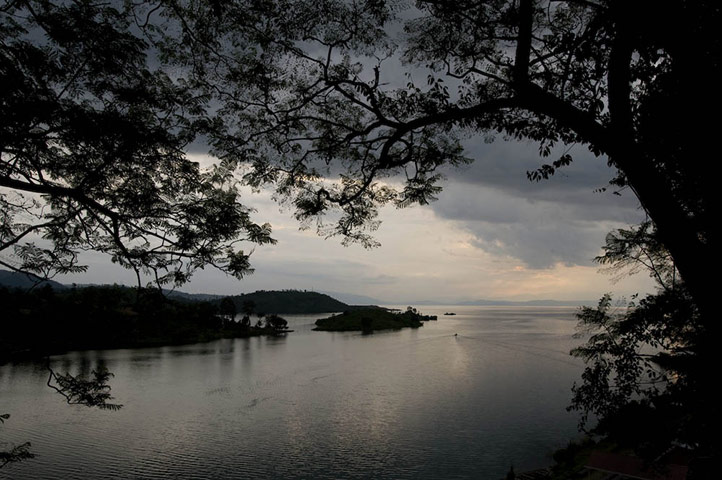
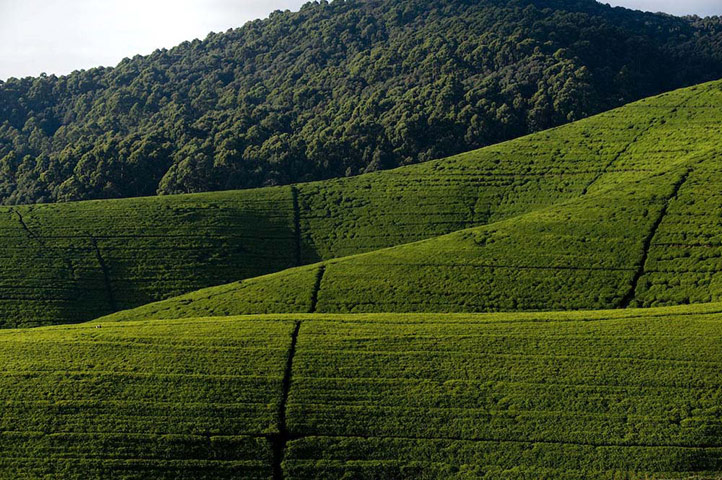
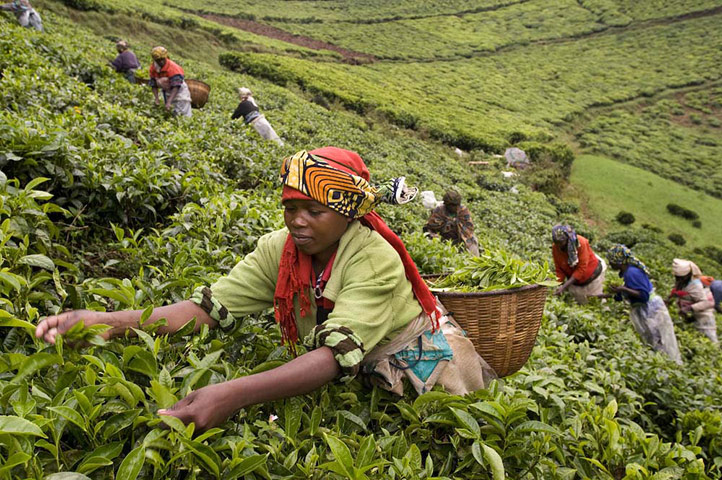
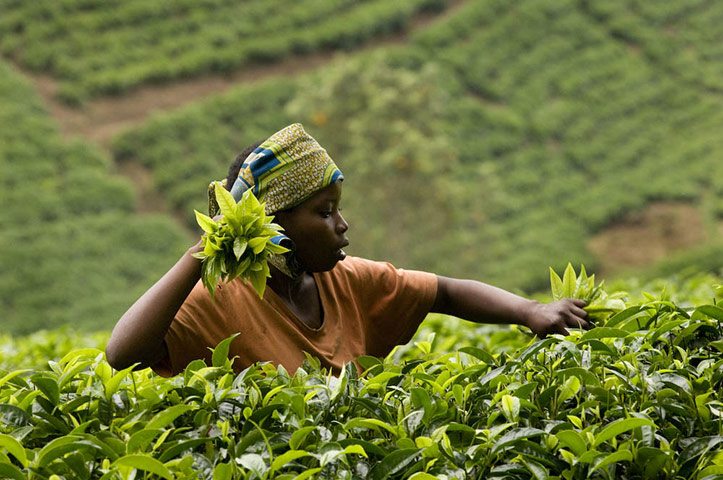
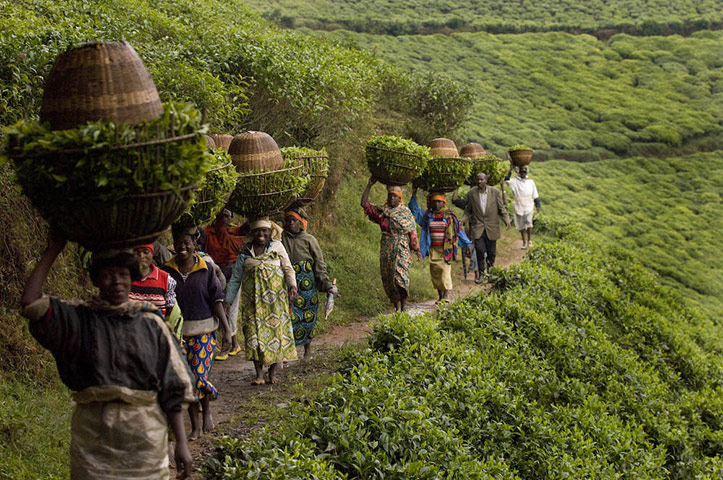
View at dusk from Kibuye across Lake Kivu towards the CongoPhotograph: Tim SmithTea pickers make their way to work at dawn on the Gisovu tea estate where the steep slopes, acidic soils and high altitude make them unsuitable for growing food crops, but ideal for the cultivation of teaPhotograph: Tim SmithPlucking tea on a hillside on the Kitabi tea estate where the steep slopes, acidic soils and high altitude make them unsuitable for growing food crops, but ideal for the cultivation of teaPhotograph: Tim Smith
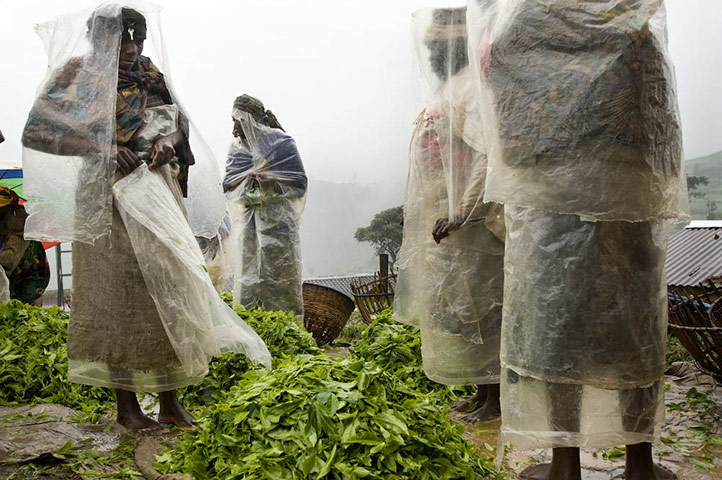
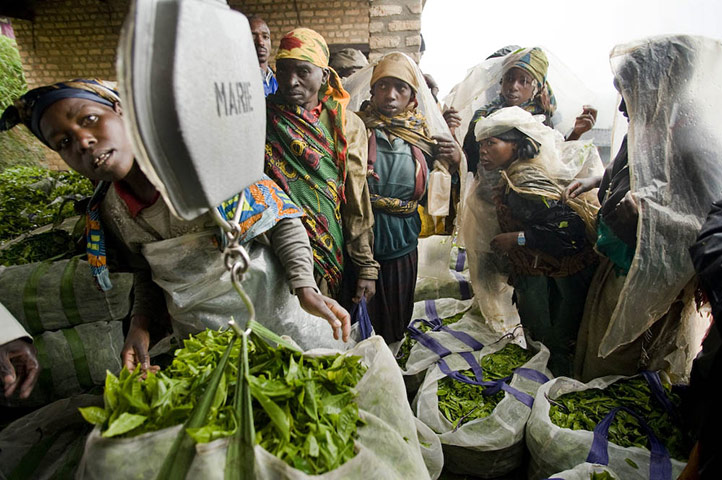
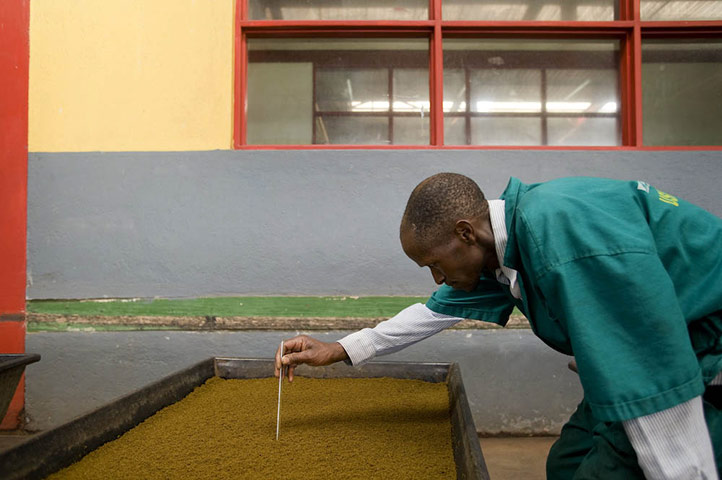
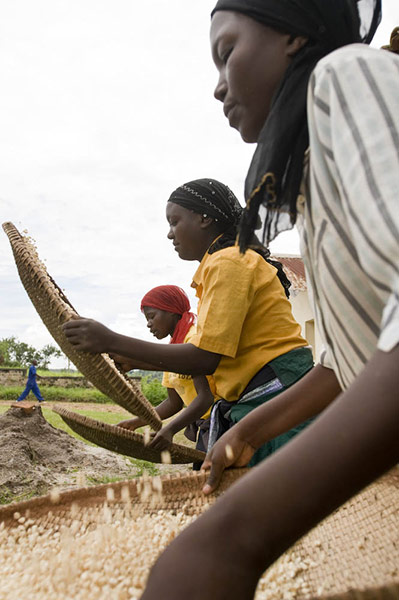
Plucking tea on a hillside on the Mata tea estatePhotograph: Tim SmithA group of tea pluckers with their morning's work make their way across a hillside on the vast Kitabi tea estate to a weighing station. The tea is collected from these stations and taken to the factory at the centre of the estatePhotograph: Tim SmithA group of tea pickers are caught in a downpour outside a collecting station in Kitabi, the town at the centre of the huge Kitabi tea estate. Tea growing relies on a cool climate combined with lots of rain and sunshinePhotograph: Tim SmithWeighing the picked tea at a collection station on the Kitabi tea estatePhotograph: Tim SmithFermenting the tea at carefully controlled temperatures at the Gisovu tea factory turns the tea from green to brownPhotograph: Tim SmithWinnowing grain at the Institute of Agricultural Science of Rwanda (ISAR). A department of the National University of Rwanda in the town of Butare, ISAR carries out research and conservation work on crops such as tea and natural flora and faunaPhotograph: Tim SmithA group of school children are caught in a downpour in KitabiPhotograph: Tim SmithMembers of the first primary class at the school run alongside the Kitabi tea factory. Children from up to 10kms away walk to the school, which provides free education for 525 pupils in six classrooms. Some children of tea farmers and estate workers attend in the morning, others in the afternoonPhotograph: Tim SmithFerdinand Nyirinyema and his wife, Agnes, with the youngest of their seven children. He is employed as a weighing clerk at the Gisovu tea factory, and they both work on the small farm they have bought with savings from his wagesPhotograph: Tim SmithTea worker at a memorial service to commemorate the victims of the genocide of 1994, an event which decimated the Rwandan tea industry. Every year employees of the tea industry gather together from all over Rwanda to remember their colleagues who died. In 2010 the service was held at Shangasha tea estate on the shore of Lake KivuPhotograph: Tim SmithTea workers throw flowers into Lake Kivu at a memorial service to commemorate the victims of the genocide of 1994. Many people were forcibly drowned in Lake Kivu, which was also used to dispose of tens of thousands of bodiesPhotograph: Tim Smith
Sign up to read this article
Read news from 100’s of titles, curated specifically for you.