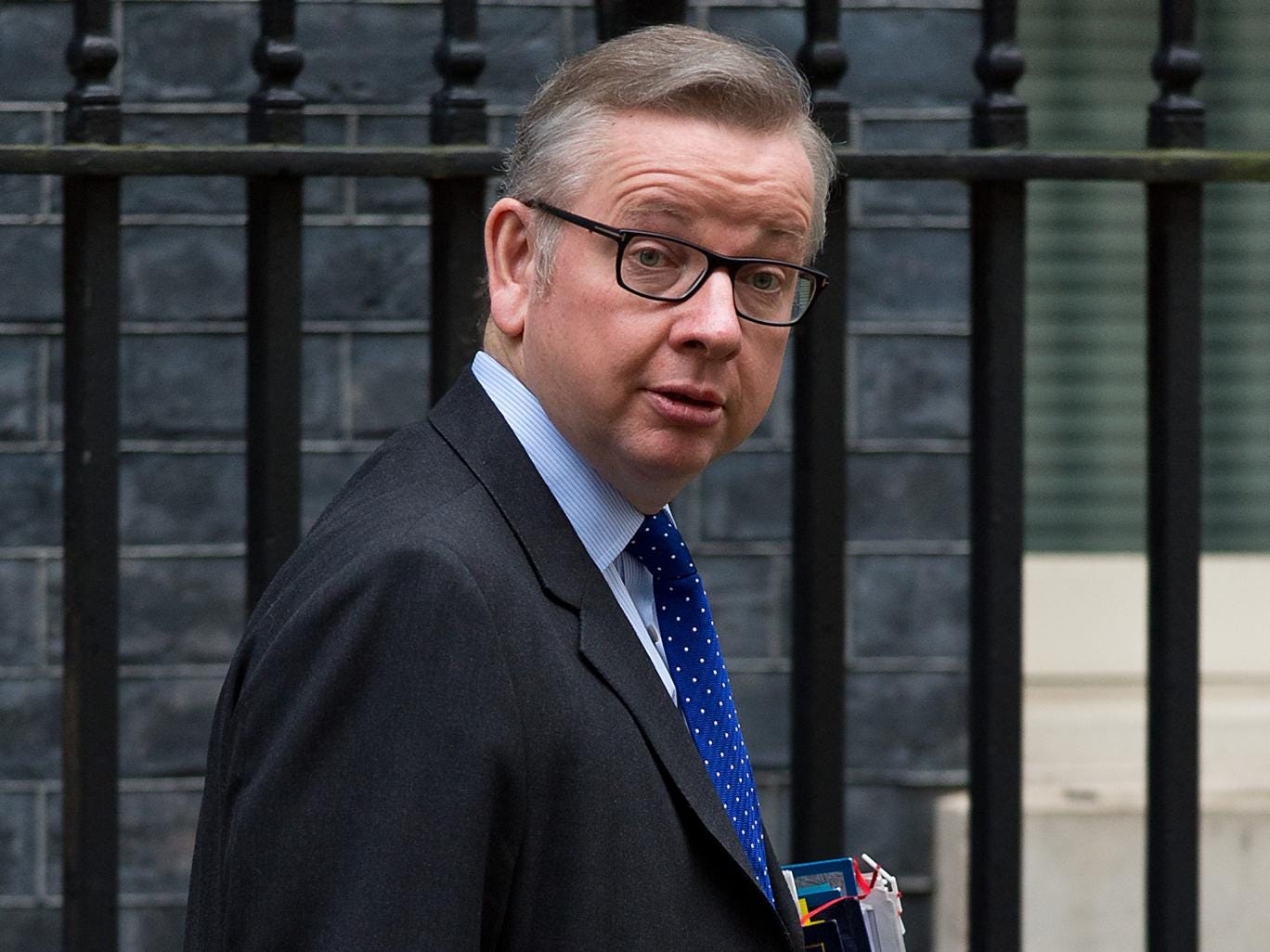
Michael Gove will today abandon the Government’s controversial "tax on justice" less than a year after it was introduced, the Independent can reveal.
In a written statement to Parliament later today Mr Gove will say that he has listened to complaints from magistrates, judges and lawyers and is abandoning the Criminal Courts Charge.
The move follows a campaign by the Independent that exposed how some defendants were being encouraged to plead guilty to crimes they did not commit to avoid a fee that could not afford to pay.
Others faced extra financial hardship as a result of crimes that were motivated by poverty in the first place.
The Ministry of Justice has been inundated with complaints about the £150 flat fee court charge which is not means tested and could rise to £1,000 if someone pleaded not guilty but lost their case in court.
Pressure to address the unpopular charge increased as peers in the House of Lords condemned the policy as “Ryanair justice”. The Commons Justice Committee – that is dominated by Conservatives - also condemned the charge last month.
The change, which will take effect from December 24, will be announced in a Written Ministerial Statement to Parliament this afternoon. Mr Gove will also personally announce the climbdown in speech to magistrates in London.
The move will be seen a rebuke to the policy of his predecessor Chris Grayling who introduced the charge to help off-set the cost of the court system as part of the Government austerity drive.
The Independent understands that Mr Gove wanted to make the climb down earlier but was forced to wait for the outcome of last week’s Comprehensive Spending Review.
In discussions with the Treasury Mr Gove is understood to have argued that early income from the charge was far less than the expected yield of between £65m and £85m a year.
Estimates suggest that less than £300,000 has been collected of £5m charges imposed.
The Ministry of Justice’s hand in negotiations with the Treasury was strengthened by David Cameron’s endorsement of Mr Gove’s strategy for criminal justice reform in his speech to the Conservative Party Conference.
Mr Gove has already suggested that he wants to adopt a successful scheme pioneered in the United States to set up special courts designed to deal with criminals’ underlying problems such as drug use, family breakdown or mental health issues.
There is recognition that piling debt on to people who already have very little money can be counter-productive and could even lead them to commit further crimes. The potential for the charge to “trigger more crime” is one of the issues so far highlighted by judges in sentencing.