Government defeated in Lords on tax credits - Summary and analysis
- George Osborne, the chancellor, has signalled that the government is going to partially back down over tax credits after peers inflicted a double defeat on the government, voting for amendments to delay implementation of the tax credit cuts until ministers have produced a scheme for “full transitional protection” for those who will lose out. (See 7.56pm and 8.54pm.) Osborne said that he “would listen” and that he would respond to the peers’ demands with some sort of transitional arrangements. He would give details in the autumn statement, he said. At this stage it is not clear quite what he means, or how extensive those transitional arrangements might be, but the new measures will still have to get through parliament and anything less than a substantial package would be likely to fail. The debate showed quite how much opposition there now is in the Conservative party to the current plans. Lord Lawson, the Conservative former chancellor and a figure usually supportive of Osborne, joined those in the Lords saying the tax credit cuts policy needs to be amended. Lawson said the lowest earners needed greater protection. (See 7.26am.) During the debate Lady Meacher, a crossbencher, claimed that some Tory MPs were now “livid” about the proposals and that the government had lost its majority for them in the Commons. Until now ministers have indicated that they will not abandon the cuts, but that they will introduce alternative measures to mitigate the impact on those who might lose out. Whether that would amount to a U-turn or not is a matter for debate, although experts have said that the only effective way to compensate the losers is to amend the way the cuts will be implemented.
While Lords debate #tax credits, IFS and Resolution Foundation tell MPs only way of mitigating tax credit changes is in tax credit system
— Laura Kuenssberg (@bbclaurak) October 26, 2015
- Peers have been accused of a constitutional outrage because they voted against a measure passed by the Commons. Osborne and No 10 said this in terms, and the Conservative MP Michael Ellis said it more explicitly. (See 8.20pm.) The Lords votes were questionable, in constitutional terms, potentially for three reasons; because the Lords by convention does not block manifesto commitments (the Salisbury convention); because it does not normally block secondary legislation; and because it is prevented by parliamentary rules and by convention from amending budget measures. But constitutional experts are sceptical about whether this amounts to a genuine constitutional crisis. (See Meg Russell and Ruth Fox at 1.41pm.) Tax credit cuts were not explicitly in the Conservative manifesto, and peers have blocked statutory instruments in the past (although not one quite this important). And, although many observers would view tax credits as a financial matter, the government could have put the changes in the finance bill and chose not to. Flooding the Lords with hundreds of new Conservative peers is not generally seen as a realistic option, and trying to amend parliamentary rules to curb the power of the Lords over secondary legislation could prove problematic. It is hard to avoid the conclusion that Cameron and Osborne are talking up the “constitutional outrage” issue partly as a smokescreen to provide cover for what might be seen as a U-turn. (See above.)
That’s all from me for today.
Thanks for the comments.
Updated
Here is the key quote from George Osborne.
Tonight unelected Labour and Liberal lords have defeated a financial matter passed by the elected House of Commons and David Cameron and I are clear that this raises constitutional issues that need to be dealt with.
However, it has happened and now we must address the consequences of that. I said I would listen and that is precisely what I intend to do. I believe we can achieve the same goal of reforming tax credits, saving the money we need to save to secure our economy, while at the same time helping in the transition. That is what I intend to do at the autumn statement. I’m determined to deliver that lower welfare, higher wage economy that we were elected to deliver and that the British people want to see.
Sky News is now broadcasting George Osborne’s interview. Osborne says that a constitutional issues has arisen, and that he and David Cameron will have to address that.
On tax credits, he said he would listen, and he has, he says.
He says he thinks he can achieve the goal of bringing in his tax credit changes while also introducing transitional arrangements to protect people. He will do that, he says. He will set out how in the autumn statement.
Osborne says he will take action to protect those losing out from tax credit cuts
George Osborne has been giving interviews, and he has indicated that he will introduce transitional arrangements to protect those who are losing out from the cuts.
After humiliating defeat Osborne tells me there WILL be transitional arrangements to smooth tax credits cuts, details not til end Nov..
— Laura Kuenssberg (@bbclaurak) October 26, 2015
No 10 accuses peers of breaking a constitutional convention
Downing Street has responded to the defeats. According to Sky News, they are talking this up as a constitutional crisis. This is what they are saying:
The prime minister is determined we will address this constitutional issue. A convention exists and it has been broken. He has asked for a rapid review to see how it can be put back in place.
Michael Ellis, a Conservative MP, has just told Sky News that the decision of the Lords to vote against legislation passed by the Commons with cost implications worth billions is “an outrage to the constitution”.
The BBC’s James Landale says - rightly, I think - that any low-profile Tories hoping to get a seat in the Lords as a result of some effort to pack it with 100-plus peers can dream on.
Tonight there are ex Tory MPs, councillors & minor donors hoping for a call to serve in the Lords. I fear they will be disappointed
— James Landale (@BBCJLandale) October 26, 2015
The DUP has got no sympathy with the government’s predicament. This is from an official DUP Twitter account.
It was ridiculous for Govt to try to send a financial measure thru the Lds dressed up as though it wasn't, so they could avoid HofC scrutiny
— Westminster Unionist (@WestminsterDUP) October 26, 2015
John McDonnell tells Osborne he needs to reverse the proposed tax credit cuts
John McDonnell, the shadow chancellor, has just told Sky News that George Osborne needs to think again about the tax credit cuts. Labour will work with the Tories to achieve this, he says. And he says that, if Osborne does change his policy, Labour won’t “make hay” with the issue and exploit it politically, he says.
He says people were offended by the fact that the Tories did not mention these proposed cuts during the general election.
Asked how the government could afford to reverse the policy, he says the government should look again at proposals like the inheritance tax cut.
Updated
The Lib Dem amendment was actually defeated. But that has not stopped the Lib Dem leader Tim Farron sending out a press statement effectively claiming victory. Here it is.
The government has been forced into an embarrassing climb down. George Osborne must now go back to the drawing board and come back with plans to balance the books that don’t simply attack working families who are already struggling to get by.
We have sent a clear signal to the Tories that the British people will not accept this scale of attack on the vital support they need.
Tonight’s vote gives people hope, but the threat still looms large.
It is utterly depressing that Labour did not join with the Liberal Democrats to kill off the cuts to Tax Credits completely.
We support the delay in the proposals and the demand for transitional protection, but this alone won’t stop the Conservative’s attack on working families who rely on Tax Credits, or ensure that it really does pay more to be in work than remain on benefits.
The Liberal Democrats will continue to do all we can stop tax credit changes that disproportionately hurt low-earning families, and urge others to do the same.
This is from the Labour MP Wes Streeting.
Huge cheer in the Commons as Sir Edward Leigh reports that the Lords has backed Labour's amendment to slam brakes on #taxcredits cuts!
— Wes Streeting MP (@wesstreeting) October 26, 2015
Peers vote to protect those who lose out from the tax credit cuts by majority of 17
The Hollis amendment has also been passed, but by a smaller majority. It was passed by 289 votes to 272 - a majority of 17.
Ian Murray, the shadow Scottish secretary, has hit back at Nicola Sturgeon on Twitter for what she said about Labour and the tax credit cuts. (See 7.30pm.)
We have just won a vote that actually does something. What you are suggesting is the worst type of gesture politics https://t.co/DwPZU94eqG
— Ian Murray (@IanMurrayMP) October 26, 2015
Lady Hollis’s speech, the best of the debate, is now available here, on the Lords Hansard.
Peers are now voting on the Hollis amendment. This just beefs up the Meacher delaying amendment, and now seems almost certain to be passed too.
Here is the amendment they have just passed.
to move, as an amendment to the motion in the name of the Lord Privy Seal, to leave out all the words after “that” and insert “this House declines to consider the draft Regulations laid before the House on 7 September until the Government lay a report before the House, detailing their response to the analysis of the draft Regulations by the Institute for Fiscal Studies, and considering possible mitigating action.”
This one does delay implementation of the tax credit cuts until the government has responded to the Institute for Fiscal Studies, and considered “possible mitigating action”. That does not 100% oblige the government to mitigate the effects.
But the Hollis amendment is stronger. It says:
to move, as an amendment to the motion in the name of the Lord Privy Seal, to leave out all the words after “that” and insert “this House declines to consider the draft Regulations laid before the House on 7 September until the Government, (1) following consultation have reported to Parliament a scheme for full transitional protection for a minimum of three years for all low-income families and individuals currently receiving tax credits before 5 April 2016, such transitional protection to be renewable after three years with parliamentary approval, and (2) have laid a report before the House, detailing their response to the analysis of the draft Regulations by the Institute for Fiscal Studies, and considering possible mitigating action.”
Hollis made clear that, by “full transitional protection”, she meant exempting existing claimants from the cuts, at least until they migrate over to universal credit.
Peers vote to delay implementation of tax credit cuts by majority of 30
The Meacher amendment delaying the implementation of tax credit cuts has been passed by 307 votes to 277 - a majority of 30.
The LabourLordsUK Twitter account, an official one, has been defending Labour’s decision not to support the Lib Dem “fatal” amendment.
@Jack_Blanchard_ waiting for vote on something that will actually have an impact on policy. #FarronsFatal would have been a gift to Osborne
— LabourLordsUK (@LabourLordsUK) October 26, 2015
Strugeon criticises Labour for not voting to block tax credit cuts for good
Nicola Sturgeon, the Scottish first minister, has criticised Labour for not backing the Lib Dem amendment to block the tax credit cuts for good.
I'm no fan of the House of Lords but, if you are a Labour peer, why would you abstain in a vote to stop tax credit cuts?
— Nicola Sturgeon (@NicolaSturgeon) October 26, 2015
The Green peer Jenny Jones says some bishops voted against the Lib Dem “fatal” amendment.
Very disappointing some bishops voting against the fatal motion. The least they cld have done after their talk of poverty was to abstain.
— Jenny Jones (@GreenJennyJones) October 26, 2015
Here is the key quote from Lord Lawson’s speech earlier about his reservations about the tax credit cuts. (See 5.34pm.)
I am torn because I believe there are aspects to these measures which need to be reconsidered and indeed changed. The great harm, or a great deal of the harm, is at the lowest end and that is what needs to be looked at again. That is what concerns me.
I think it is perfectly possible with tweaking it to take more from the upper end of the tax credit scale and less from the lower end of the tax credit scale.
Updated
Lady Meacher is now putting her amendment to a vote.
This is what it says.
to move, as an amendment to the motion in the name of the Lord Privy Seal, to leave out all the words after “that” and insert “this House declines to consider the draft Regulations laid before the House on 7 September until the Government lay a report before the House, detailing their response to the analysis of the draft Regulations by the Institute for Fiscal Studies, and considering possible mitigating action.”
Motion to totally reject tax credit cuts defeated by majority of 211
The first amendment, to reject the tax credit cuts for good (the “fatal” one), has been defeated by 310 votes to 99 - a majority of 211.
The opening of the debate is now available here, on Hansard.
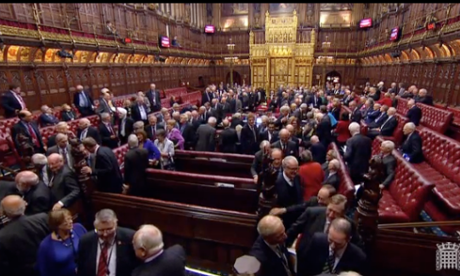
We’re expecting this amendment to be defeated quite easily.
The Lib Dems are in favour, but they only have 112 peers.
The Conservatives, who have 249 peers, are voting against. Other peers will join them too because this is a “fatal” amendment and there is a widespread view in the Lords that it is not their job to reject Commons legislation unequivocally.
Peers vote on motion to totally reject tax credit cuts
Lady Manzoor is wrapping up now.
She says she welcomes Lady Stowell’s comment about George Osborne listening to the Lords very carefully.
But she could not look herself in the mirror if she did not know she had done all she could to stop these cuts, she says.
She wants peers to reject the regulation, and she is putting her amendment to the vote
Peers are voting now.
Here is the Manzoor amendment again.
to move, as an amendment to the above motion, to leave out all the words after “that” and insert “this House declines to approve the draft Regulations laid before the House on 7 September.”
Updated
Here’s my colleague Nicholas Watt on Earl Howe.
That @George_Osborne Workers Party going well. Government case summed up in House of Lords by Frederick Richard Penn Curzon, 7th Earl Howe
— Nicholas Watt (@nicholaswatt) October 26, 2015
Howe says the Lords has not tried to over-rule the Commons on a financial matter for more than 100 years.
There is a right way and a wrong way to challenge the government on a matter like this. The right way is to table a non-fatal amendment like the bishop’s, or to try to amend primary legislation.
These cuts form a central plank of the programme on which the government was elected in May, he says.
But even if they were not, even if they were dreamt up overnight, it would still be wrong for the Lords to ignore the primacy of the Commons on financial matters, he says.
Howe says the Lords is only entitled to block secondary legislation on rare occasions.
But those rare occasions do not include this one, because the regulations clearly cover financial matters, he says.
He says Lady Manzoor’s amendment should be rejected because it a fatal one.
As for the Meacher and Hollis amendments, it can be argued whether or not they are fatal.
But if one of them to pass, the regulations won’t be approved.
There is no mechanism for asking the Commons to think again, he says. There is no mechanism for a dialogue between the two Houses on secondary legislation.
Lady Smith, the Labour leader in the Lords, intervenes. They are not asking the Commons to think again, she says. They are asking the government to think again.
Howe says Smith gave an interview to the Huffington Post clearly implying the Hollis amendment was a fatal one.
Lord Grocott says Howe seems to be suggesting there is no distinction between a fatal amendment and a non-fatal one. But there is a fundamental difference, he says. It is the difference between the Lib Dem amendment and the Labour one. What advice has he had on this from the clerks?
Howe says it is “unarguable” that there is a clear difference in the wording. But the effect of the amendments would be the same.
Howe says the Hollis amendment is not worded as a fatal amendment. But if it were carried it would “frustrate the government’s intent”, he says.
The Hollis amendment “holds the government hostage, holds it to ransom”, he says. What if the government came back with changes still unacceptable to the Lords?
Howe says the disability elements of tax credits are not being cut. They are being uprated with inflation.
This is from the Sun’s Tom Newton Dunn.
I hear Tory whips even persuaded Lord Lloyd Webber to fly back from New York for tonight's #taxcredits vote. Desperate, a touch.
— Tom Newton Dunn (@tnewtondunn) October 26, 2015
Howe says the richer families claiming tax credits will lose more than the poorer families claiming tax credits. (He is quoting figures from the government’s impact assessment - see 3.29pm.)
Earl Howe, the deputy leader of the Lords, is winding up for the government.
He says the savings mentioned by Lady Hollis (see 6.38pm) have already been included in the government’s calculations.
He ways eight out of 10 families will be better off as a result of all the changes the government is making.
A peer asks for clarification. Are all those families on tax credits? Howe says it is eight out of 10 working families, whether or not those families are claiming tax credits.
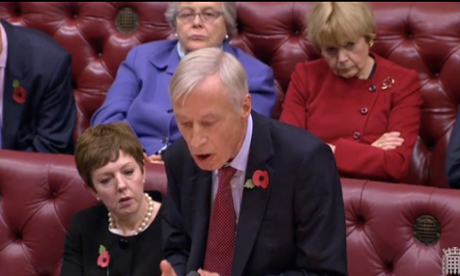
Hollis claims cuts could be watered down without government losing out
Smith says the Lords can give the chancellor the opportunity to address the very serious concerns raised by peers, including by senior Tories (like Lord Lawson and Lord Fowler).
Asking the government to think again is the right role for the Lords.
It is not just peers who are expressing concerns; it is charities like the Children’s Society, and papers like the Sun, that normally support the government.
Lord Forsyth, the Conservative former Scottish secretary, asks how much the Hollis amendment will cost the government.
Lord Hollis rises to respond. She says that the government will save money as a result of the increase in the minimum wage. And by 2019 most tax credit claimants won’t be claiming tax credits because they will be on universal credit, she says. Taken over the course of the parliament, the government will be making savings, “probably exceeding the very cuts the government demands”, she says.
Winding up, Smith says: “There is no constitutional crisis arising at all.”
Smith says that, if the Hollis amendment goes through, it is not as if the measures disappear, as Lord Butler implied earlier. Instead the government would be free to bring a new version of the regulations back to the Lords, she says.
It it not a fatal amendment, and it does not block the government’s plans.
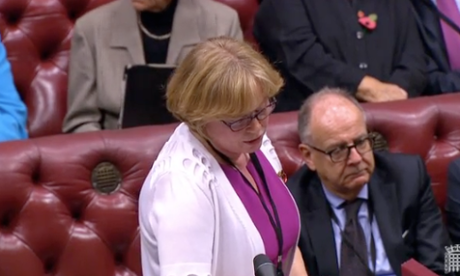
Lady Smith, the Labour leader in the Lords, is winding up for her party. She says peers listened in silence earlier as Lady Hollis spelt out the impact of the tax credit cuts on specific families. (See 4.41pm.)
She says she accepts that there are constitutional issues thrown up by this debate. But the government chose not to introduce this in a finance bill, she says. And she says the original Tax Credits Act of 2002 was not treated as a money bill (ie, it was not one of those bills that the Lords are not allowed to amend.)
Lady Stowell, the leader of the Lords, intervenes. She says that the Tax Credits Act also included other administrative changes which were not money matters. That is why it was not a finance bill.
Labour’s Lady Hollis intervenes. She says she was the minister who took the bill through the Lords, and those considerations did not even arise.
Stowell responds by saying it would have been for the clerks to certify the bill as a money bill, not Hollis.
Updated
According to Lords sources, voting in the debate may start at around 6.45pm. That means, if it goes to four votes, we won’t get the result of the final one until nearly 8pm. But, given that the Meacher and Hollis amendments are similar, it is possible that only one might go to a vote. And if the Hollis or Meacher amendments go through, there would be no need for a vote on the bishop’s amendment.
According to the Spectator’s James Forsyth, ministers are still hoping that the blocking or delaying amendments will all fail.
Bit of optimism in govt circles that they might just squeak through in the Lords with regret motion passing but the other motions failing
— James Forsyth (@JGForsyth) October 26, 2015
That means we could end up in the bizarre situation of having ministers celebrating peers passing a motion criticising their plans (see 4.53pm) as a victory.
Lord Fowler, the Conservative former social security secretary, says that the government has indicated it will make changes. He hopes the government will amend its plans to do more to help families with children.
But ultimately it is for the Commons to take the final decision, he says.
A peer intervenes to say Lady Stowell did not explicitly say that amendments would be made to the plan.
Fowler says that that was the impression he got. He expects the government to clarify this in the winding up speech.
As long as this is an appointed House, it must accept the limitations on its powers, he says.
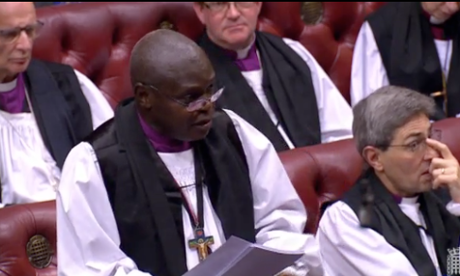
John Sentamu, the archbishop of York, is speaking now. He says that he does not consider the Meacher or Hollis amendments fatal.
He says, if the government is willing to delay and consider changes to the tax credit cuts, the Lords would be willing to pass amended regulations.
He is worried the current proposals could force more people into the hands of loan sharks, he says.
Campbell-Savours says 'public cannot take this scale of lying'
Here is the key quote from Lord Campbell-Savours, the Labour peer, accusing David Cameron of lying about the planned tax credit cuts during the general election.
The British public would regard what he said now as a lie, a lie to win the general election. The British public are fed up with politicians who tell lies on that scale. It was a lie, it exceeded the misleading of the public in the case of the Liberal Democrats on tuition fees; at least they didn’t know what was going to come after the election where they misled the public. But in this particular case Mr Cameron did know. And they set out to avoid revealing the fact by hiding behind the statement that they would have to make substantial cuts. I believe that those lies trump all the constitutional niceties, whether they be financial privilege or the fatality of amendments ... The public cannot take this scale of lying.
Earlier this year the Full Fact factcheckers posted a blog on whether or not Cameron lied about tax credits.
Lord Butler, the former cabinet secretary, tells peers that he thinks it would be unconstitutional for the Lords to reject a financial matter of this kind.
Labour peer accuses Cameron of lying about tax credits to win the election
In a short speech Lord Campbell-Savours, the Labour peer, has said he is backing the Hollis amendment because David Cameron “lied [about tax credits] to win the general election”.
- Labour peer Lord Campbell-Savours accuses Cameron of lying about tax credits to win the general election.
I will post the full quote soon.
Lord Lawson tells Osborne to think again on tax credit cuts
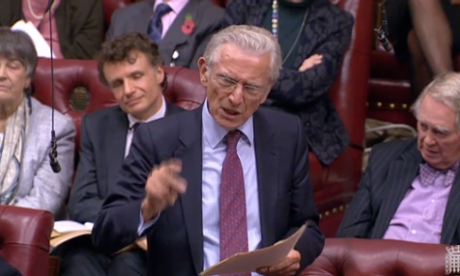
Lord Lawson, the Conservative former chancellor, is speaking now. He says he is torn on these measures.
It is clear that the cuts are budgetary measures that should be decided by the Commons, he says.
Lady Smith, the Labour leader in the Lords, says that when the Tax Credit Act was passed in 2002, it was made clear that that was not subject to financial privilege. (These tax credit changes are being introduced under secondary legislation allowed under the 2002 Act.)
Lawson says that is “nit-picking”.
He says there are “aspects of these measures that need to be reconsidered, or changed”.
In particular, he says that the distributional impact is wrong. George Osborne should amend them so that more of the tax credit savings come from higher earners, he says.
He says that is why is wants to support the Bishop of Portsmouth’s amendment. (See 4.53pm.)
(This is significant since George Osborne regards Lawson as something of a mentor, and takes his advice seriously.)
- Lord Lawson tells Osborne to think again on tax credit cuts.
Tax credit cuts 'blatantly threaten damage to the lives of millions', bishop tells peers
Here is the key quote from the Rt Rev Christopher Foster, the Bishop of Portsmouth, who spoke earlier. (See 4.53pm.)
Of course employers should pay decently and not rely on the rest of us to subsidise their low rates of pay. But while they may be expected to be rewarded for better practice with changes in company taxation, those receiving tax credits will bear the impact immediately. Carrot for some, stick for others.
I say to the government that these proposals are morally indefensible. It is clear to me, and I believe to very many others, that these proposals blatantly threaten damage to the lives of millions of our fellow citizens. This must not be the way to achieve the government’s goals at a cost to those who, if we believe the rhetoric, the government intends to encourage and support. For many in my diocese and well beyond, this seems punishing rather than encouragement.
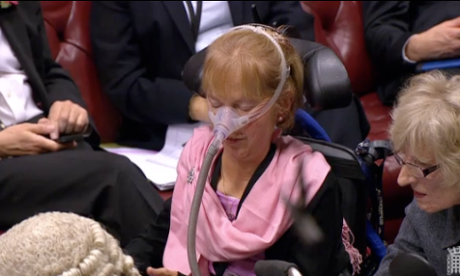
Lady Campbell, the disabled crossbencher, is speaking now. She says tax credits are particularly important for disabled people. The government wants to halve the disability employment gap (currently running at over 30%). But these cuts will make it harder to achieve that goal, she says.
And she says there has been no impact assessment of the effect of these cuts on disabled people and their families.
Disabled people are already suffering from other cuts, she says.
The government is making employment less welcoming for disabled people, she says. That is not their intention. She says she hopes they will think again.
Osborne 'very open' to considering measures to help those affected by cuts, Mackay says
Lord Mackay says George Osborne is “very open” to considering measures to mitigating the impact of the cuts.
Clearly sanctioned speech by Lord Mackay: @George_Osborne 'very open' to considering concerns. From 'listening mode' to 'very open' in 1 day
— Nicholas Watt (@nicholaswatt) October 26, 2015
Updated
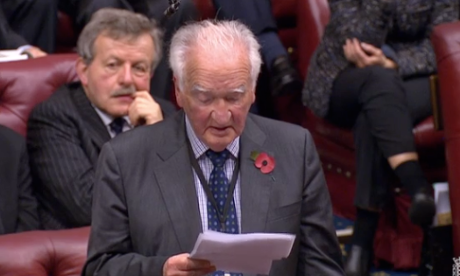
Lord Mackay, the Conservative former lord chancellor, is speaking now. He says the tax credits are paid for by money raised by taxation. He is clear that blocking the cuts would be contrary to the financial privileges of the Commons. To decline to accept the regulations, or to decline to accept them until some conditions have been met, would amount to not accepting the authority of the Commons, he says.
Tax credit cuts are 'morally indefensible', bishop tells peers
The Rt Rev Christopher Foster, the Bishop of Portsmouth, is speaking now. Here is his amendment.
to move, as an amendment to the motion in the name of the Lord Privy Seal, at the end to insert “but this House regrets that the draft Regulations fail to take account of concerns about their short-term impact on working families and individuals currently receiving tax credits, and calls on the Government to consult further on the draft Regulations and revisit their impact.”
He says the tax credit cuts are “morally indefensible”.
He says he will listen to the debate before deciding how to vote. But he may vote for the other amendments too, he says. (If another amendment is passed, his one won’t be called.) He will decide how to vote taking into account the interests of those with most to lose, he says.
(That sounds as if he is voting with Manzoor, Meacher or Hollis.)
Bishop of Portsmouth on "morally indefensible" #taxcredits: "A carrot for some, a stick for others." pic.twitter.com/LHvzCWpH5b
— Political Scrapbook (@PSbook) October 26, 2015
Bishop of Portsmouth: "These proposals are morally indefensible.They threaten damage to the lives of millions of our citizens."
— Jack Blanchard (@Jack_Blanchard_) October 26, 2015
The bishop was reading his speech from an iPad.
Just a bishop reading off an iPad in an unelected second chamber as people sit on throne steps. Nothing to see here. pic.twitter.com/xpo1zUZxH7
— Jim Waterson (@jimwaterson) October 26, 2015
Updated
Lords debate on tax credit cuts - Verdict so far
Lords debate on tax credit cuts - Verdict so far: It is said that the Lords is a more reflective and less partisan chamber than the Commons, a place where the quality of the argument can sway the outcome of a debate. If so, then George Osborne has probably already lost. Lady Hollis’s speech was outstanding, not just because she deftly swept aside the constitutional objections to her amendment, but because she came out with one of the best justifications for tax credits that any parliamentarian has made for years. Lady Meacher and Lady Manzoor were both reasonably good, but Lady Stowell was reduced to half-hearted special pleading. The Conservatives are out in force but, so far at least, they’re losing the argument.
Hollis finishes by quoting some real cases. She quotes one woman who will lose £1,644, a firefighter’s family who will lose £2,914, another family who will lose £2,005 and a family, with a father in full-time work and a mother looking for two disabled children, who will lose £3,120.
Hollis says people like this contribute to the construction of an entrepreneurial society.
If peers pass the regulations, or pass the regulations with the bishop’s amendment, these cuts will become law. Is that what peers want, she asks.
This is about honouring our word, the prime minister’s word, that work should always pay, she says.
It is about trust between parliament and the people, she says.
Hollis says, if the Commons back her amendment, the government could come back within a week with a new statutory instrument saying the cuts would only apply to new claimants.
That SI would then go to the Commons, she says. As is right, the Commons would have the final say.
Hollis says the Commons should be given the chance to think again as more information comes through about the impact of the cuts.
And she says her amendment would not deny the government the savings they want (because by 2020 most claimants will have moved over to universal credit.)
Hollis says the cuts will begin as families move over to universal credit. But 2019 only 9% of existing tax credit recipients will still be on tax credits, she says.
She says the government says these changes will put tax credits on a sustainable basis. That’s right, she says, because tax credit is being phased out.
Hollis is now turning to the government’s impact analysis. (See 3.29pm.) It is not an analysis, and it does not look at impact, she says.
Hollis says the purpose of tax credits is misunderstood.
They should not just be there to subsidise low pay, she says.
But imagine two women working in a call centre: one, who is single, works full time and earns £13,000 a year; another, a single mum, works 25 hours a week, and earns £9,000 a year. But she needs to support three people on that money.
You cannot expect an employer to make up the difference, she says. That is what tax credits are there for.
Lady Hollis, the Labour peer and former work and pensions minister, is speaking now.
Here is the text of her amendment.
to move, as an amendment to the motion in the name of the Lord Privy Seal, to leave out all the words after “that” and insert “this House declines to consider the draft Regulations laid before the House on 7 September until the Government, (1) following consultation have reported to Parliament a scheme for full transitional protection for a minimum of three years for all low-income families and individuals currently receiving tax credits before 5 April 2016, such transitional protection to be renewable after three years with parliamentary approval, and (2) have laid a report before the House, detailing their response to the analysis of the draft Regulations by the Institute for Fiscal Studies, and considering possible mitigating action.”
She says her amendment is a not a fatal motion. It is a delaying motion, and it was drafted with the help of the clerks.
In practice, it would mean the cuts would apply to new claimants only.
A statutory instrument implementing this could be drafted within a week, she says. And it could be passed in plenty of time to allow the (amended) cuts to start next April, she says.
She says financial privilege does not apply to statutory instruments.
And the Salisbury convention (the “rule” saying the Lords should not block measures in a party’s election manifesto) does not apply to statutory instruments either, she says.
Why should peers treat this as a financially privileged matter when the government explicitly decided not to make it financially privileged, by putting it in a finance bill, she asks.
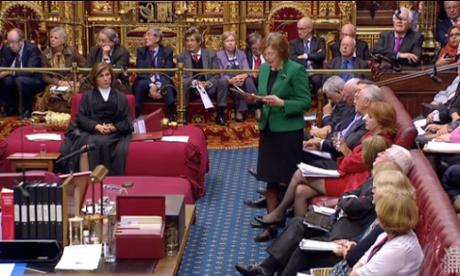
Meacher says some Tory MPs now 'livid' about tax credit cuts
Back in the Lords Lady Meacher says her motion leaves the matter in the hands of the Commons. There will be a vote on Thursday. MPs have already voted three times for these cuts, she says. But Conservative MPs did not have the information they needed, she says. She says she understands that some of them are now “livid” because they they believe they were kept in the dark. Tory MPs have kept their “voting powder dry” ahead of the vote on Thursday, she says.
Even allowing for the death of her former husband, Michael Meacher (they divorced in the 1980s), the government has lost its majority because at least eight MPs are now opposed to the tax credit cuts, she says.
- Some Tory MPs are now “livid” about tax credit cuts, peers told.
Updated
While peers debate the tax credit cuts, the Commons work and pensions committee is taking evidence on them from Paul Johnson, director of the Institute for Fiscal Studies.
IFS director Paul Johnson on tax credit cuts: "It’s kind of just obvious the majority will be worse off as a result of the package."
— steve hawkes (@steve_hawkes) October 26, 2015
Paul Johnson of @theifs says "in the order of two thirds of the losers from tax credits" get no compensation from higher minimum wage
— John Ashmore (@smashmorePH) October 26, 2015
Meacher says a committee chaired by Lord Cunningham said the Lords should have the power to reject secondary legislation. That report was backed by the Lords without a vote.
And in 1999 Lord Strathclyde, the then Conservative leader of the Lords, said the convention that peers did not vote against secondary legislation was dead.
Meacher says Tories have lost their majority in Commons over tax credit cuts
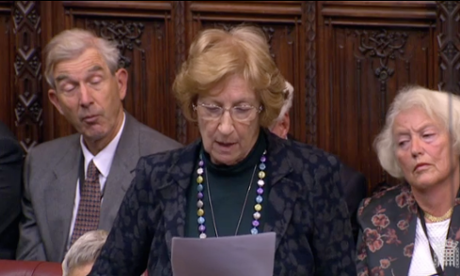
Lady Meacher, a crossbencher, is proposing her amendment now. Here is what it says.
to move, as an amendment to the motion in the name of the Lord Privy Seal, to leave out all the words after “that” and insert “this House declines to consider the draft Regulations laid before the House on 7 September until the Government lay a report before the House, detailing their response to the analysis of the draft Regulations by the Institute for Fiscal Studies, and considering possible mitigating action.”
She says she thought a fatal amendment would be going too far.
MPs are debating the tax credit cuts in the Commons again on Thursday, she says. She says eight Conservative MPs have already indicated that they will oppose the measures in the debate (which is on a backbench motion). That means the government has already lost its majority, she says.
Updated
Andrew Lloyd Webber in the Lords 4 tax credits debate, a Tory peer tells me this is the tightest 3 line whip that they have had in a decade
— James Forsyth (@JGForsyth) October 26, 2015
Manzoor says peers should do their duty and stand up against a poor decision taken in the Commons. It is time for the government to think again, she says.
Lady Browning, a Conservative peer, says Manzoor is going “a bit too far” in assuming she has a mandate to oppose these changes.
Manzoor says she does think she has a mandate.
Lord Grocott, a Labour peer, says the Lib Dems gave strong support to the Tories in coalition. Now they are opposing them. Wouldn’t it have been easier if the Lib Dems had decided to bring down the Tories earlier?
Manzoor says the Lib Dems vetoed these proposals when they were in government.
Manzoor says she supports the three other amendments too.
Manzoor says she has tabled her amendment because she wants to stop these wrong-headed and ill-though-through changes.
Peers must consider their constitutional role, she says. But they must also consider their duty to people.
She says the government could have put these changes into a finance bill it it wanted to stop the Lords blocking them.
Some MPs have said a fatal motion is too blunt an instrument. But ministers could have put the changes in the welfare bill, which would have allowed peers to amend the regulations, she says.
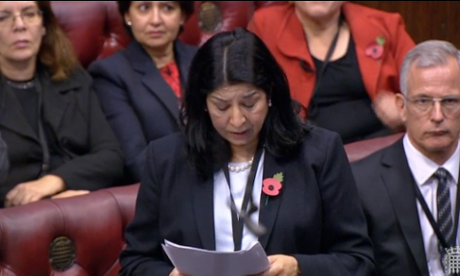
The Lib Dem peer Lady Manzoor is speaking now.
Here is the text of her motion. This one is “fatal” in Lord-speak, because it would stop the regulations becoming law.
to move, as an amendment to the above motion, to leave out all the words after “that” and insert “this House declines to approve the draft Regulations laid before the House on 7 September.”
Under these changes, the taper rates that people could get to keep just 7p for every extra £1 they earn, she says.
Lord Cormack, a Conservative, asks Manzoor how the Lib Dems square what they are doing tonight with their opposition to an unelected Lords, and their belief in the primacy of the Commons.
Manzoor says she will address that in her speech later.
Another peer asks Stowell if she accepts that the Meacher and Hollis amendments are not fatal ones.
Stowell says they have not been described as such. But, if they were passed, they would set a precedent, allowing peers to apply conditions when backing financial measures.
Lord Wills, a Labour peer, asks Stowell to explain when it is appropriate for peers to vote against something they dislike.
Stowell says that if peers were to block these regulations, “we would be challenging the financial primacy of the other place”.
Stowell says we are in an unprecedented situation.
The Commons has had primacy over financial matters for over 300 years, she says. Peers must decide whether they want that to continue.
If peers vote for any of the blocking or delaying amendments, they will be blocking a financial measure that the Commons has passed.
Lord Richard, the Labour peer, asks Stowell to accept that the Meacher amendment and the Hollis amendment are non-fatal.
Stowell says she does not accept that.
The Lords does have the power to block secondary legislation, she admits. But it has only done so five times since the second world war, and never on a piece of financial legislation, she says.
So the debate is about whether peers accept that the primacy of the House of Commons should apply in financial matters.
Updated
Stowell suggests Osborne will respond to tax credit concerns concerns provided peers reject the blocking motions
Stowell says the debate also raises issues about the role of the Lords.
The government accepts that peers take their role very seriously.
The government does not accept any of the three amendments that would block or delay the tax credit cuts, she says.
But the amendment in the name of the Bishop of Portsmouth (to “regret” the cuts, but not block them) is consistent with the role of the Lords, she says.
Passing any of the other three amendments would challenge the primacy of the Commons, she says.
She says she has seen George Osborne, the chancellor, this morning. And Osborne suggested he would respond if the bishop’s amendment were passed, she says.
He would listen very carefully were the House to express its concern in the way it is precedented for us to do so.
Lord Tyler, a Lib Dem peer, intervenes. He quotes a Lords report saying the Lords is entitled to reject secondary legislation.
Stowell says the Commons has voted on the tax credit cuts three times.
We would be challenging the primacy of the Commons on financial matters, she says.
Lord Campbell-Savours, the Labour peer, asks if David Cameron was telling the truth in the election campaign when he said tax credits would not be cut. Or was he misleading the public?
Stowell says the Tories were very clear that they would be introducing welfare cuts, and that these would be aimed at working-age claimants.
But they were also clear that there would be a new settlement on welfare.
Lady Stowell's speech
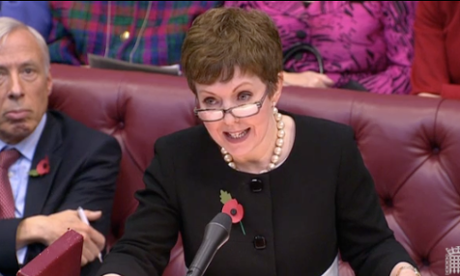
Lady Stowell, the leader of the Lords, is opening the debate.
She starts by saying she has decided to open the debate in the light of the constitutional importance of this debate.
She is now defending the tax credit cuts. Change was necessary because the cost of tax credits has risen so much, she says.
In the last parliament tax credits were cut so that only six out of 10 families were eligible, instead of nine out of 10, the situation in 2010.
Even after the government’s changes, five out of 10 families will be eligible, she says.
Lords debate on tax credit cuts
The Lords debate is starting now
Here are the regulations the peers are debating.
And here is the government’s impact assessment (pdf).
It includes this rather sneaky distributional impact chart. It’s sneaky because it makes it look as though the cuts are progressive (affecting wealthier families more than poor families). But it is potentially misleading because it does not include all income groups, just all tax credit claimants.
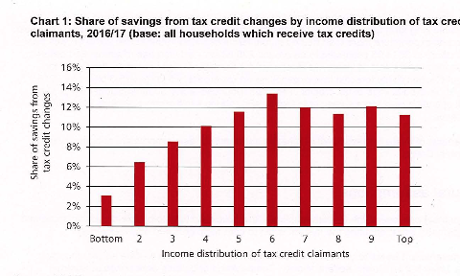
Updated
Paul Johnson, director of the Institute for Fiscal Studies, is giving evidence about the tax credit cuts to the Commons work and pensions committee later this afternoon. On BBC News he has just given his verdict as to whether the Tories flagged up these cuts during the election campaign.
IFS Paul Johnson on Tories and welfare cuts in election: "they certaintly did not say they were going to cut tax credits".
— Patrick Wintour (@patrickwintour) October 26, 2015
The Bishop of Gloucester, the Rt Rev Rachel Treweek, will today take her seat in the House of Lords, becoming the first female bishop to sit in the chamber. Speaking to the Press Association, she said she hoped to be listen to the debate on the tax credit cuts.
I won’t be able to use my voice, as yet. I hope I will be able to use my ears and listen well. What really matters to me is that we get to a place where we can send a loud message to the chancellor of the exchequer that we are passionate about working families in particular not being worse off.
It’s finding the right way to do that ahead of the Autumn Statement. Obviously a debate is what it says - it’s a debate, it’s about going in and being willing to listen and to find the right way to give that message without causing a constitutional crisis.

Lunchtime summary
- Downing Street has said that it would be unconstitutional for peers to vote for a Labour motion delaying implementation of the tax credit cuts until “full transitional protection” has been introduced for those who lose out. Number 10 spoke out as new research was published suggesting that, even allowing for the other measures being introduced to help low earners, two-thirds of working tax credit recipients will be worse off in 2020. The debate in the Lords is now expected to start at around 3.45pm.
- The former head of the government’s legal service has accused Downing Street of “contempt for the rule of international law” after it quietly abandoned a key plank of the ministerial code. As Josh Halliday reports, in a sharply-worded letter to the Guardian, Paul Jenkins claimed the obligation that ministers must comply with international law had caused “intense irritation” to David Cameron.
Updated
Tax credit cuts debate - A reading list
Today’s showdown in the Lords over tax credits takes us into complex territory involving tax, benefits and constitutional proprietaries. Here are seven good blogs that will help you untangle some of these issues.
I doubt that the Chancellor realised any of this when he set out to reform tax credits. I suspect he is having one of his omnishambles moments, when the implications of his proposals are evident only after their publication. He kept this a secret during the campaign, and is now paying the price – because it meant very little proper analysis has been done. As Osborne found out during the Omnishambles Budget, the Treasury isn’t very good at working out unintended consequences of its actions.
In tearing tax credits away from people – rather than phasing them out, which is the obvious thing to do – Osborne now risks inflicting grave damage to his party’s reputation. Doing it his way will save just £3.5 billion, not much for a government that spends north of £600 billion. There are many, many other ways to find this saving. Economically, it is just not necessary. Politically, this could be an epic act of self-harm.
Based on analysis on over 100,000 households of working-age in receipt of Housing Benefit and Council Tax support, and taking into account the impact of the National Living Wage at £9.00 per hour, and a personal tax allowance of £12,500, we find that 67% of Working Tax Credit recipients will still be worse off in 2020, compared with today.
* Analysis update: We have updated our analysis this morning to take into account the 30 hours of free childcare that will be available to three and four year olds. If we assume that all households with children age three to four will be better off (which may not necessarily be the case) we find that half of all Working Tax Credit recipients within our sample will still be worse off in 2020.
- Isabel Hardman at Coffee House says Labour peers are not confident of winning this afternoon’s vote.
Therefore those behind the Hollis amendment are still not confident that their more reasonable attempt to stop the cuts will succeed. A senior Labour source tells me that ‘we’re not as confident as we’d expect to be because of the sabre-rattling around the constitution, and we do not know the impact that this has had on the progressive cross benchers that might support this normally.’
It might be that those progressive peers who would normally back a motion like this could be sufficiently frightened by the government threats that they end up voting down the Hollis amendment and others.
Overall the changes are seen as unfair by 46% of people, fair by 28% of people. YouGov then asked about the combined effect of the tax credit changes, the minimum wage increase and the increased tax allowances and whether it will leave different groups better or worse off. By 45% to 1% people think they will leave those out of work worse off, by 57% to 13% they will those on the minimum wage will be worse off, by 53% to 7% they think those in work and earning low wages (but above the minimum wage) will be worse off. Whatever the actual facts of whether people will be better or worse off, the government have clearly failed to convince the public that the combined effect of the policies will leave people better off.
While it was seen as unfair and bad for most of the less well off, when YouGov asked it if it should go ahead people were evenly divided. People didn’t like the principle of the changes – 53% thought they were a bad thing, only 21% a good thing. However, within that 53% of people who disapproved, 16% thought they should go ahead regardless given the state of the public finances, 37% thought they should be stopped and the money found elsewhere. Adding up those who like the changes and those who dislike them but reluctantly think they should happen, brings us to 37% wanting the changes to go ahead, 37% wanting them stopped.
Tax credit recipients will start to lose out as soon as their household earns just £3,850. So many affected by tax credit cuts do not pay National Insurance in the first place. For some context it’s worth noting that 43 per cent of households receiving tax credits had earnings of below £10,000. And the winners would include those on higher incomes – including higher and additional rate payers – but exclude everyone over the state pension age because they do not pay NI anyway. The latter fact might be a good thing from fairness perspective, but is not when looking at a straight question of tax credit compensation.
Two of the four motions tabled for debate in the Lords (from Crossbencher Baroness Meacher and Labour’s Baroness Hollis) are couched in terms of delay to allow for more consultation, not outright opposition. These fall into an intermediate category as neither strictly ‘fatal’ (like the motion from Liberal Democrat Baroness Manzoor) nor ‘non-fatal’ (like the motion of ‘regret’ from the Bishop of Portsmouth).* They would prevent the proposal being approved, but leave the option open for the Lords to pass it on a future date following further debate and analysis – which is a new procedural innovation by the Lords.
The government has suggested that a delay, for whatever reason, is irrelevant and these motions, if accepted, would amount to a fatal veto of the SI and thereby bring about a constitutional crisis. Erskine May and the Lords Companion make clear that Peers can amend an approval motion or table a separate motion calling on the government to take a specific action in relation to the instrument, but this does not prevent approval of it. In July this year, the House of Lords voted to ‘delay the enactment of the Universal Credit (Waiting Days) (Amendment) Regulations 2015 until Universal Credit is fully rolled out’. Here, again, Peers concerns reflected those in the report by the government’s own advisory body, the Social Security Advisory Committee. This form of delay motion didn’t prompt a constitutional crisis ...
The Tax Credits SI doesn’t come into effect until 15 April 2016. The government therefore has time to change course. It can either delay consideration of the SI in the Lords and provide more information to assuage Peers’ legitimate scrutiny concerns. Or it can press ahead, risk losing, and then amend and re-lay the same SI – only a cosmetic change (e.g. revise one word!) would be required and convention would dictate that the House of Lords would certainly pass it a second time. The risk here, of course, is that it would also have to submit the revised SI for approval to the Commons. But as was demonstrated in the Opposition Day Debate last week, MPs are now more attuned to the proposals and the lack of detail about their impact than they were when they actually voted on the Regulations during the main debate in September.
The Electoral Reform Society has put out a press notice this morning saying that, if David Cameron were to create 100 new Tory peers following a defeat over tax credits in the Lords this afternoon, that would cost the taxpayer at least £2.6m a year. Darren Hughes, the ERS’s deputy chief executive, says Cameron should reform the upper chamber instead.
If the prime minister is worried about a constitutional crisis following today’s House of Lords votes, he should reform the chamber so that it’s elected – instead of trying to pack it with pliant Peers.
We need a fairly-elected upper chamber that has a clear definition of its responsibilities – instead of the government claiming that an unelected upper chamber is a wonderful revising body, but then threatening to pack it with cronies if it doesn’t vote the way Ministers want it to.
A chamber built on vague conventions and illegitimacy is no way to deal with legislation, and is simply asking for constitutional chaos and confusion.
Number 10 lobby briefing - Summary
If the government’s approach to the tax credits debate in the Lords has been a mixture of carrot and stick, Number 10 was putting a lot more emphasis on the carrot (the hint that measures could be taken in the autumn statement to help those affected by the tax credit cuts) than the stick (the threat of flooding the Lords with Tory peers, or reducing its powers over secondary legislation) at the lobby briefing. Here are the main points.
- Number 10 brushed aside new research highlighting how the tax cut cuts will penalise low earners. Asked about the figures published by the Spectator this morning, the prime minister’s spokeswoman insisted that the cuts had to be seen alongside other measures that would help low-earners, such as the “national living wage”, the increase in the personal tax allowance and the extension of free childcare. And she insisted that the tax credit system was “not sustainable as it is”.
- The spokeswoman strongly hinted that measures would be introduced in the autumn statement to mitigate the impact of the tax credit cuts on low earners. Asked what ministers meant when they said the government was “in listening mod”, she said:
The policy is the policy. The prime minister and the chancellor have been clear that that is not going to change. The point that we are making is that the chancellor has a track record of delivering budgets that back working people and that benefit working people and we will be a government that continues to pursue that approach.
- The spokeswoman insisted that it would be unconstitutional for the Lords to hold up the implementation of the tax credit cuts. She said:
The issue is whether or not the House of Lords respects the longstanding convention that the House of Commons should have the final say on issues of tax and spending.
- The spokeswoman refused to comment on suggestions that ministers could flood the House of Lords with new Conservative peers, or reduce the powers of the Lords over secondary legislation, if it loses the vote today. Asked if the government was looking at these options, she said she was not going to “get into speculation” ahead of the vote.
- The spokeswoman said the tax credit cuts were being introduced as a statutory instrument (SI), not as an item in the finance bill, because this was “usual [for] this type of measure”. Because the cuts are in the form of an SI, a form of secondary legislation, peers have the option of blocking them, or holding them up. If the cuts were in a finance bill, peers could not do anything because the Lords does not have the power to change finance bills.
- Number 10 said the government would not stop raising human rights issues with Saudi Arabia despite concerns raised by its ambassador. In an article in the Daily Telegraph today, Mohammed bin Nawaf bin Abdulaziz, the Saudi ambassador to London, suggests that over criticism of his country could have “potentially serious repercussions”. He wrote:
Over the past few weeks, there has been an alarming change in the way Saudi Arabia is discussed in Britain. The Kingdom has always had to deal with a lack of understanding and misconceptions, but on this occasion I feel compelled to address some of the recent criticisms.
The importance of Saudi Arabia to the UK and the Middle East’s security, as well as its vital role in the larger Arab world as the epicentre of Islam, seems to be of little concern to those who have fomented this change. Yet it should be worrying to all those who do not want to see potentially serious repercussions that could damage the mutually beneficial strategic partnership that our countries have so long enjoyed ...
Our justice system is based on Sharia law and implemented by our independent judiciary. Just as we respect the local traditions, customs, laws and religion of Britain, we expect Britain to grant us this same respect.
Asked if the government would carry on raising human rights issues with the Saudis, the prime minister’s spokeswoman said: “At the meetings that we have with Saudi Arabia, whether at official or ministerial level, we will continue to raise issues where we have concerns.”

I’m just back from the Number 10 lobby briefing. Most of it was taken up with a discussion about the tax credit votes, although Number 10 did not really budge from the position set out by Nicky Morgan, the education secretary, yesterday, and repeated by Matthew Hancock, the Cabinet Office minister, this morning (see 9.38am) - refusing to abandon the cuts, but hinting strongly that measures will be introduced to mitigate their impact on low-earners.
I will post a proper summary in a moment.
Hollis rejects claims Labour triggering constitutional crisis
Lady Hollis, the Labour peer and former welfare minister who is moving the Labour amendment that would delay the implementation of the tax credit cuts until measures have been introduced to compensate low-earners who lose out, told the BBC’s Victoria Derbyshire’s show that the government was wrong to suggest she was creating a constitutional crisis. She made the point when asked about claims that crossbenchers in the Lords were coming under strong pressure from the government not to support her. This was true, she said.
They have been strong-armed, they have been told it’s a constitutional crisis, which is a fig leaf, frankly. It is not a constitutional crisis at all. What we are doing with this is seeking to ask the chancellor to produce transitional protection for existing families and, as wages rise, tax credits, which are means tested, fall.
But she said she had not been “bullied” herself by the government whips.
No. If they try to bully me, I tease them. It’s fine.
I’m off to the Number 10 lobby briefing now. I will post again after 11.30am.
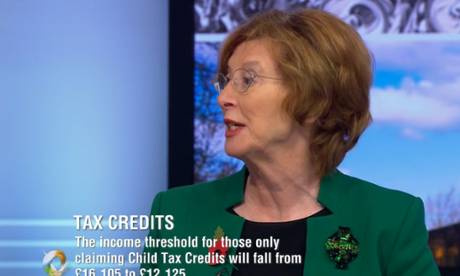
The Child Poverty Action Group has produced a briefing for peers on the impact of the tax credit cuts (pdf).
To illustrate the impact the cuts will have, it has produced this chart showing how much various workers (based on typical gross earnings figures from the Office for National Statistics) could lose next year. The figures assume people are working full time and that they have two children, and that they are either single parents or sole earners in a family.
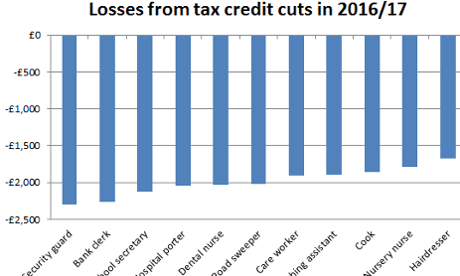
Alison Garnham, the CPAG chief executive, said:
Nobody who supports hard-working families can think it’s right to suck £1,788 from the tax credits of a nursery nurse’s annual income, or £2,304 from a security guard, £1,669 from a hairdresser These are grafting parents, often working long hours and trying to provide for their kids. And if you’re struggling now to pay for food, utilities, fares and your children’s clothing, these kind of losses must make you fear for the future. The government has had the message loud and clear from right across the political spectrum: there isn’t a case for cuts that would target working families, increase child poverty and damage family security.
Farron criticises Labour for not opposing tax credit cuts more robustly
Tim Farron, the Lib Dem leader, and Owen Smith, the shadow work and pensions secretary, were also on the Today programme talking about the tax credit cuts vote.
There is a difference between the two parties. As Nicholas Watt explains in his preview story, the Lib Dems are proposing a “fatal motion” in the Lords that would block the tax credit cuts for good. Labour are proposing a separate motion that would delay them until ministers introduce a scheme compensating low-earners who lose out for at least three years.
The Lib Dems will support the Labour proposal if their own one fails. But Labour is not supporting the more blunt and unequivocal Lib Dem motion.
On the Today programme Farron explained why the Lib Dems wanted to kill the tax credit regulations for good.
We think it is right to use the mechanisms available to us to overturn this proposal which would damage so many families, which is unfair, which is a disincentive to work, and which they have no mandate for.
Addressing Smith, Farron also criticised Labour for not doing all it could to block the tax credit cuts.
You abstained on the welfare bill in July, shamefully, and let this stuff pass in the House of Commons. Then today you are putting forward a bill to delay these changes – that’s a lot better than nothing so we will, in comradely fashion, vote with you. We are going further and [are] seeking to block them.

But Smith rejected this. Asked to explain why Labour was not backing the Lib Dem motion, he implied that his party accepted it was wrong for the unelected Lords to totally reject a measure passed by the Commons. He said just blocking the tax credit cuts would allow the Tories to turn this into an argument about constitutional powers.
We will not be falling into the trap of allowing the Tories to present this as some sort of unjust, unfair use of the House of Lords and in the House of Commons, where these things are properly decided, we will be voting against it tomorrow.
He also said the Labour motion would force the Tories to go “back to the drawing board”.
If we were to win on our motion then the Conservatives would need to go away, think again, come back with some proposal for transitional arrangements in order to mitigate the worst effects of these cuts. We all know that these are going to hit families on low income, middle income in Britain, and all of the things that Matthew Hancock was saying earlier on would be compensatory measures – increasing the national minimum wage, raising the personal allowance – none of those things in any way offset the volume of losses people will have. They are just not being truthful about that, Jim, and therefore we have got to get them to go back to the drawing board, and in the Commons and the Lords we will be trying to get them to do that.

Tim Montgomerie, the Conservative commentator, thinks Tim Farron has done well to outflank Labour on this.
Quite an early achievement for 8 MPs @timfarron to have out muscled 232 MPs @jeremycorbyn in leading the fight against tax credit cuts
— Tim Montgomerie ن (@montie) October 26, 2015
And the Guardian’s Patrick Wintour explains why the Lib Dems are only too happy to provoke a constitutional crisis on this.
Lib Dem leader Farron unfazed by constitutional crisis in Lords. He wants to reform the place and for notice must paint in primary colours.
— Patrick Wintour (@patrickwintour) October 26, 2015
Matthew Hancock's Today interview - Summary
In his Today programme interview Matthew Hancock, the Cabinet Office minister, suggested that peers would trigger a constitutional crisis if they voted to delay the implementation of the tax credit cuts. (See 9.10am.) Here are some of the other points he made.
- Hancock said that Lord Butler, the former cabinet secretary, has said that it would be unprecedented for the Lords to block or delay the tax credit cuts.
On this programme on Friday, Robin Butler has said that the three blocking measures are all unprecedented, the conventions say that the Lords does not block financial measures that effect the budget of the country. And so, yes of course that means the finance bill, but it also means things like this that are over £4bn of public spending. This is obviously a financial matter. But don’t take it from me, you know, take it from Robin Butler who is possibly one of the greatest constitutional experts in the country.
Here is our report of what Lord Butler said on Friday.
- Hancock claimed that the Tories did signal during the election that they would cut tax credits. Asked about this, he replied.
We did, we set out that we were going to seek £12bn of welfare savings, this is just over £4bn of it.
Hancock was then played a clip of Cameron appearing to rule out a cut to child tax credits on Question Time during the election campaign. Hancock replied.
[If] you actually continue the clip which said ‘but we will continue to make savings in welfare’. The level of child tax credit is not being changed in this package. So, it’s consistent with what the prime minister said then, it’s consistent with the fact that we went into the election calling for £12bn of further savings in welfare.
- He said the government was “in listening mode”, implying that measures to mitigate the impact of the tax credit cuts are being considered.
Yes, George [Osborne] is very much in listening mode and the peers this afternoon have the opportunity through a motion put down by the Bishop of Portsmouth to express regret at this measure without breaking these constitutional conventions, long-standing.
- Hancock made a point of praising the Lords generally.
There is an opportunity for the House of Lords, who I greatly respect – having taken bills through the House you know, they improve and they suggest - but they can do that in a way that doesn’t break this long-standing constitutional convention.
I’ve taken the quotes from PoliticsHome.
This afternoon it seems very likely that peers will back a motion delaying the implementation of the government’s £4.4bn tax credit cuts. The vote is significant not just because it would tear an enormous hole in George Osborne’s welfare cuts programme, but because it would amount to an almost unprecedented challenge to the authority of the elected House of Commons by the unelected House of Lords. The Lords has not had the power to block budgets since the Parliament Act of 1911 (passed as result of the showdown between the two Houses triggered by Lloyd George’s “people’s budget in 1909) and, although it has on rare occasions blocked pieces of secondary legislation, it has not used this power in relation to financial measures.
There could be up to four votes this afternoon. In his preview story, my colleague Nicholas Watt explains what they entail.
Labour and the Lib Dems said they would press ahead with their challenge to the cuts on the grounds that the tax credit cuts are included in a statutory instrument rather than in a finance bill which peers cannot delay or block. Peers will hold up to four votes which will determine the fate of the tax credit cuts in the following order:
A “fatal motion”, tabled by the Liberal Democrat peer Zahida Manzoor, which would kill the tax credit cuts stone dead. This motion, dubbed in the Lords as the “Farron motion” after the Lib Dem leader, who has forced reluctant party peers to accept it, will fail because Labour is not whipping its peers to support it.
A motion, to be tabled by the crossbench peer Molly Meacher, that would delay the cuts until the government spells out how it will help low-paid workers. It cites a report by the Institute for Fiscal Studies (IFS) that 3 million families would lose £1,000 a year. Meacher is facing intense pressure from the government to back down. Labour does not expect Meacher to force a vote on her motion if the government says it will produce a report highlighting the impact of the cuts on different income groups.
A motion, to be tabled by the former Labour minister Patricia Hollis, which would halt the cuts until the government until it produces a scheme to compensate low paid workers for three years. This is the most dangerous motion for the government because it would force the chancellor to go back to the drawing board. It explains why the government is issuing such dire warnings to the Lords about the dangers of blocking financial measures.
A “motion of regret”, to be tabled by the bishop of Portsmouth, Christopher Foster. The government is hoping that crossbench peers, who are wary of being overly hostile to the government, will support this motion. This would allow peers to register their opposition without disrupting the government’s plans.
The government is nervous because David Cameron leads the first Tory government to enjoy a majority in theCommons without a majority in the upper house. There are 249 Tory peers, 212 Labour peers, 111 Lib Dem peers, 176 crossbenchers and currently 25 bishops.
On the Today programme this morning Tim Farron, the Lib Dem leader, said the Lib Dems would back the Labour motion. You only have to look at the numbers in Nick’s final paragraph to see why a government defeat is highly likely.
Earlier on the Today programme Matthew Hancock suggested this would provoke a constitutional crisis. He told the programme:
The conventions say that the Lords does not block financial measures that affect the budget of the country ... The House of Commons has debated this three times, it passed this statutory instrument with a majority of 35 - which is almost three times the government’s majority. We want to listen to the views, which I respect, from the House of Lords. But we hope they will not take us down an unprecedented constitutional path.
I will be posting more from his interview shortly, and I will be focusing on this debate all day.
Here is the agenda for the day.
11am: Number 10 lobby briefings.
3.45pm: The Institute for Fiscal Studies and the Resolution Foundation give evidence to the Commons work and pensions committee about the tax credit cuts.
Around 4pm: Peers are expected to start debating the tax credit cuts. The votes are expected at around 6pm.
As usual, I will also be covering breaking political news as it happens, as well as bringing you the best reaction, comment and analysis from the web. I will post a summary at lunchtime and another in the afternoon.
If you want to follow me or contact me on Twitter, I’m on@AndrewSparrow.
Updated