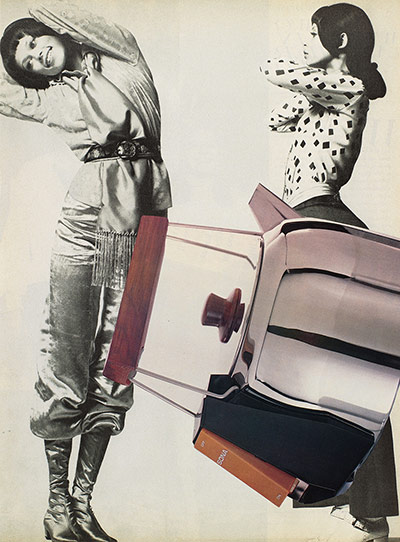
There’s an emphasis on fabric and style in this year’s Tate St Ives summer show. To create her exquisite images fusing yesteryear’s ballet stars with birds, insects and woodland creatures, punk collagist Linder has been drawing inspiration from Barbara Hepworth’s little-explored love of clothes and ballroom dance. Linder’s ballet, shown as a film, takes Hepworth’s famed sculpture The Family Of Man as the starting point for some snaky choreography; further forgotten histories are unearthed in the form of abstract textile designs from St Ives painter Patrick Heron. Younger artists featured include Nick Relph, who blends films about Ellsworth Kelly, Comme des Garçons founder Rei Kawakubo, and the history of tartan in Scotland.
Tate St Ives, Sat 18 May to 29 Sep
SS Photograph: Todd-White Art Photography
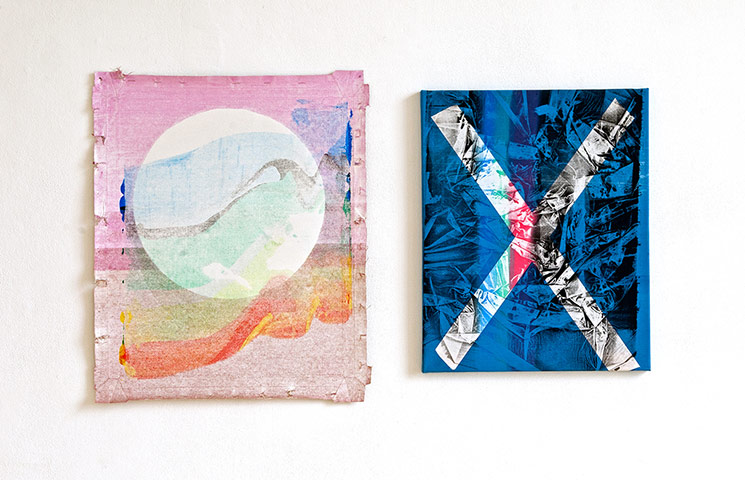
Ciara Phillips presents technically experimental and rigorously organic abstract images carried out through silkscreen printing, affording a precision perfectly fitted to her botanic inspiration. Her images are intriguingly paired with selections from the Royal Botanic Garden’s collection of nature printing, a technique of taking coloured impressions directly from flowers, ferns and grasses. But the central historical attractions here are rarely seen polarised Perspex abstract sculptures by the seminal Scottish artist Rory McEwen, plus screenings of the film he made of art shaman Joseph Beuys on Rannoch Moor in 1970.
Inverleith House, to 23 Jun
RC Photograph: Michael Wolchove
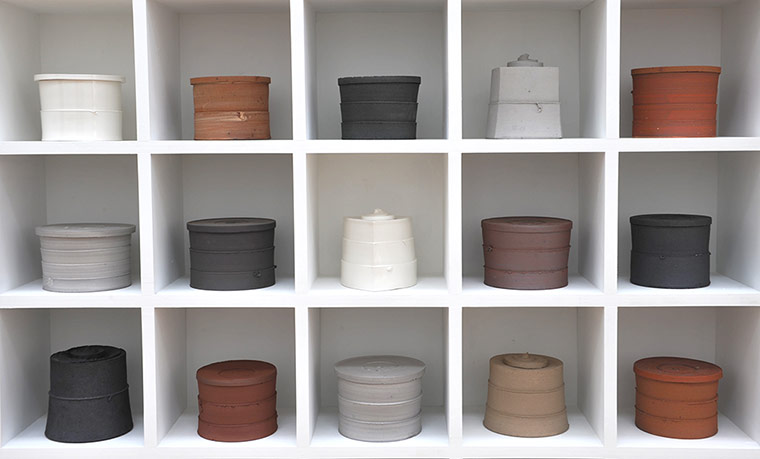
Within the deconsecrated medieval ambience of York St Mary’s, Julian Stair has combined archaeological treasures on loan from York Museum with congregations of his own unglazed stoneware, porcelain and brick clay vessels. For these are no ordinary ceramics; there’s nothing nicely decorative nor usefully domestic here. The implication throughout is that Stair’s vessels, resembling funeral urns and sarcophagi more than the bowls and mugs of a craft shop, contain long-ago presences, the voids left by those who might have passed away. With bravery and artistic daring, he attempts deceptively simple 3D still-lifes for contemplating the ultimate obscurity that awaits us all.
York St Mary’s, to 7 Jul
RC Photograph: PR
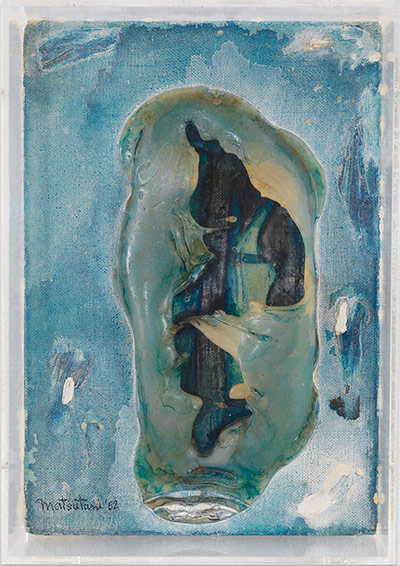
The painters born of gutai, Japan’s energetic postwar art movement, all had their quirks: whether daubing with their feet or throwing bottles of paint at the canvas, they aimed to challenge conformist thinking through self-expression, turning away from the complacency they saw in previous eras. In the case of Takesada Matsutani, his idiosyncrasy was his choice of medium: vinyl glue. Inspired by blood samples seen through a microscope, his work is full of gluey bubbles, drips and bulges. Blown into being using a hairdryer or simply his breath, the paintings are a fresh take on abstract expressionism; in one a mound of red resembles a swollen sun above a pale cream vista that could be blistering skin or parched earth.
Hauser & Wirth, W1, Sat 18 May to 27 Jul
SS Photograph: Alex Delfanne
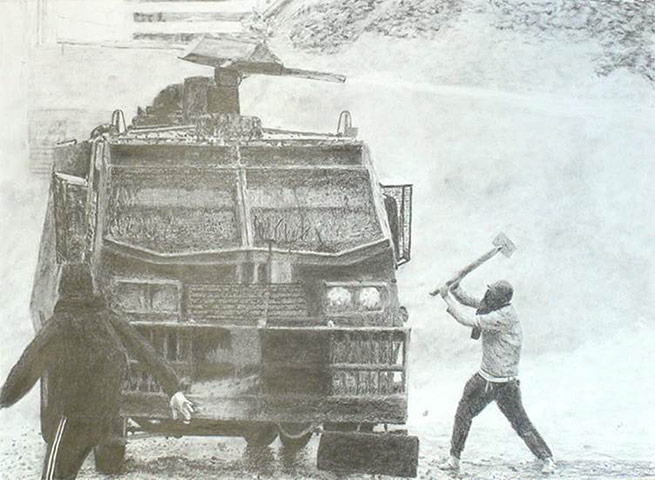
Sam Durant’s Proposal For Public Fountain is unlikely to be snapped up by arts commissioning bodies any time soon. It depicts in black marble an armoured water cannon, which repeatedly drenches the figure of a protester, who bears an anarchist flag aloft. Inspired by clashes between riot police and protesters in Santiago, which Durant has previously depicted, the fountain meshes two traditions: art representing those who rebel against oppression – depictions of Christ’s torture, for instance – and the grand style of state-approved statuary. It’s a sharp comment on monuments, and the treatment of history.
Sadie Coles, W1, to 29 Jun
SS Photograph: PR
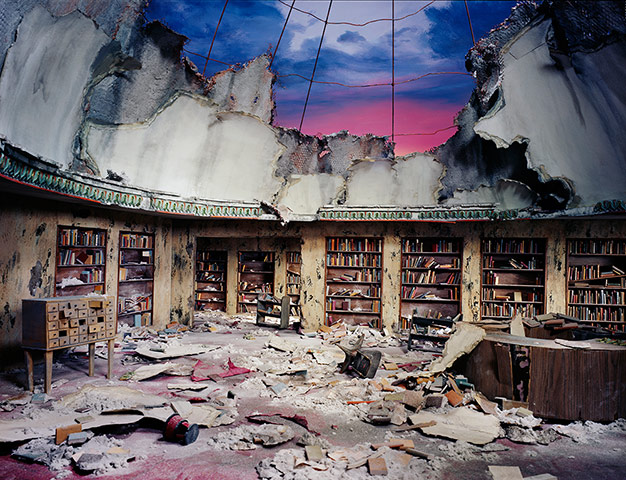
Recognising the essential fact that art goes beyond message-mongering, contemporary artists here approach the subject of global warming with ironic wit rather than the full-on provocations of the more politically partisan. Thus the renowned Anya Gallaccio’s You Got The Best Of My Love, a fishing net woven from gold lamé thread, could just as likely refer to romantic heartbreak as to ecological crisis. Lori Nix’s series The City initially appears more directly concerned with post-nuclear desolation as urban sites are photographed in fallout-covered ruins. Then you realise that each scene has been meticulously crafted by hand in miniature before being carefully laid to waste. Just maybe the apocalypse is make-believe after all.
Wolverhampton Art Gallery, to 6 Jul
RC Photograph: PR
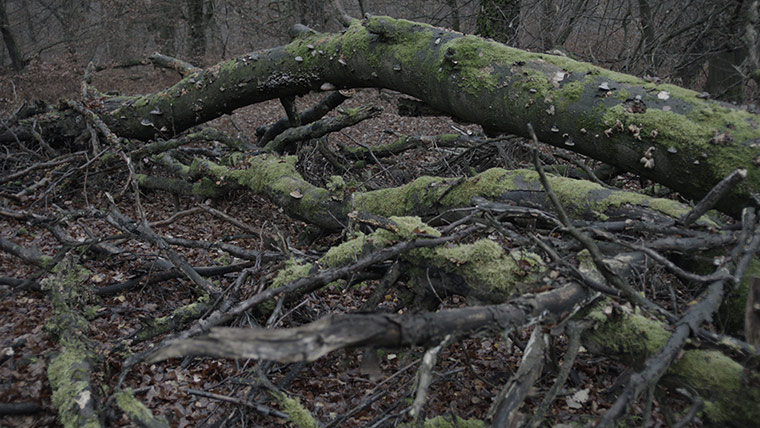
The landscape around Kassel, Germany, which here forms the central focus of Willie Doherty’s video musings, once served as the atmospheric backdrop for the 19th-century folk tales collected by the Brothers Grimm. Despite the apparently unremarkable topography, hints mythic reverie appear to remain in the air. While the Derry-born Doherty keeps an open mind as to Kassel’s particular historic aura, his work is almost always informed by tensions experienced during the Irish political conflicts. Amid the tangle of the forest’s undergrowth, the present moment – which is enchantingly filmed – seems haunted by past losses and shadowed by future dreads.
IMMA Annex, National Concert Hall, Tue 21 May to 1 Sep
RC Photograph: PR
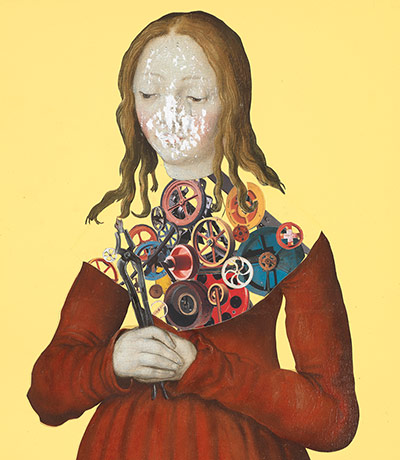
What would the National Gallery’s latest artist-in-residence, Michael Landy, make of the collection? He’s best-known for obliterating all his possessions in an old C&A store and getting artists to chuck their failed works into a giant art bin. Unsurprisingly then, the paintings he’s produced feature saints who came to sticky ends, ending up being grilled alive or having their teeth yanked out. He’s created rickety-looking machines where 3D figures copied from Renaissance masterpieces whir into action, while a metallic claw will distribute T-shirts lifted from the bum of St Francis.
National Gallery, WC2, Thu 23 May to 24 Nov
SS Photograph: PR