Though they are the stuff of fond memories and indulgent holiday feasts, many of these beloved Christmas dishes owe their origins to the commoner-class deprivation and imposing spiritual dogma which prevailed in days of yore.
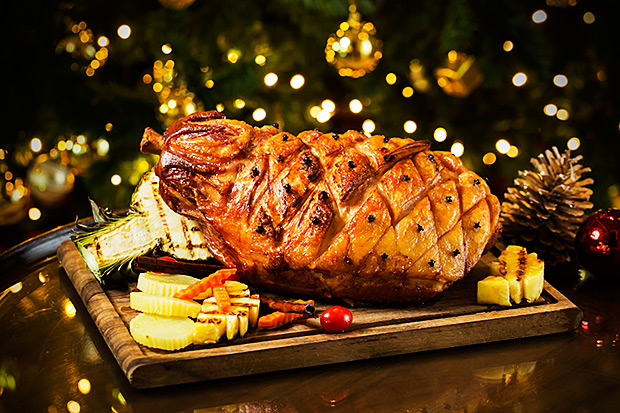
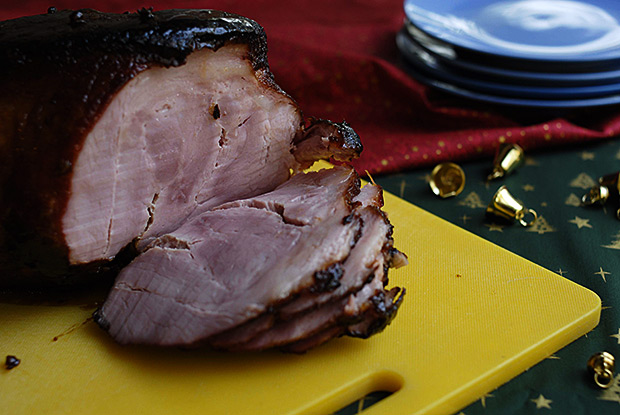
The traditional Christmas Ham owes its provenance to the use of boar's head as a banquet centrepiece for wealthy households in Tudor England (1485-1602) as part of a Norse harvest and fertility celebration. But commoners could only afford a less showy Yule Ham, and though Christmas has since replaced the pagan fete, the tradition of tucking into a "poor folks" feast of cured pork has been preserved. Hams are most often baked with a honey-glaze and adorned with dried clove, which diners are well advised to remove before eating.
Christmas dinner often shares many of its side dishes with those served at Thanksgiving, including mashed potatoes & gravy, cranberry sauce, pumpkin pies and stuffing, but there are a number of treats which give the ho, ho, ho season its distinct character.
Mincemeat was originally made in centuries past with chopped meat and dried fruit, sugar, and seasonings. Mincemeat pies became a British Christmas specialty in the 1600s, but over the years the meat was left out leading to its modern recipe of fruits, sugar and rum or brandy.
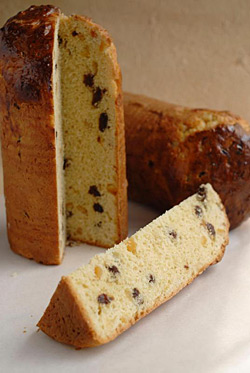
Panettone is an Italian bakery specialty whose name is said to be derived from "Pane di Tono" or luxury bread. Baked in tall, circular loafs, the perennial cake-bread contains dried fruits and citron essence, and has become a popular yuletide favourite the world over.
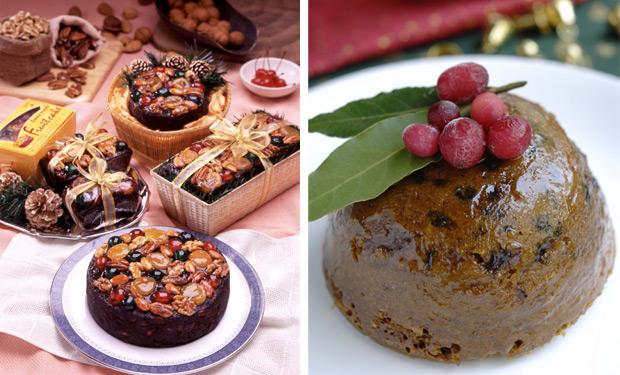
Arguably the most Christmas-y of food traditions, the concept of plum pudding came about sometime in the 1600s, and is endowed with a surprisingly hefty touch of religious symbolism resulting from a Catholic Church decree that families should make a pudding with exactly 13 ingredients to represent Christ and the 12 apostles. And because back then "plum" referred to any dried fruit, the modern version of raisins, currants, citrus zest, almonds, and spices contains no plums or even prunes. More confusing still, plum pudding is also known as figgy pudding, though today it contains no figs.
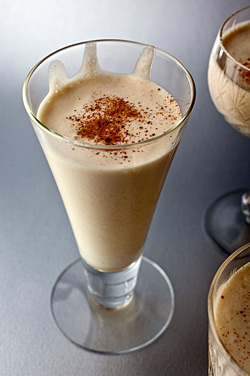
For the uninitiated, it may not be immediately clear whether eggnog is a festive cocktail or quaffable dessert, as it displays characteristics of both. Descended from milk- and wine-based punch drinks that date back to the 17th century, the modern eggnog is a sweet, milkshake-like holiday indulgence of eggs, milk and sugar, fortified with rum, brandy or bourbon. Because of health concerns surrounding raw eggs, pasteurized commercial eggnogs are widely available.
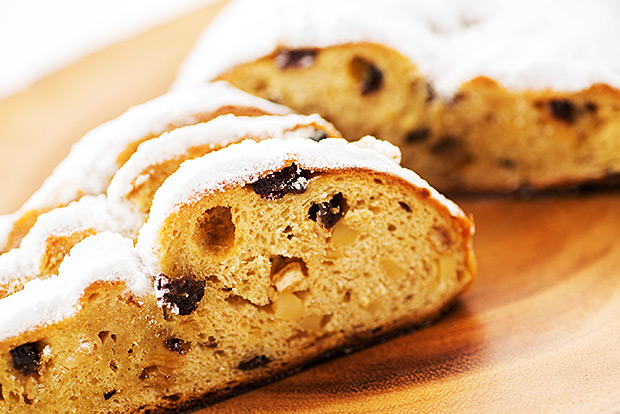
With roots firmly in German-Austrian Christmas baking tradition, Stollen has a long and fascinating history featuring a visual religious analogy. First appearing in official documents from the 15th century, Stollen was the subject of a four-decade lobbying campaign by Saxon royals for permission from a string of popes to use butter--which at the time was a highly regulated essential commodity--in the recipe. From then on, typical Stollen became richer in texture, with dessert-ish enhancements like dried fruits and layered marzipan added later, resulting in the bread-cake we know today. Despite its evolution, Stollen's ecclesiastical roots are preserved in its very name, which is short for Christollen after the oblong loaf's resemblance to a swaddled infant.
Back in pre-globalisation times when basic baking ingredients were expensive imports, holiday fruitcake was a rare treat limited to the holiday season. Today, the famously dense, dark and rich cakes laden with dried fruits, nuts and sometimes a splash or two of booze are ubiquitous, if not somewhat outdated Christmas time gifts which often end up being re-gifted or relegated to the back of the fridge.