Design can positively influence global change if combined correctly with engineering scales and business metrics. Consider the plastic packaging you throw away in the bin. That plastic packaging somewhere else in the world is picked up from landfills by millions of people who live for about a dollar a day. Now imagine your household plastics could become any other plastic product you need, at the push of a button. How valuable is it to you then?
This is the value paradox that Better Future Factory (BFF) created. BFF is a design agency, founded by five industrial design engineering alumni of Delft University of Technology in The Netherlands. Our mission is to manufacture a better future, tackling real problems through design, engineering and business modeling.
Plastic recycling is a technical issue, but plastic waste is connected to people. Consumers influence what happens to plastic waste by choosing to throw it away or recycle it. The choices consumers make about their plastic waste can be influenced by incentives. It is important to make people aware of the value of their waste.
Perpetual Plastic Project
What if consumers could return broken or outdated products to the store and have them repurposed? What if plastic products were made on demand using 3D-printers and recycled materials?
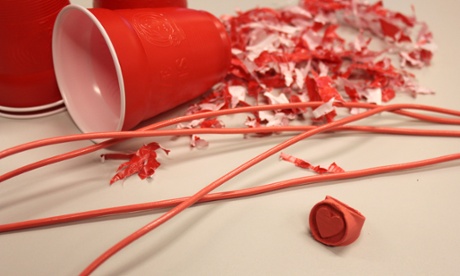
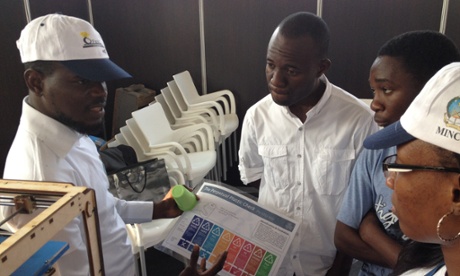
Better Future Factory has created an interactive plastic recycling installation called Perpetual Plastic Project. The installation is a small intervention to start recycling the tons of plastic that are processed by industry every day. The machine allows people to make 3D-prints of plastic products using their disposable drinking cups as raw material. While shredding and melting the waste plastics into 3D-printer filament people are involved in the process through a fun and educational experience.
We are tapping into 3D-printing as part of the plastic waste solution as it has the potential to be disruptive in multiple ways. It can produce on demand, eliminate stock, change design copyrighting and make design personal again. The global market for 3D-printing filaments is expected to reach $669m (£418.7m) this year. However, people are using virgin plastics to make prototypes, gadgets and toys that have a short lifetime. These filaments are not from recycled material and BFF is on a mission to change that.
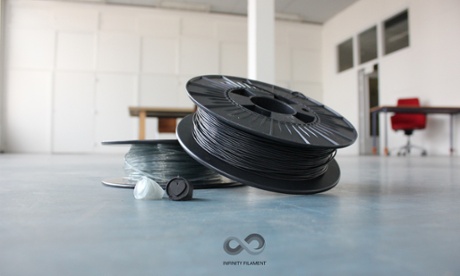
BFF aims to make recycled plastic the standard for popular desktop 3D-printers. We are developing a new recycled 3D printer filament based on the same principles of “Perpetual Plastic.” We’re using carefully selected and safe waste streams, (ie from car parts or refrigerators), to source the raw material and convert it into high quality filament.
Adding value to waste by designing new products
It’s only been in the past few years that we’ve become globally aware of the effects that plastic waste is having on our environment.
Let’s take Angola, a country in Africa that suffered a long civil war. The war has left a generation with an educational gap, but Angolan people are eager to learn. To inspire and educate Angolans on recycling plastics, BFF is now cooperating with Angola’s ministry of science and technology. We’re teaching them how to use a replica of the interactive recycling installation to stimulate environmental awareness and entrepreneurship. In this context, recycling plastics just for the environment is not a priority, but if people understand the value of plastic waste as a resource they could turn this into local business. BFF therefore develops low-tech recycling solutions in cooperation with local Angolan entrepreneurs.
As the product designer Victor Papanek said “that which we throw away, we fail to value. When we design and plan things to be discarded, we exercise insufficient care in designing or considering safety factors.”
We are reinventing the way plastic products are made and fundamentally changing the relationship people have with these products. In the west, BFF links local plastic waste streams to the growing 3D-printing market via existing recyclers. In Angola we are linking plastic waste entrepreneurship to a country that is rebuilding itself.
BFF believes that in order to solve real problems we need designers who can build bridges between people’s needs and abilities; designers who not only execute projects but take into account context in order to develop sustainable business models.
Content on this page is paid for and provided by Philips, sponsor of the circular economy hub