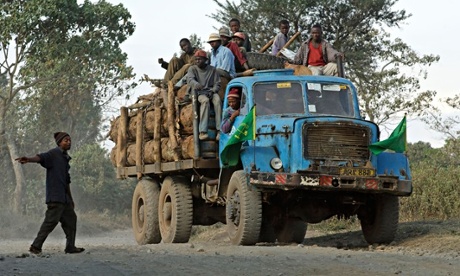
Illegal logging gangs in Tanzania are smuggling hundreds of tonnes of trees every month and driving some species to the brink of local extinction, officials have warned.
In a trend similar to the poachers laying waste to African wildlife, armed loggers are slipping into forests at night and transferring their natural wealth to highly organised syndicates, seemingly with impunity.
Shamte Mahawa Mangwi, village executive officer in the district of Rufiji, told the Thomson Reuters Foundation: “The loggers seem to be very well-organised and armed. Unfortunately, our local forest guards do not have the capacity to confront them.”
Indigenous tree species such as mninga and mpodo are facing local extinction due to high demand for their wood in the construction and furniture industries, according to district records. More than 70% of the total volume of wood harvested in the forest is unaccounted for, causing huge losses of government revenue from levies, taxes and fees.
Nurdeen Babu, a Rufiji district commissioner and chairman of the forest harvesting committee, said illegal harvesting threatens the survival of natural forests, but insisted that the government is fighting back. “We have beefed up security by increasing the number of forests guards,” he said. “Anyone who is found to be doing anything illegal in the forest will be arrested and charged.”
But local villagers complain that fines imposed on those caught are too low to act as a deterrent. They also accuse some district forest officials of colluding with illegal loggers, helping them to move the wood through unofficial routes while pretending to detain them.
Justin Mfinanga, who lives in the village of Ikwiriri, said: “I don’t have any trust with the police force. They sometimes arrest suspected criminals and release them without charge.”
Police have denied the allegations.
Tanzania has 33m hectares (82m acres) of forests and woodland but has been losing more than 400,000 hectares of forest each year for two decades, the UN Food and Agriculture Organisation’s most recent Global Forests Resources Assessment found.
The east African country’s controller and auditor general report in 2012 said 96% of trees cut are illegally harvested. Illegal cutting is the result of poor planning and the government’s inability to manage its forestry resources, it added.
A 2013 report by Global Witness found that collusion between political elites, civil servants and logging companies is systematically robbing people of their livelihoods in African countries including the Democratic Republic of the Congo, Liberia, Ghana and Cameroon. Greenpeace Africa has warned that logging is the single biggest threat to the Congo basin rainforest.