Say goodbye to the "cold shower dance" and hello to unlimited hot water. Here is the ultimate guide to upgrading your Bay Area or Sacramento home to a tankless system without the headache.
![Sleek modern tankless water heater mounted on a garage wall]](https://46156612.fs1.hubspotusercontent-na1.net/hubfs/46156612/Article%20Images/Sleek%20modern%20tankless%20water%20heater%20mounted%20on%20a%20garage%20wall%5D.jpg)
The Struggle is Real: Why We Are Breaking Up with Tanks
Let’s be honest: adulting is hard enough without your shower turning into an ice bucket challenge halfway through washing your hair. We have all been there. You are enjoying a nice, steamy rinse, and suddenly someone flushes a toilet or starts the dishwasher. The temperature drops, and you are left shivering, wondering why you didn't just stay in bed.
If you own a home in the Sacramento Valley or the Bay Area, you are probably dealing with older infrastructure. Maybe you’re in a classic Victorian in The City with a water heater that looks like it survived the 1906 earthquake, or you’re in a ranch style home in Elk Grove clinging to a rusty tank from the 90s.
Old school water heaters are like that ex who refuses to move on—clunky, unreliable, and taking up way too much space. It’s time to ghost that old tank and "glow up" your plumbing with a tankless water heater.
Searching tankless water heater installation near me is the first step toward reclaiming your morning routine. But before you click "buy" on the first unit you see, let’s spill the tea on what this actually involves, especially for us living in Northern California.
What Even Is a Tankless Water Heater?
Think of a traditional water heater as a giant kettle that is always on. It keeps 40 to 50 gallons of water hot 24/7, just in case you might need it. That means you are paying PG&E to heat water while you are sleeping, while you are at work, and while you are sitting in traffic on I-80. It’s a waste.
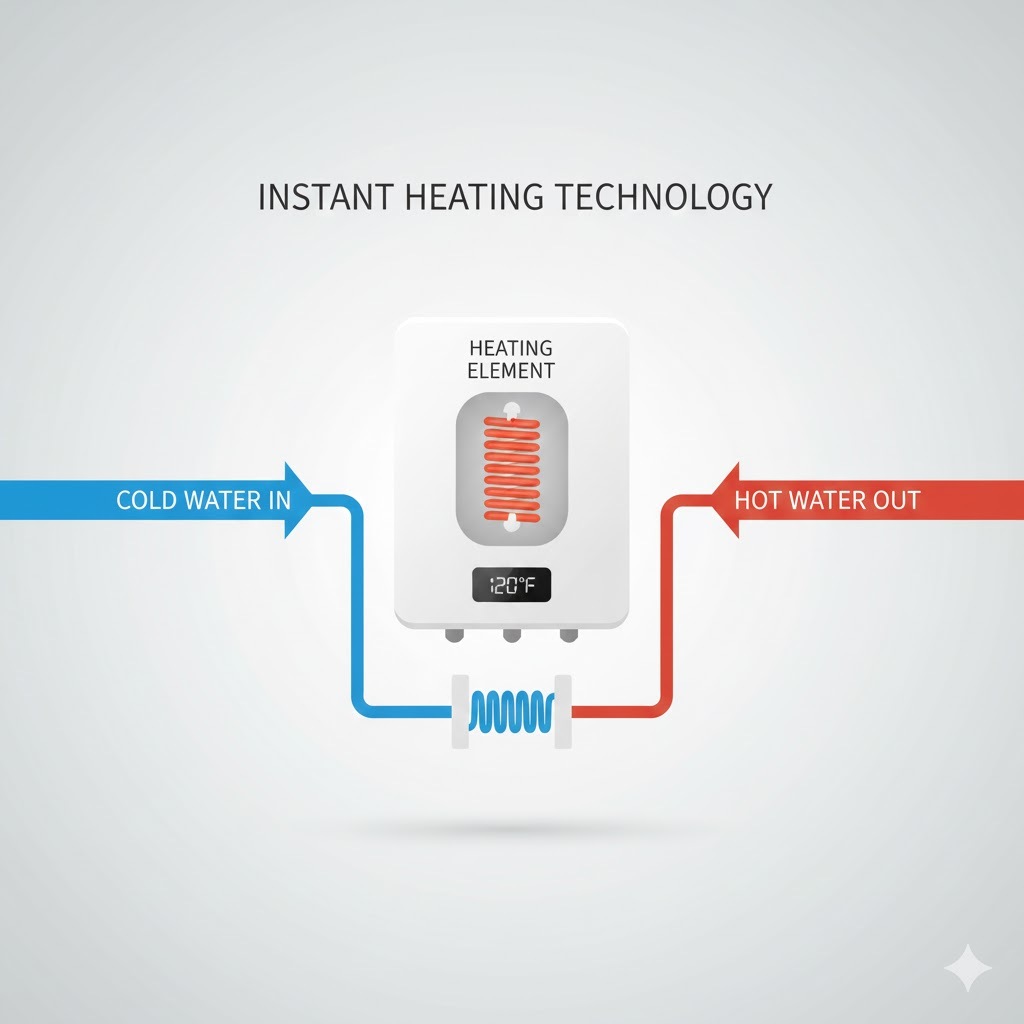
A tankless water heater (also called "on-demand") is different. It doesn’t store water. Instead, when you turn on the hot tap, cold water travels through a pipe into the unit. A gas burner or an electric element heats the water instantly.
The result? You get hot water only when you need it, and—here is the kicker—it never runs out. As long as you have water and fuel, you have hot water. It’s the "streaming service" of plumbing: on-demand and endless, rather than buying the DVD and hoping it doesn't get scratched.
Why Go Tankless in Northern California?
Living in California comes with its own unique set of vibes and challenges. Here is why tankless is practically made for our lifestyle in the Sac and Bay regions.
1. Space is a Luxury
If you live in the Bay Area, you know that square footage costs more than a tech CEO's car. Traditional tanks are massive cylinders that eat up valuable closet or garage space. Tankless units are about the size of a carry-on suitcase and mount on the wall.
This is a game-changer if you are trying to maximize storage in a San Francisco condo or create more room in your garage in Roseville for your gym equipment (or, let's be real, your boxes of stuff you haven't unpacked since 2018).
2. PG&E Bills are No Joke
We all cringe when that bill hits our inbox. Because tankless heaters don't suffer from "standby heat loss" (reheating water over and over), they can be 24% to 34% more energy-efficient than conventional storage tank water heaters. That means lower monthly bills. It’s basically free money in the long run.
3. The "Hard Water" Factor
Especially in Sacramento and the Central Valley, our water is harder than a final exam in physics. Hard water leaves mineral deposits (scale) that destroy traditional tanks from the inside out. While tankless units also need maintenance (we will get to that), they are generally easier to flush out and clean than a giant 50-gallon drum of sediment.
Gas vs. Electric: The Great Debate
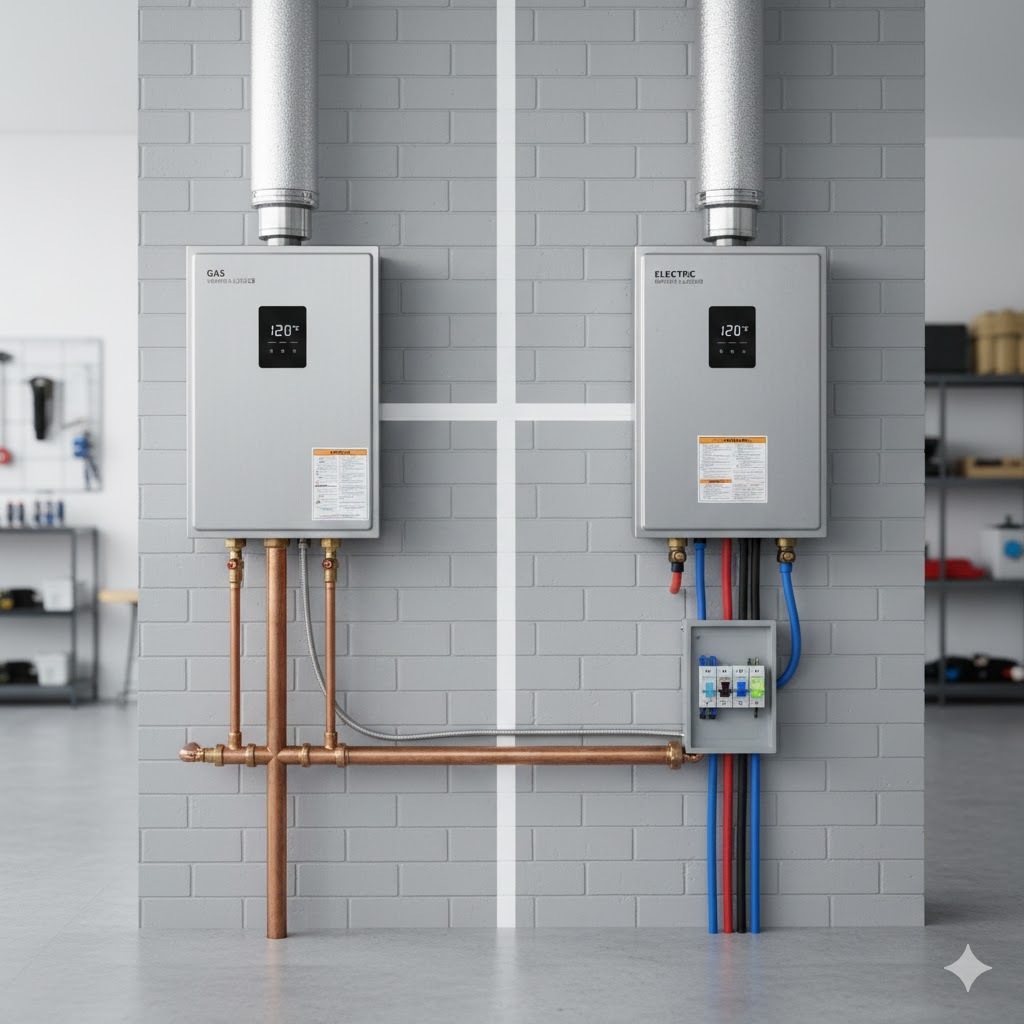
When you look for installation near you, you’ll have to choose between gas and electric. This isn’t just a preference; it’s about what your house can handle.
Gas Tankless Heaters
Most homes in our region use natural gas. Gas tankless units are powerful and can heat a lot of water at once (high flow rate).
- Pros: Can handle a shower, a dishwasher, and a washing machine running at the same time.
- Cons: They often require a larger gas line than your old tank did, and special venting. This is where the installation gets technical.
Electric Tankless Heaters
If you have solar panels on your roof in Folsom or San Jose, electric might sound tempting to maximize that renewable energy.
- Pros: No venting required, smaller size.
- Cons: These things are power hungry. They often require a massive upgrade to your electrical panel (sometimes up to 4 dedicated breakers). If you live in an older home with a 100-amp panel, you’re looking at a pricey electrical upgrade first.
The Installation: Not a DIY YouTube Weekend Project
Look, we love a good DIY project. Painting a wall? Go for it. Building an IKEA bookshelf? May the odds be in your favor. But installing a tankless water heater? Hard pass on DIY.
Here is why you need a pro, specifically one who knows California codes.
1. The Gas Line Upgrade
Your old tank heater used a small amount of gas slowly. A tankless heater needs a massive "whoosh" of gas instantly to heat the water. This usually means we need to upsize your gas pipe from 1/2 inch to 3/4 inch or even 1 inch. If you don't do this, the heater will starve for fuel, error out, and give you a lukewarm shower.
2. Venting is Critical
You can’t just stick the exhaust pipe into the chimney. Tankless units need special stainless steel or PVC venting that goes out the side of your house or up through the roof. If done wrong, you risk Carbon Monoxide leaking into your home. That is definitely not the vibe we are going for.
3. California Title 24 and Permits
Whether you are in Marin, Alameda, or Sac County, the building inspectors are strict. You need a permit. You need to meet Title 24 energy standards. You need seismic strapping (earthquake safety). A professional installer handles the paperwork so you don’t get a nasty fine when you try to sell your house later.
What to Expect on Installation Day
So, you’ve decided to hire a pro. What does the day look like? It’s not as chaotic as a kitchen remodel, but it’s real work.
- The Arrival: The crew shows up (hopefully on time, because we respect your schedule). They’ll protect your floors—no muddy boots allowed.
- The Removal: We drain and disconnect the old beast. This can take a while if the sediment buildup is bad. We haul it away so you don't have to look at it ever again.
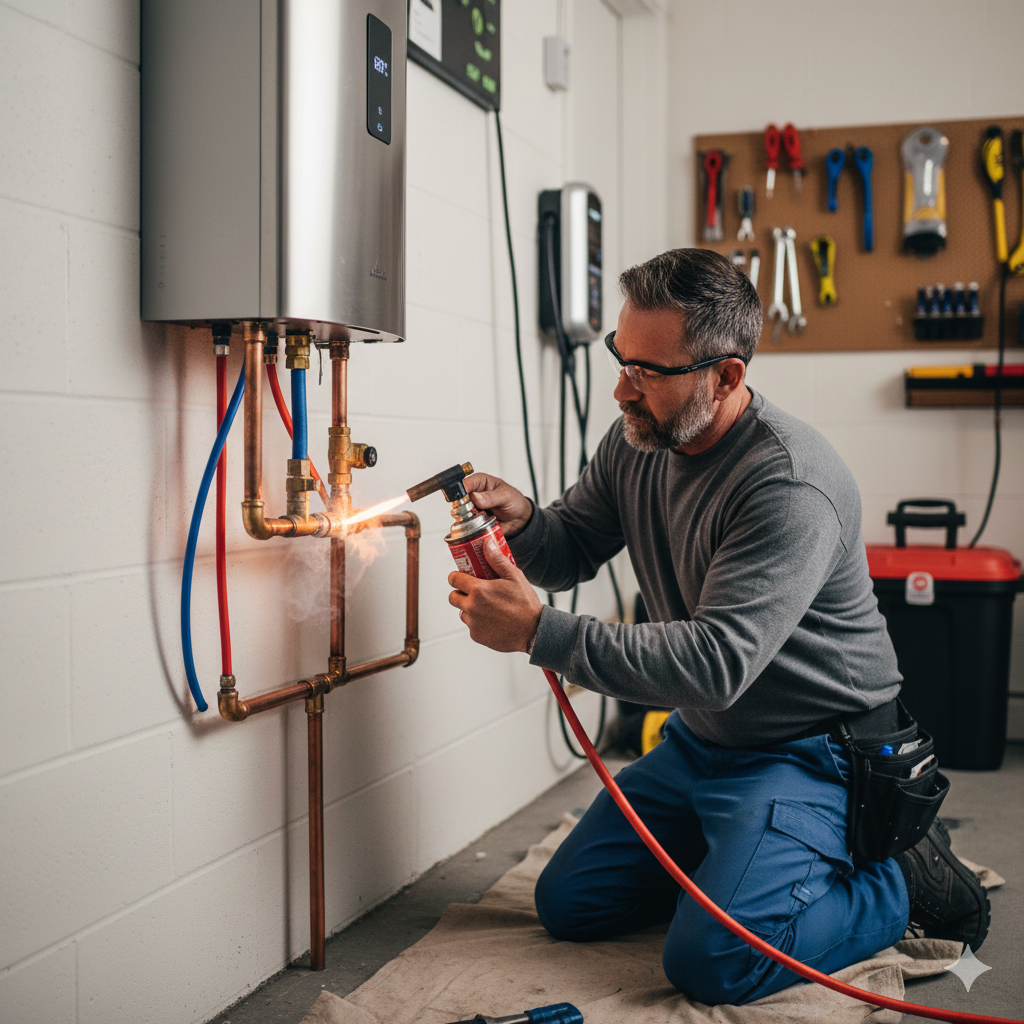
- The Retrofit: This is the meat of the job. We run new water lines, gas lines, and electrical connections. We drill holes for the venting. It looks like surgery for your house.
- The Mounting: The new unit goes up on the wall. It looks sleek and futuristic.
- The Test: We fire it up, check for leaks, and test the temperature. Then, we show you how to use the digital controller.
Let’s Talk Money: The Cost Breakdown
We believe in transparency. No one likes hidden fees—that’s for airlines, not plumbers.
Upfront Cost: Yes, a tankless unit costs more to install than a traditional tank. A tank replacement might run you a couple of grand, while a tankless retrofit can range significantly higher depending on the gas line work and venting needed. It’s an investment.
The Payback:
1. Longevity: Tankless units last 20+ years. Traditional tanks last about 10-12. You buy one tankless for every two tanks.
2. Rebates: California loves energy efficiency. There are often rebates from PG&E, SMUD (if you are electric in Sac), or federal tax credits (Inflation Reduction Act) that can put hundreds of dollars back in your pocket.
3. Home Value: Buyers in the Bay Area love "green" upgrades. It’s a selling point.
Maintenance: Don't Ghost Your Heater
Remember how we mentioned the hard water in Sacramento and the Valley? It is the enemy. Calcium builds up on the heating elements (heat exchanger).
To keep your warranty valid and your water hot, you need to flush the unit once a year. This involves hooking up a pump and circulating vinegar or a descaling solution through the unit for 45 minutes.
You can do this yourself (it’s easier than building that bookshelf), or you can have us come out and do it for a small service fee. Just don't ignore it, or your heater will die young.
Is Tankless Right For *You*?
Let's do a quick vibe check to see if this is the right move for your home.
You should go tankless if:
- You have a large family and run out of hot water constantly.
- You have a giant soaking tub that never fills up all the way with hot water.
- You plan on staying in your home for more than 5 years.
- You want to reclaim space in your house.
- You are environmentally conscious and want to reduce gas usage.
You might want to stick with a tank if:
- You are on a super strict budget right now (upfront costs are higher).
- You are flipping the house or moving next year.
- Your home’s gas and electric systems are extremely old and would cost a fortune to upgrade.
![Happy homeowner adjusting the digital temperature controller]](https://46156612.fs1.hubspotusercontent-na1.net/hubfs/46156612/Article%20Images/Happy%20homeowner%20adjusting%20the%20digital%20temperature%20controller%5D.jpg)
FAQ: Questions We Get Asked at the Door
1. Will I get hot water *instantly* when I turn on the tap?
Not exactly. "Instant" refers to the heating process, not the delivery. The cold water sitting in the pipes between the heater and your bathroom still has to be pushed out. However, you can add a recirculation pump to get truly instant hot water at the tap. It’s a luxury upgrade, but totally worth it.
2. Can it handle my whole house?
Yes, if you size it right. In the Bay Area, where groundwater is colder, you need a unit with a higher GPM (Gallons Per Minute) rating. We calculate this based on how many bathrooms you have. Trying to run three showers on a small unit? That’s a recipe for disaster. We ensure you get the right size.
3. What happens when the power goes out?
Standard tankless units need electricity to ignite the burner and run the computer board. If the power goes out (which, let's face it, happens during storms here), you won't have hot water unless you have a battery backup or a generator. Traditional gas tanks usually still work without power.
4. Is it noisy?
Not really. When it’s running, it hums a bit like a refrigerator or a computer fan. It’s usually quieter than your old tank gurgling and popping.
Ready to Upgrade Your Home Comfort?
Life is too short for lukewarm showers and worrying about if the water heater is going to burst and flood your garage. You deserve the comfort of endless hot water.
Whether you are in the heart of Sacramento, the hills of the East Bay, or anywhere in between, we are the local pros you can trust. We don't just install boxes; we upgrade your home's infrastructure with safety and longevity in mind.
Stop searching "tankless water heater installation near me" and start enjoying the spa experience at home.
Want a Free Quote?
Let’s look at your setup and give you an honest price—no sales pressure, no nonsense. Just good plumbing.






.png?w=600)