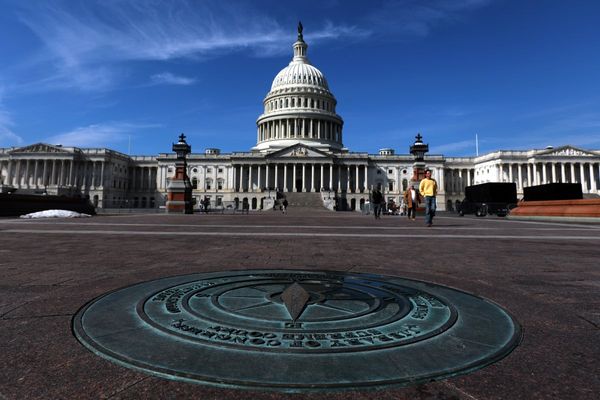
Donald Keene was a scholar of Japanese literature whom even the Japanese held in the highest regard, and we writers also respected him. When I had an opportunity to interview him about "The Tale of Genji" at his home in New York, I asked him a broad question that I'm sure he was often asked by reporters: Could he please name his top three works of Japanese literature?
The mild-mannered Keene, who died last year, replied with a smile, "Number one, of course, is 'The Tale of Genji.'"
The second was "Five Women Who Loved Love," a collection of short stories by Osaka writer Ihara Saikaku published in 1686. This work and others by Ihara were the first examples of literature for the masses in Japan, and Keene gave Ihara high marks as a leading figure of the Japanese Renaissance in the 17th century.
For his third choice, Keene agonized a bit before deciding on a modern novel, "The Makioka Sisters" by Junichiro Tanizaki. The novel consisted of three volumes, published successively in 1946, 1947 and 1948.
The story centers on four sisters born into a merchant family in the Semba district in Osaka. It depicts their lives maintaining traditional Japanese customs, such as cherry blossom viewing, catching fireflies, and looking at the moon, amid the turmoil of a world heading toward World War II.
The story is set in Osaka, where the eldest daughter took over the family business after marrying a man who was adopted by the family, and Ashiya, Hyogo Prefecture, where the second daughter lives with her husband.
Ashiya is west of Osaka, about 15 minutes away by the train bound for Kobe, and is full of wealthy people. However, every year, the sisters would go the opposite direction, to Kyoto, for their cherry blossom viewing.
In an excerpt from the novel, Tanizaki describes why:
"There are cherry blossoms near her house in Ashiya, and she can view them as much as she wants from the window of the Hankyu Railway train (Note: the railway line connects Kobe, Ashiya, Osaka and Kyoto stations in that order), so it was not like she was limited to Kyoto. But just as a sea bream would not be tasty if it weren't from Akashi, Sachiko could not feel that she had seen cherry blossoms unless she saw them in Kyoto."
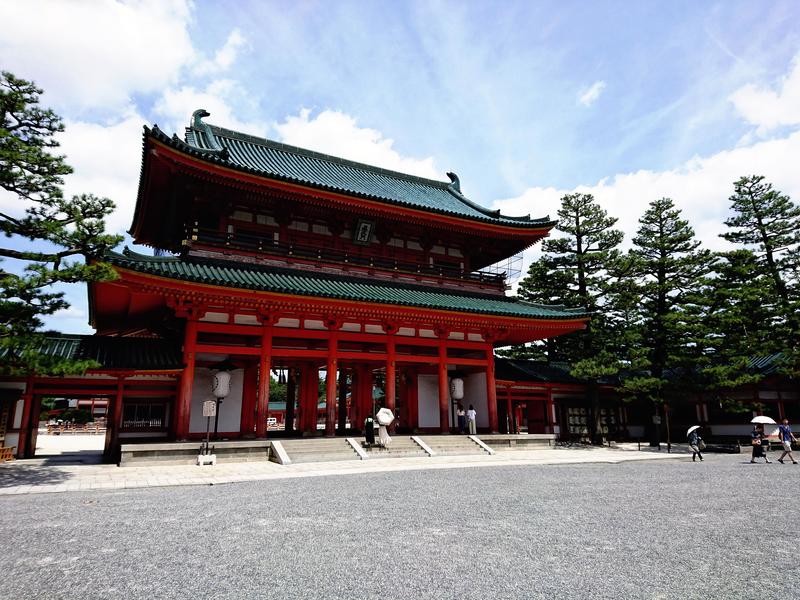
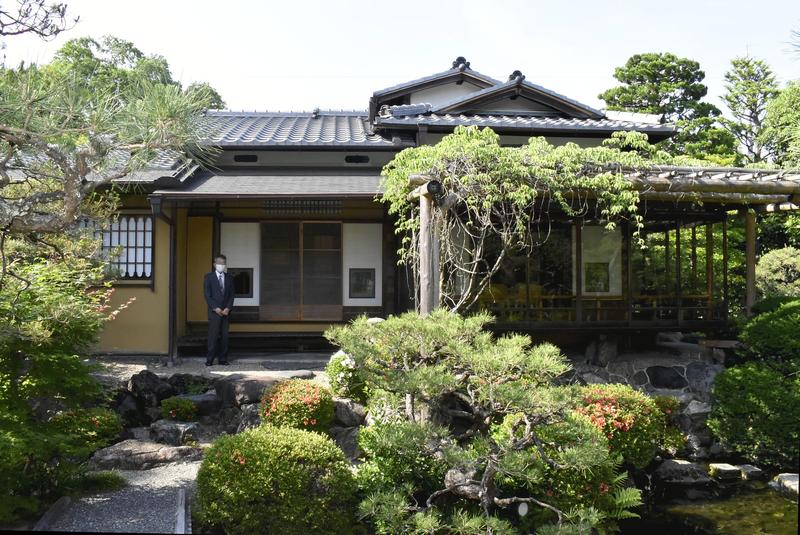
The sisters would always stay for days in Kyoto and visit many famous spots for cherry blossom viewing. The final spot would be Heian Jingu Shrine, because they wanted to see a red weeping cherry tree. The tree had been a favorite of Tanizaki himself. The sisters would have dinner at Hyotei, a Japanese cuisine restaurant in the Nanzenji district in Kyoto. The meal at Hyotei came with sashimi of sea bream caught off Akashi, which remains so even today.
But why the attachment to Kyoto?
Osaka has been known as one of Japan's three major cities since the Edo period (1603-1868), along with Edo (now Tokyo) and Kyoto. But because it was the economic center, Osaka was considered to lack places worth seeing. Edo was the heart of politics, while the ancient capital of Kyoto was thought to be the center of culture, religion and education.
Tanizaki was born in the Nihombashi district of Tokyo and moved to the Kansai region after the 1923 Great Kanto Earthquake that devastated Tokyo. The novelist moved numerous times in the Kansai region, and after trying places with a good living environment like Kobe, he eventually settled in Kyoto. He often went to Hyotei, which was within walking distance.
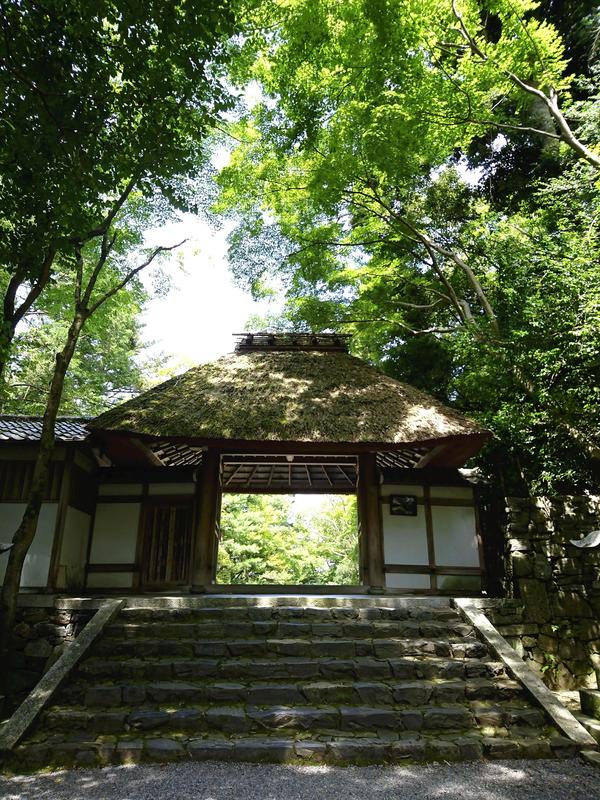
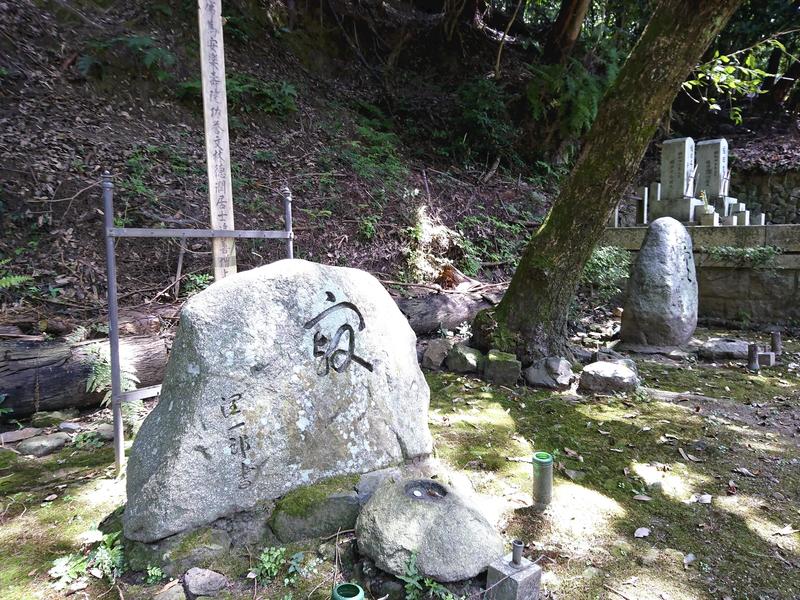
Tanizaki liked Honen-in temple, which was also within walking distance, and bought a tomb there.
By the way, I lived in front of Honen-in temple during my childhood. I have heard that one day, when I was taken for a walk in my stroller, we passed Tanizaki. He looked at me and said, "Oh, how cute! Is it a girl?"
Read more from The Japan News at https://japannews.yomiuri.co.jp/