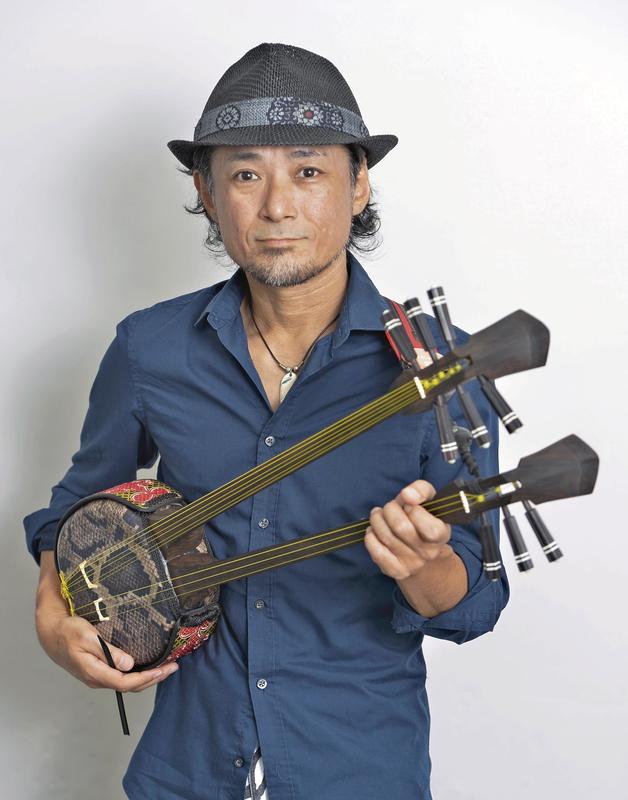
As a performer of shima-uta, the traditional island ballads generally associated with Okinawa, singer-songwriter Atsushi Tanaka is making waves with his major debut single "Oshima Elegy."
The name "Oshima" elicits different images, such as the setting for NHK's drama "Segodon." But in this case, the attention is on the island of Amami-Oshima.
To mood-filled, folksy sounds, he declares "No, it's not Okinawa," and "Yes, we're part of Kagoshima Prefecture" as he humorously points out the characteristics of Amami-Oshima and how it differs from Okinawa Prefecture.
On the subject of local sake, "It's not [Okinawa's] awamori, it's kokuto shochu," he sings, referring to the brown sugar shochu of Amami-Oshima. He also points out that the type of shamisen used in both locales for their brand of folk music is "totally different."
"I tried to explain the difference between Okinawa and Amami during my concerts, but it didn't seem to get through," Tanaka said. "I wanted to put that feeling into a song."
A fan of standard Japan pop tunes since his youth, Tanaka said, "I wanted to write a mood song that felt like something from the Showa era. Maybe it could be something people would sing at karaoke."
The song was well received during a performance before people with Amami ties, and he released it as an indie song. That led to its major debut.
Tanaka was raised in Tokyo, but his grandfather was born on Kikaijima island in the Amami archipelago. His grandfather would repeatedly host get-togethers for others from Amami-Oshima, and it was at those parties that Tanaka heard the shima-uta of Amami -- not that he had much interest at the time.
He was more interested in listening to the Beatles and Eric Clapton. In time, it was the blues of B.B. King and Muddy Waters that caught his fancy.
Playing music since boyhood, it was not until his grandfather died and he was already past 30 that he took up the shamisen. "My relatives were always saying, 'Give it a shot,'" Tanaka said. "I suppose it reminds them of Granddad."
He also starting playing together with Ikue Asazaki, an acquaintance of his grandfather who is regarded as the leading performer of Amami shima-uta, and also appears as a member of the shima-uta unit "Maburi."
"What I had heard was not intended for an audience, but was just a shima-uta sung by my granddad and his buddies while drinking," Tanaka said. "That's the feeling I want to convey."
Read more from The Japan News at https://japannews.yomiuri.co.jp/