CHENNAI: The Tamil Nadu government’s hurried 10.5% vannyiar quota law was star-crossed since the inception.
In 2018, the Union government had removed state governments’ authority to include socially and educationally backward classes for grant of quota in jobs and education. They can identify, but inclusion could be done only by the Union government. Hence, the February 26, 2021, Tamil Nadu law apportioning more than half the quota meant for most backward classes (MBCs) had no constitutional basis.
Till Parliament restored the states’ power in May 2021, following an uproar over the Maratha reservation case, no state could modify the reservation list of castes. Yet, that was what the AIADMK government did moments before assembly polls were announced in TN.
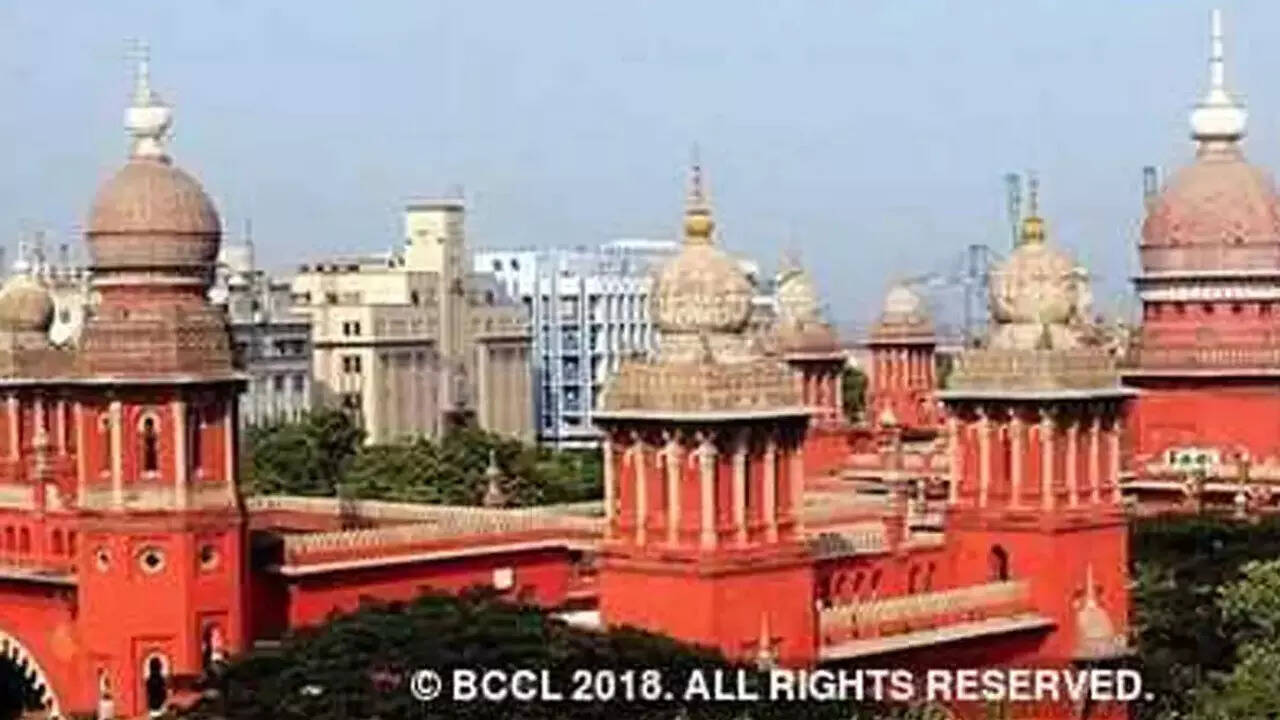
It is, hence, of little surprise a Madras high court’s 184-page verdict, penned by a division bench of Justice M Duraiswamy and Justice K Murali Shankar, raised seven critical issues and answered all of them against the law. The first question was whether the TN state legislature had any competency to carve out an internal reservation after 102nd Constitutional Amendment Act, 2018, and before 105th Constitutional Amendment Act, 2021.
Another query was can a quota be based entirely on caste? The answer was a reasoned ‘no’. The Constitution treats all castes, including sub-castes, as one group for a social purpose, and this group cannot be subdivided. That was the spirit of the Supreme Court’s constitutional bench judgment in the E V Chinnaiah vs State of Andhra Pradesh case.
TN’s MBC is a bouquet of 116 and they together enjoyed 20% reservation. The now-quashed sought to give vanniyakula kshatriya -- comprising subsects like vanniyar, vanniya gounder, gounder or kander, padayachi, palli and agnikula kshatriya --alone 10.5% reservation. The remaining 115 MBC communities will have a 9.5% quota, of which the denotified communities within MBC will get 2.5% and other MBCs will get the rest.
One argument held out by the provanniyar quota lobby was that TN had an internal quota for Muslims within backward classes and arunthathiyars within scheduled castes. The Madras high court on Monday smashed this comparison saying: “So far as reservations for Muslims and arunthathiyars are concerned, the population figures are enumerated in every census, and based on that, the backwardness and inadequate representation has been studied and a valid commission report had been submitted.”
In the case of the 10.5% quota law for vanniyars, other than the available population figures of 1983, there is no data on any of the requirements. “Everything was done in a hasty manner. Where are the statistics to show target beneficiaries are socially backward? Ideally, a committee should have made recommendations based on data,” says constitutional lawyer V Raghavachari.
The sub-classification of MBCs into three categories can be done only on adequate population data and objective criteria. Justice K Chandru, former judge of Madras high court, said the TN law could not stand scrutiny because any reservation law would need data. “Even if there is data, the Chinnaiah case of Andhra Pradesh will be staring at our face,” he said.
As for the competency of the state to come up with such a law, the court pointed out that the law brought in by the state to protect 69% reservation provided in TN in 1993 has been placed in the Ninth Schedule of the Constitution. How can a law insulated from judicial scrutiny be tinkered with by the state without any amendment to the 1993 law?