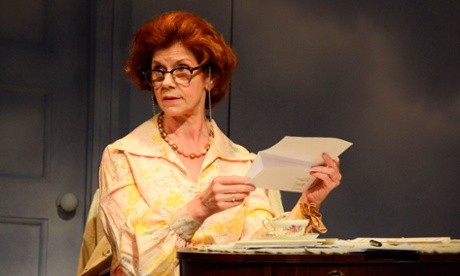
Alan Bennett’s monologues were written for the TV close-up and this trio of them doesn’t always benefit from being exposed on stage. In A Cream Cracker Under the Settee, Stephanie Cole’s ageing but fiercely independent, hygiene-obsessed Doris appears to be stranded in a minimalist wasteland that has more in common with purgatory than a suburban sitting room in 1980s Yorkshire.
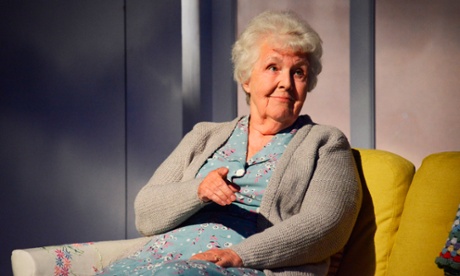
Maybe that’s the point. Francis O’Connor’s striking design, with its cloud-scudding walls and ceiling, certainly provides a link between the three, suggesting the vastness of a world that is in sharp contrast to the closed-down lives of Bennett’s protagonists. In Lady of Letters, the obsessive letter writing of Siobhan Redmond’s lonely Miss Ruddock turns out to be less benign than initially appears and far more liberating, too; in A Chip in the Sugar, the mentally fragile Graham (Karl Theobald) finds his small world tilts when his 72-year-old mother takes up with an old flame.
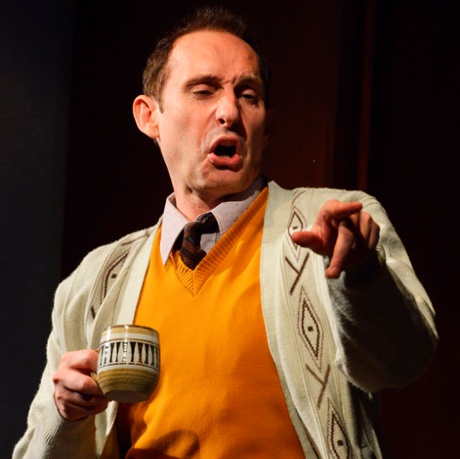
There is plenty of wry humour here, but the whole thing lacks bite and there are few surprises, although Redmond has fun when Miss Ruddock is unexpectedly released from the captivity of the childhood home she once shared with her mother. Theobald delicately plays on the gaps between what Graham says and his real feelings and dependence on his mother, and Cole hints at the emptiness in a marriage where obsessive tidiness becomes a retreat from dealing with the loss of a baby.
But the emotions are muted, often quite cosy rather than genuinely painful, in both Sarah Esdaile’s revival and Bennett’s original script. It’s a very pleasant evening full of unchallenging and comforting stereotypes. Putting the three monodramas side by side points up the repetitiveness of the writing and what 30 years ago may have seemed like social observation now comes across as a eulogy for a disappeared world.
- At Theatre Royal, Bath, until 8 August. Box office: 01225 448 844.