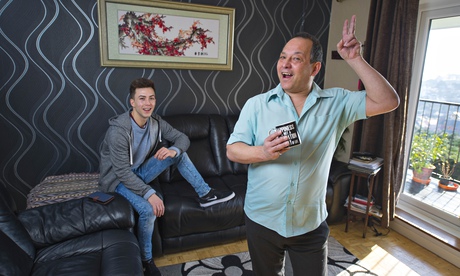
It was an advert in the paper that brought Peter Pike together with the two young men who now call him “Pops”. A local homelessness charity, Nightstop Devon, was looking for people willing to offer a bed for the night. “It was a time when it was very cold, wet and miserable,” he says. “I thought: ‘I’ve got a spare room’, and applied.” Four years later the rooms which were occasional lodgings for his nieces are home to Rudi, 24, and Beau, 23 – brothers who had both found themselves homeless after a family breakdown. As well as support, he has given them the permanent address needed to do things such as open a bank account, apply for a job and even register with a GP.
Through the scheme, hosts offer a hot meal, a bed for the night and use of a washing machine and can claim up to £15 a night in expenses. Pike is a social worker and had had contact with homeless young people before: he had “a vague understanding” of what he was letting himself in for when the first person turned up on 29 December 2011. He is single, but does not think other individuals or people with families should be daunted. He says 99.9% of his experiences were good. “Most of them would have been on the streets, or continuing to sofa-surf, or in situations where they would have been vulnerable.”
Peter, who is now 53, collected his first guest, Shaun, from the station. “When we arrived at my home it was simply a case of settling him in with a hot drink, I showed him the room and he then unpacked his bag and washed all of his clothes. I remember him sniffing his clothes when I brought them to him, folded, and he said: ‘You probably think it odd smelling my clothes but just to have fresh clothing is amazing’,” he says. “By the time we finished our evening meal Shaun had told me most of the difficulties he’d faced living on the streets. It’s a daunting place with an awful lot of prejudice.”
After that, more than 20 other homeless men were sent by the charity. “Some stayed for just one night, some stayed for two weeks,” says Pike.
Like the others sent by the scheme, Rudi turned up with just a couple of hours’ notice. He stayed for two weeks, then moved into a project. But then he contacted Pike to say it wasn’t working out and he was going to end up back on the streets. “He asked if he could move in as a lodger,” Pike says. He says he talked about the options with Rudi, then ran his plan past friends at his local church, but had “no reservations” about the idea. Rudi moved in in April, then in December his brother Beau took the second spare room.
It hasn’t all been easy. The brothers hadn’t lived together for several years. Beau says that it was a struggle adapting to life in a family home after living in hostels. “The first six weeks were horrible,” he says. “I went from seeing 30 people every day to two people and two cats. It took me a while to learn to be comfortable in my own company.”
The two claim housing benefit to cover their rent while they study. Neither had English or maths GCSEs, so they’ve had to complete them before moving on to the next level.
Beau says that coming to live with Pike has changed their lives. “Pops has really made a difference to me. It would be amazing if there were people who were inspired by what he has done.”
There are about 40 Nightstop schemes around the UK offering temporary emergency accommodation to homeless people aged between 16 and 25. Hosts are trained and vetted before they are added to the list. Kevin Hunter, coordinator of Nightstop Devon, says accommodation is typically arranged on a night-by-night basis, as the charity is keen to see people every day to check that they have turned up to appointments and done the other things necessary to try to find a more permanent home. Then those in need of housing undergo a risk assessment and are matched with hosts. “Some hosts say no to people with criminal convictions; others won’t take someone who has been on drugs,” says Hunter. The scheme won’t usually be able to help a homeless person if they have a recent history of violence, arson or sexual offences, or a serious criminal record.
Nightstop schemes are typically run by charities and coordinated by Depaul UK, which sets standards for the schemes. In 2014 it helped 5,000 homeless people through its network of 700 volunteers. It wants to double that network this year – but that will still only be tapping into 0.01% of the 7.5 million UK households with a spare room.
Most schemes offer out-of-pocket expenses, and HMRC says there is no need to declare this money to the taxman. Depaul says that you should tell your home insurer that you are becoming a host; in many cases it won’t affect your premiums.
By lunchtime on Wednesday, the Nightstop scheme in Devon was looking for beds for five people; some days more people come in for help, other days no one does. But the charity is always in need of hosts. “It’s about having the right type of hosts available – we might have four boys in need of homes but only have someone who can host girls available,” Hunter says.
One problem people face when they look for more permanent accommodation is landlords’ increasing reluctance to take on tenants who are on housing benefit. Recent research by the website SpareRoom.co.uk found that only 18% of landlords currently let to tenants on housing benefit compared with 33% in 2012 and many now state “no housing-benefit tenants” in their ads.
Nightstop: 020-7939 1234