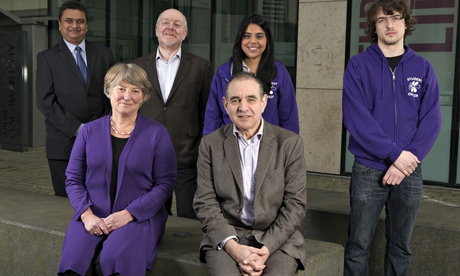
Five years ago, ahead of the Browne review, which led to higher tuition fees, Education Guardian visited students and staff at one institution to talk about their hopes and fears for the future. At the time, Kingston University, Surrey, had just completed a decade of rapid expansion, which had seen student numbers nearly double to 22,782. When Julius Weinberg became vice-chancellor in 2011, he decided to concentrate on raising the quality of applications. Like other parts of the sector, the university experienced a dip in applicant numbers after tuition fees tripled to £9,000 in 2012, with part-time students particularly affected. Ahead of the general election, we returned to find out what is on the minds of staff and students after five years of coalition government.
The vice-chancellor
Julius Weinberg has been vice- chancellor of Kingston since April 2011
Higher education has changed less than people feared. There have been some problems in terms of a reduction in numbers of part-time students, but in some ways that is more to do with the recession than the funding environment. Fears that students from non-traditional backgrounds might be put off by concerns about debt haven’t come to fruition, although I think at a time of full employment we might have had a different outcome: for young adults leaving school there weren’t many choices.
For universities it is a less certain environment. They are having to be much more flexible and fleet of foot. One of my fears is that we separate into a two-tier system of middle-class kids that can afford it moving away for university, and those who cannot staying at home. If we continue to run our universities around the residential ideal, there will be problems.
I think higher education should be free at the point of consumption, funded directly through taxation. The only benefit of the current system is that university income has been taken out of the anxieties of what might happen through taxation cycles. But the government is still spending huge amounts supporting higher education, and students think they are paying it all.
I’m an old-school liberal. I don’t see that any party has been brave enough to stand up for some of the values I hold dear. I wish there was a party that fundamentally spoke to the values of public service that I believe in.
The students’ union president
Denza Gonsalves studied biochemistry at Kingston and is in her second year as president of the students’ union
Many people I studied with at college decided not to go to university because of the fees. The only thing that tripling fees did was to tell them to look at alternatives – and they did, by getting apprenticeships or jobs.
But we know that people from disadvantaged backgrounds still want to get a place at university, and incentives from organisations such as Offa [The Office for Fair Access] mean money has been available to support them.
My fear is employment opportunities. I worry that there won’t be enough jobs for graduates after they have got their very expensive degrees. It’s easy to understand why young people find it difficult to engage in politics. I’m not sure which way I’m voting – but I will vote.
The student
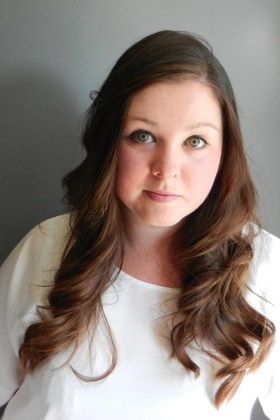
Holly Hart, 26, is in her third year at Kingston University studying for a business management practice degree, while working in the head office of Toyota’s sales and marketing department in Surrey. She has three children
My first two years were taught at Kingston College so fees were £3,750 a year. This third year was the full £9,000. It caused a lot of hesitation. I’m coming out of this with a ridiculous amount of debt – nearly £17,000 in course fees and at least £15,000 in maintenance loans. It’s a big risk to take because how do I know I will get a return on my money? My worst fear is for fees to rise.
The Green party is talking about student fees and debts being wiped, and sounds like it is very much centred around helping students. That would be a big deciding factor. Unless something comes up, I’m probably voting Green.
The faculty head
Mukesh Limbachiya has been head of the school of civil engineering and construction at Kingston since 2009
The Browne report failed to recognise that there is increasingly a requirement to have a postgraduate degree. The lack of support for postgraduates seems economically disastrous and socially divisive. The first cohort [of those paying £9,000 fees] are coming out this summer and are less willing to pay even more fees for postgraduate study.
The policy around the international student visa system is the biggest barrier for higher education. I’m not saying we have to have an open-door policy, but consistently different messages aren’t assisting UK plc. Other countries have a clearer idea of how to present themselves in a global market. We are proud of the reputation of British education. There is a danger that others will overtake that. I’m going to vote but the jury’s still out. I’m leaning towards Labour.
The deputy dean
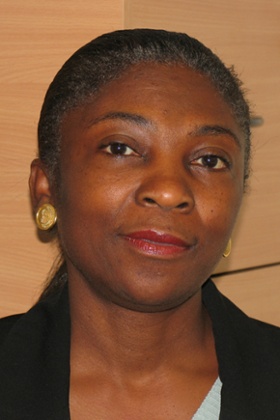
Val Collington has been at Kingston for 19 years and is deputy dean in the faculty of health, social care and education
I’m still worried, just as I was five years ago, about maintaining fairness, although I haven’t got the impression that those likely to be disadvantaged due to finances aren’t being able to access higher education. They can get a grant, and scholarships are still being offered. We need to think more in terms of the jobs our graduates will have.
I don’t want to say which way I’m going to vote. My confidence in the parties as they stand is not as clear-cut as it was so I’m rethinking .
The student services director
Bruce Armstrong is Kingston University’s dean of students
The fees issue, after a small blip, doesn’t appear to have put off full-time students, although at open days it’s clear not everyone understands how it works. Increased competition for a limited pool of students has caused many institutions to look closely at their provision. I was concerned that some might make cuts in areas outside the academic sphere, such as student services, but that hasn’t been the case at Kingston.
Stability is my main concern. It will be a very challenging sector to be in over the next five years, and those that survive will be much better attuned to what they can offer students.
I will vote tactically. Vince Cable is my MP. If I had the opportunity, I would probably vote SNP, but the idea of some form of coalition doesn’t depress me at all.
The lecturer
James Orwell joined Kingston in 1998 and is associate professor in the school of computing and information systems
The gradual removal of student number quotas for each institution means in a subject like computer science we are suddenly very exposed to other institutions taking strategic decisions to grow into our area. We are having to raise our game and think much more carefully about provision of services to students.
A counter-productive effect of the fees reforms is that some students are feeling, because they have paid all this money, their degree is going to happen without them having to do that much.
My fear is that the government will look at the proportion it is paying and ration the loans on the basis of the students most likely to pay back. I’m going to vote Lib Dem – I’ve forgiven them.
The union activities officer
Will Franden came to Kingston from the US to study for a BA in music for a year and has stayed on to be vice-president for activities at the students’ union
It’s not the amount people will actually be paying – it’s more the idea that university is worth £9,000 a year and you have to be able to afford that much to be able to get an education. It’s a deterring statement. My fears are privatising the student loan book and increases in tuition fees. Labour saying it will reduce tuition fees to £6,000 is a step in the right direction.
The union education officer
Noor Khan studied biochemistry at Kingston and is in his first year as vice-president, learning and teaching, at the students’ union
One of the major changes is that my job now involves aspects of strategy and how the university and students think about teaching and learning – not just in terms of the curriculum but also pastoral care and the personal tutor system. The Browne review has changed quite a lot in terms of what students want from an education. The other side of spending as much as they do, is increased expectations of university. Further cuts to higher education really worry me because that would mean a reduction in services to students.
My parents are very good Labour supporters but I’m definitely voting Green.
The sociologist
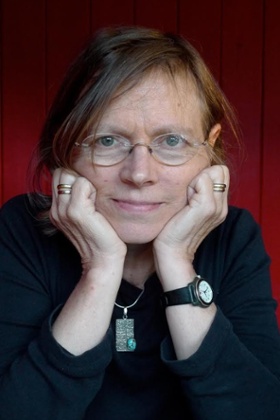
Vron Ware, chair of sociology and gender studies, joined Kingston last year
My hope – although I don’t expect it to be realised – is we need to do what Germany did and abolish student fees. I think they have been disastrous. While numbers of students haven’t necessarily gone down, it changes the nature of what we do and I cannot help thinking about the amount of debt students are accumulating, which affects their sense of what they are doing in getting a degree. It has a crushing effect. I’m struck by how difficult the weekly pattern of life can be for students.
My hope is that we can maintain university as a place of learning and intellectual development and excitement rather than a place where people just get qualifications.
The educationist
Robin Middlehurst has been professor of higher education at Kingston since 2007 and is on part-time secondment to the Higher Education Academy
One fear I had has not come to pass, in that students are still applying to study humanities and social science subjects. The political argument over the coalition’s decision to open the English HE market to give more choice to students has not yet been resolved, though, and one reason is there hasn’t been a higher education bill in this parliament. This means that nobody has established how to regulate the whole sector, including new private institutions. There needs to be a bill. I’m even clearer about that now than I was five years ago.
None of the ideas coming out of the political parties demonstrates a good understanding of the way institutions or student choices work. There is a real problem with targets – and the worst one for HE in the last five years has been counting international students in immigration targets. If it continues, it’s a disaster, not just for the ability to recruit international students but for the whole country, economically and socially.
If there is a hung parliament there could be another election and the most serious worry is a potential referendum on the EU, which has major implications because the UK is such a big recipient of research income from the EU.
I will probably vote Labour. I have a long-standing support for Labour’s principles and direction of travel.
- This article was amended on 28 April to correct the spelling of a name in the caption