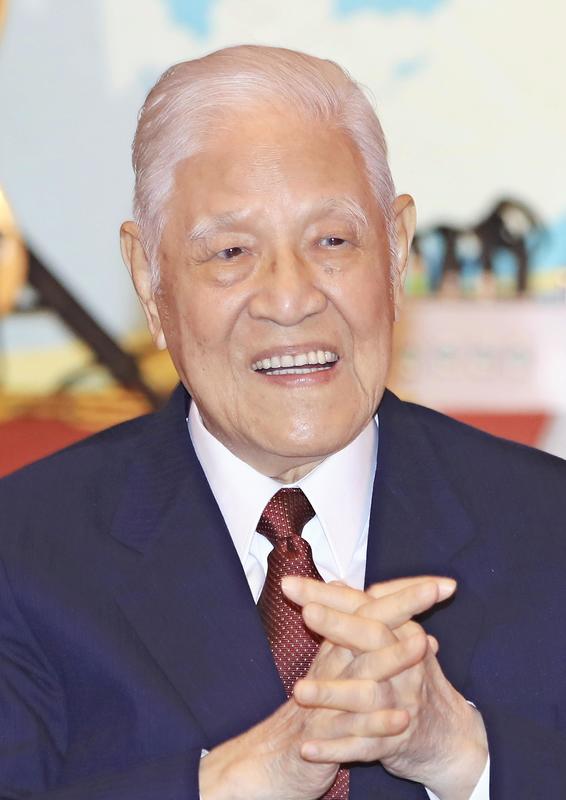
TAIPEI -- In China and South Korea, anti-Japanese public sentiment rooted in Japan's past invasion and colonial rule is still strong. In contrast, many people have friendly feelings toward Japan in Taiwan, which was under Japanese rule for 50 years. One of the main reasons is the reform of history education promoted by former Taiwan President Lee Teng-hui, who passed away in July.
Japanese rule over Taiwan started in 1895 and lasted until 1945 -- from when China's Qing Dynasty ceded Taiwan to Japan following the First Sino-Japanese War until Japan was defeated in World War II. During that period, the people of Taiwan had Japanese names, spoke Japanese and fought for the Japanese military.
In 1949, the government led by the Chinese Nationalist Party (Kuomintang, or KMT) fled to Taiwan from mainland China after losing the civil war with the Chinese Communist Party, and imposed a dictatorship under martial law. The KMT government, proclaiming its Republic of China to be the legitimate ruler of all of China, instead of the People's Republic of China on the mainland, forced "former Japanese" -- local Taiwan people who had lived as Japanese -- to study history as "Chinese."
"Taiwan's history became a taboo subject. If you studied it, you could have been seen as a dangerous person attempting to overthrow the government or supporting Taiwan's independence," said Thomas Hsiao, a former history teacher who now runs the website Taiwan Bar, which provides information on Taiwan history and culture.
School textbooks in Taiwan had almost no description of the period under Japanese rule.
A 1970 edition of a junior high school history textbook only stated that Taiwan had "returned to its homeland" due to Japan's defeat in the war. A 1978 edition of the textbook newly included a section titled "Persecution of Taiwanese compatriots," which described anti-Japanese resistance movements among local people and their suppression by Japanese authorities.
In contrast, the Second Sino-Japanese War was described in detail. The Nanjing Incident in 1937 was stated as a "massacre of 300,000 people," a statement that is believed to be exaggerated according to empirical research.
'Understand Taiwan'
Lee Teng-hui, a Taiwan-born "former Japanese," became president in 1988 and started to promote top-down democratization, aiming to create a Taiwan where the Taiwan people themselves are the island's true masters. He also changed the conventional history education.
In the early 1990s, a breakthrough in Taiwan history education took place when classes in local history were started in municipalities whose mayors belonged to the opposition Democratic Progressive Party, which had just been legalized. Lee approved of the move, which eventually led to the publication of groundbreaking junior high school social studies textbooks in 1997.
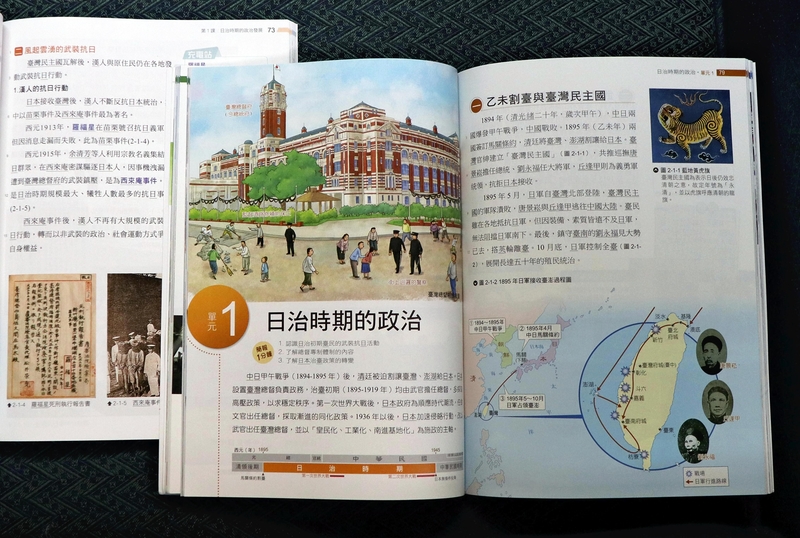
Titled "Renshi Taiwan" (Understand Taiwan), the textbooks were a set of three aimed at fostering an extensive understanding of Taiwan history, geography and society. The textbook on history featured the period under Japanese rule in two chapters over 29 pages, which accounted for about a quarter of the book.
The resistance movements against Japanese rule and the suppression by Japanese authorities were described in greater detail. The textbook also stated in detail the advantageous aspects of this period, such as economic development and the spread of compulsory education. It was further stressed that ideas about punctuality, observing laws and public awareness of hygiene were developed during this period.
"It is a fact that Japan colonized Taiwan and that local people resisted it. It is also a fact that Taiwan developed into a modern society under the Japanese rule," said Prof. Hsueh Hua-yuan at National Chengchi University's Graduate Institute of Taiwan History. "It was of major significance that the Understand Taiwan textbooks focused on both aspects."
Hsiao of Taiwan Bar said the most important change in education brought by Lee's democratization was "introducing pluralism," which enabled students to think about history through a variety of facts and values.
As in Japan, Taiwan later started a system for screening school textbooks by authorities. The current social studies textbooks for junior high schools basically follow the contents of the Understand Taiwan textbooks. They are very different from school textbooks in China, which thoroughly denounce the atrocities of the Japanese military.
In the 1990s, when the Understand Taiwan textbooks emerged, then Chinese President Jiang Zemin was trying to boost the Chinese Communist Party's momentum by enforcing patriotic education. Embedding anti-Japanese sentiments became a mainstream part of China's history education.
Not 'pro-Japanese'
Lee's education reforms were not intended to switch Taiwan's anti-Japanese education to pro-Japanese education. The "massacre of 300,000 people in Nanjing," for example, is still contained in current textbooks in the section on Chinese history.
Through the process of democratization, people in Taiwan have learned about the period under Japanese rule and its various aspects and calmly accepted them as part of Taiwan's history. This attitude is free from anti-Japanese or pro-Japanese sentiments.
Japan favorite for 59%
In Taiwan, Japanese words and phrases are widely used in TV commercials. Japanese houses built during the colonial period still remain, and museums and memorial facilities honor the achievements of Japanese people who contributed to Taiwan's development.
An opinion poll regularly conducted on Taiwan residents by the Japan-Taiwan Exchange Association, a point-of-contact organization established by Japan, shows that Japan is always the No. 1 answer to the question about "Your most favorite country (or territory)."
Last year, before the coronavirus pandemic occurred, about 4.89 million people from Taiwan visited Japan, including repeat visitors, a significant number from an island with a population of about 23.5 million.
One reason why many Taiwan people have affection for Japan is that the KMT regime that came from the mainland oppressed people who had lived as Japanese under colonial rule. So for many people, the colonial period became a nostalgic part of their historic memories.
The generations who received the updated history education naturally see themselves as "Taiwanese" and have little or no specific feeling toward Japan stemming from the past. Instead, they have come to like Japan through anime, manga and high-quality products.
Read more from The Japan News at https://japannews.yomiuri.co.jp/