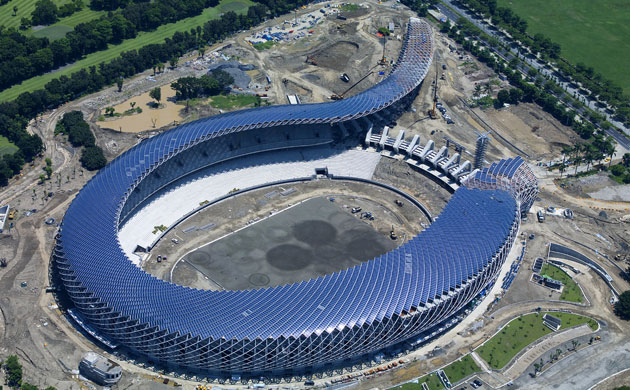
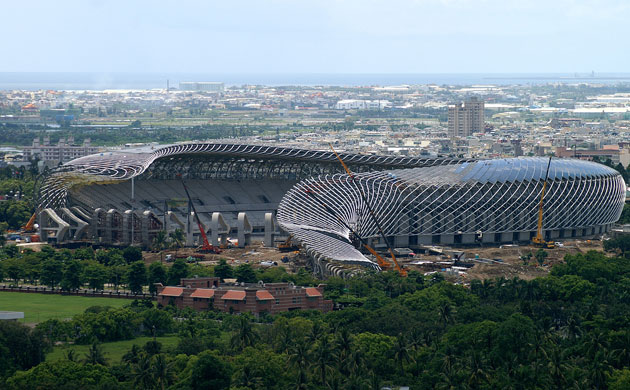
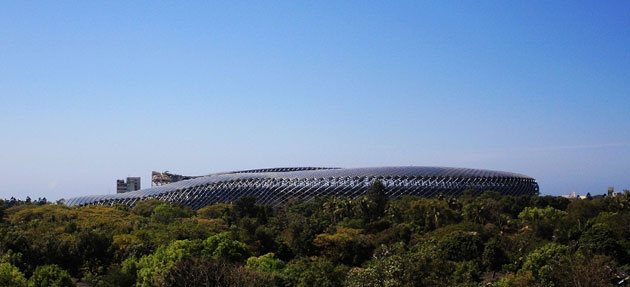
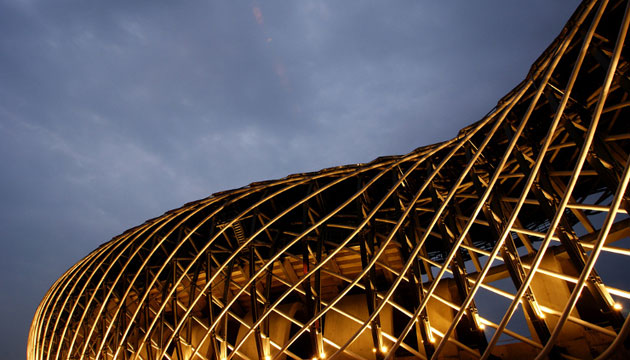
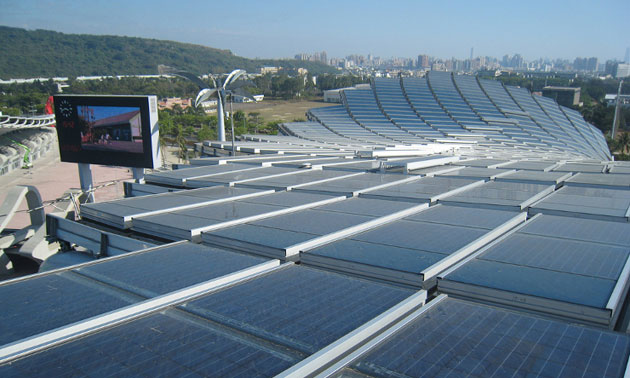
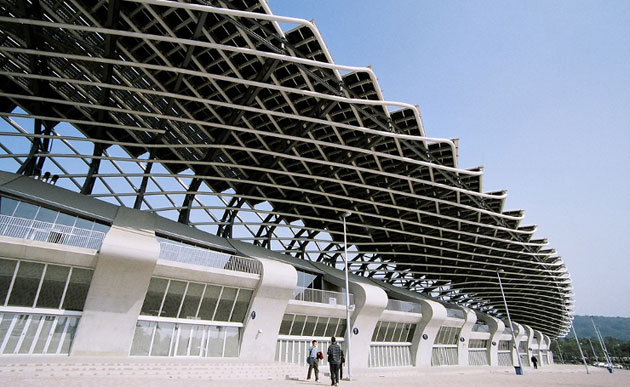
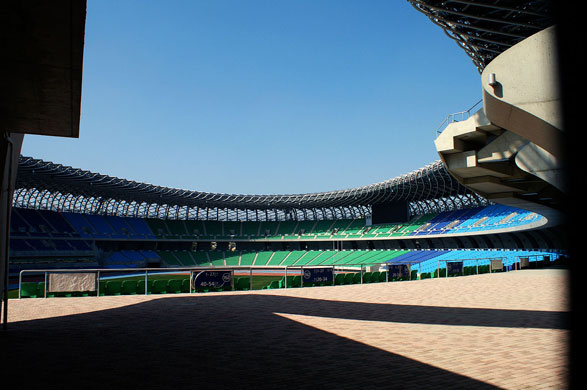
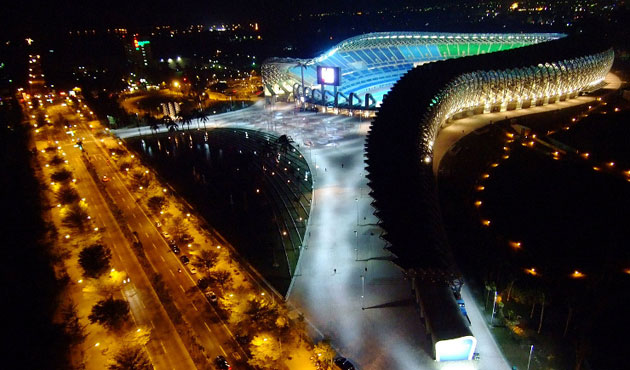
Toyo Ito’s design has a 14,155 sq metre solar roof that is able to provide enough energy to power the stadium’s 3,300 lights and two jumbo vision screensPhotograph: Chi Po-lin/deputydog.comBuilt on approximately 19 hectares, nearly 7 hectares has been reserved for the development of integrated public green spaces, bike paths, sports parks, and an ecological pond. Additionally, all of the plants occupying the area before construction were transplantedPhotograph: PeelldenThe stadium integrates additional green features such as permeable paving and the extensive use of reusable, domestically made materialsPhotograph: deputydog.com
It takes just six minutes to power up the stadium’s entire lighting systemPhotograph: deputydog.comOn days when the stadium is not being used, the Taiwanese government plans to feed the extra energy into the local gridPhotograph: deputydog.com... where it will meet almost 80% of the neighbouring area’s energy requirementsPhotograph: deputydog.comThe stadium will generate 1.14m KWh a year, preventing the release of 660 tonnes of carbon dioxide into atmosphere annuallyPhotograph: PeelldenThe arena is clad in 8,844 solar panels that illuminate the track and field with 3,300 luxPhotograph: deputydog.com
Sign up to read this article
Read news from 100’s of titles, curated specifically for you.