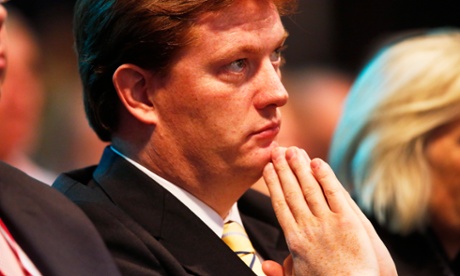
Appeals for tactical voting have emerged from two opposite ends of the Scotland’s political spectrum, from one of the most vulnerable figures within the Tory-Lib Dem coalition – Danny Alexander, and from Scotland’s most famous socialist, Tommy Sheridan.
Over the weekend, Alexander, the beleaguered Lib Dem MP and Chief Secretary to the Treasury, openly urged Tory and Labour voters in his Highland’s seat to support his bid to hold it against an insurgent Scottish National party challenger, Highlands council leader Drew Hendry.
With Hendry widely seen as being on the brink of securing Alexander’s highly-prized scalp on 7 May, Alexander told Scotland on Sunday he wanted referendum no voters to back him on a stop-the-SNP ticket:
Yes. I am absolutely saying to people that the nationalists here are campaigning for independence. If you don’t want that then the only way to stop the nationalists is to vote Lib Dem in this constituency.
Labour and the Tories are way off the pace and they don’t have a hope of winning.
This is not an orthodox position for his party, but the Lib Dems are privately very uncomfortable about Alexander’s seat. Inverness, Nairn, Baednoch and Strathspey was singled out by Lord Ashcroft for a remarkable constituency poll earlier this year which put the SNP on 50% - more than double the 21% recorded by Alexander. In the 2010 general election, the SNP had come third behind Labour on just 19%.
The Lib Dem position is that Ashcroft’s poll fail to measure a sitting MPs’ recognition rate - the benefits of incumbency, because the sitting MP’s name is not mentioned by his pollsters.
The SNP assert that in Alexander’s case, given that his enthusiastic implementation of George Osborne’s austerity agenda at the Treasury is so damaging to his reputation, Ashcroft’s policy could actually do him a favour. And the Tory peer’s polling implies that it is the SNP which is building an anti-Alexander coalition there.
Alexander asserts:
I think constituency polling is a very fickle business. [There] is absolutely a noisy and mobilised group of nationalists and they have mobilised some people through the referendum campaign so that is the battle.
Meanwhile on the opposite end of the tactical voting and political spectrum, Sheridan’s Solidarity party, now a much diminished force after Sheridan’s brief time as a Solidarity MSP and his subsequent perjury conviction, has confirmed that it wants its supporters to vote SNP in May.
Solidarity had a conference in Motherwell on Saturday and urged its supporters to “lend” their votes to Nicola Sturgeon’s party at the general election – helping, in a small way, to increase the SNP’s chances of building a left coalition against Labour.
Sheridan said doing so would help put independence back on the political agenda – a proposition Sturgeon has been carefully downplaying. The first minister was in London on Monday to tell an audience at the London School of Economics that the SNP would be constructive partners at Westminster.
Sheridan said:
For the first time in our lifetimes the SNP could actually win a Westminster election in Scotland and send a clear independence, anti-Trident and anti-austerity message to the heart of the British establishment. This is an historically unique election. It demands a unique tactical response.
Sheridan, formerly leader of the Scottish Socialist party before his split after his successfully libel case in 2006 against the News of the World, had a successful referendum. Despite being disavowed by other independence campaigners, his Hope Over Fear tour in favour of a yes vote helped him rebuild his profile on the republican, urban left.
Sheridan has previously endorsed the SNP: he did so from jail, asserting that he would be voting for the then Alex Salmond-led SNP in the 2011 Holyrood elections (where Solidarity itself secured just 2,837 votes). Sheridan did so again on 21 September, after the referendum defeat.
Sheridan seemed to forget that when he added, in a Solidarity press release issued on Saturday:
It is unusual for me to call for anything other than a socialist vote but unique times demand unique tactics. By lending their vote to the SNP the Scottish working class can put independence, nuclear disarmament and opposition to unacceptable austerity cuts to the top of the political agenda.