Rates of malnutrition in Bangladesh are some of the highest in the world. Women and children are particularly badly affected – more than half of all pre-school age children are stunted and the majority of women suffer from chronic energy deficiency as a result of poor diets.
The Global Alliance for Improved Nutrition (GAIN) is implementing a number of projects to improve the nutritional status of people in Bangladesh – from food fortification to school feeding. This week it will launch a new project which reaches women through the workplace in order to break the cycle of malnutrition.
Thirty-five percent of Bangladeshi women have a very low body mass index. More than 50% of women suffer from chronic energy deficiency and studies suggest that there has been little improvement in women’s nutritional status over the past 20 years. According to Marti Van Liere, GAIN’s director of Maternal, Infant and Young Child Nutrition, this is a clear indicator of a long-term cycle of malnutrition and ill-health, getting married early, having children early and not getting enough food.
“Normally nutrition is looked at as a health issue and you would want to intervene through the health system, through health workers, but intervention through the health system is sometimes more suitable to curing illnesses than preventing them. Women go to see a health worker because they are sick, not because they are thin,” says Van Liere.
GAIN’s approach is founded on the belief that the best way to build programs that have sticking power is to reach out to women in their daily environment, including in the workplace since the health system may only touch people at specific times.
The organisation is already taking this approach with women’s community self-help groups in India, where a joint project with the World Food Programme provides training for women to run a factory and operate the equipment that produces supplementary food for a public distribution program.
“The benefit of these projects is that we improve nutrition at the same time as bringing economic and social empowerment to women by giving them an income,” says Van Liere. GAIN is looking to roll out this model across India and into Ethiopia.
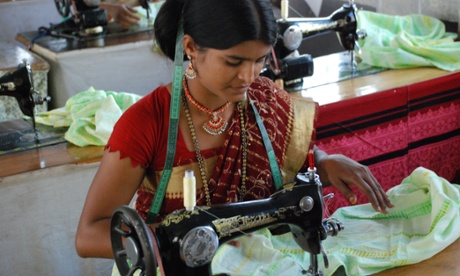
The textile industry is of huge economic importance in Bangladesh, employing 2.4 million people, of which 84% are women. Almost half of these women are anaemic and very many of them suffer from various forms of malnutrition from iodine deficiency to just sheer lack of calories
“We know from the Rana Plaza disaster how terrible the working conditions can be in these clothing factories,” says Van Liere. But not only is workplace safety important – the health and wellbeing of the workers are too. And so GAIN set up a pilot project to improve the health and nutrition situation for women employed in the garment factories.
The project forms part of a joint commitment by GAIN and BSR to Every Woman Every Child, a multi-stakeholder movement to implement the United Nations’ global strategy for women’s and children’s health. GAIN is the technical lead providing the nutrition expertise and BSR is the lead implementing partner, bringing expertise in global supply chains, workplace-based programs, and women’s empowerment, as well as a network of local partners in Bangladesh. Financial support is provided by the Government of the Netherlands.
“We’ve seen through HERproject’s more than 300 workplace programs across ten countries in Asia and Africa that workplace health interventions can deliver meaningful results for both women and their employers,” said Racheal Meiers, HERproject Director at BSR. “In this new collaboration with GAIN, we’re excited to see how those impacts can be amplified even further through food and nutritional supplement provision, and promotion of breast-feeding for mothers.”
In the first year they will pilot different models in four factories. By the end of year three the project will be reaching 42,000 women in 30 garment factories. “Working with young women – women of child bearing age - is crucial if we want to break the cycle of malnutrition,” says Van Liere. “Reaching them at their place of work offers an excellent entry point to complement the interventions through the health system.”
GAIN is planning three different types of nutrition interventions. The women will receive dietary supplements, they will be educated about nutrition for themselves as well as their children, and GAIN will test whether it is possible to improve day care facilities to encourage better nutrition and care for the workers’ children, or even offer opportunity to mothers to breastfeed their babies at work.
While GAIN is focused on raising the nutritional status of women and their children, the organisation knows that it is crucial for employers to also see the benefits. Van Liere hopes that GAIN will be able to persuade factory owners to pick up the tab by demonstrating that there are benefits for them in terms of improved productivity. This will ensure the project is sustainable and not reliant on finding donors to fund it each year.
This will be a challenge. Factory owners may fear that time spent educating the garment workers about the importance of good nutrition is time away from the production line. But studies in a variety of countries have shown evidence that improved nutrition increases productivity. If the pilot can demonstrate reductions in absenteeism due to illness, or increased productivity because of reductions in anemia, Van Liere hopes that the factory owners will be convinced.
Content produced and managed by the Global Alliance for Improved Nutrition