Among various playing styles in table tennis, there is a so-called aggressive type in which players position themselves close to the table and pick off the ball right after the bounce to create a faster-paced game. This style is employed by Tomokazu Harimoto and Mima Ito, two teenage stars who have won berths for the Tokyo Olympics.
In 2014, the International Table Tennis Federation started a transition to plastic balls and phasing out celluloid ones that had long been used. The problem with celluloid balls is that they are combustible, which caused safety concerns when they were being transported.
This transition took about six years, which many officials believe benefited the performances of Harimoto and Ito, because plastic balls have less bounce.
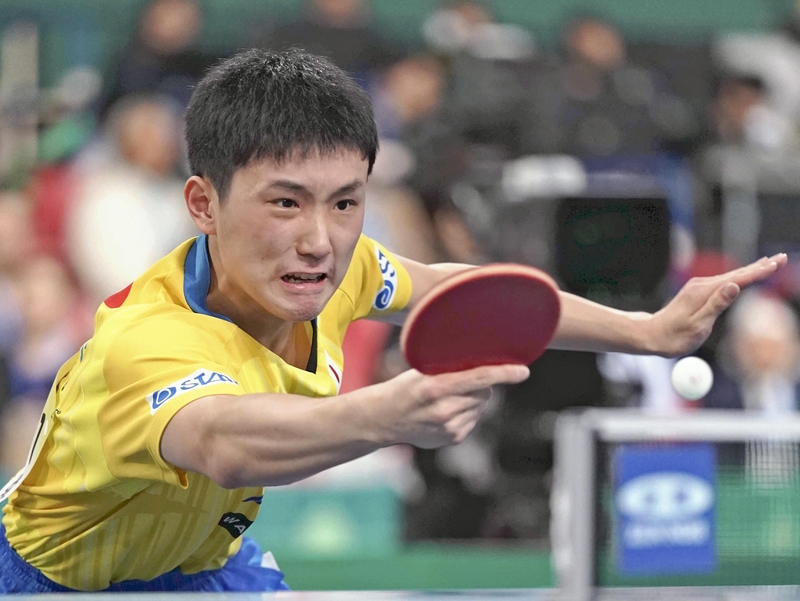
According to manufacturer Nippon Takkyu Co., since plastic is lighter than celluloid, the ball's shell must be thicker to achieve the official weight of 2.7 grams. Plastic balls absorb more energy and thus fly shorter distances. Their smooth surface makes it harder for players to spin, a disadvantage particularly for players who are good at rallies by striking farther from the table.
In contrast, plastic balls offer advantages to players like Harimoto and Ito, because they work the ball right after the bounce.
"Plastic balls give Japan a benefit because we have many players with an aggressive style," said Yoshihito Miyazaki, who is in charge of athlete development at the Japan Table Tennis Association.
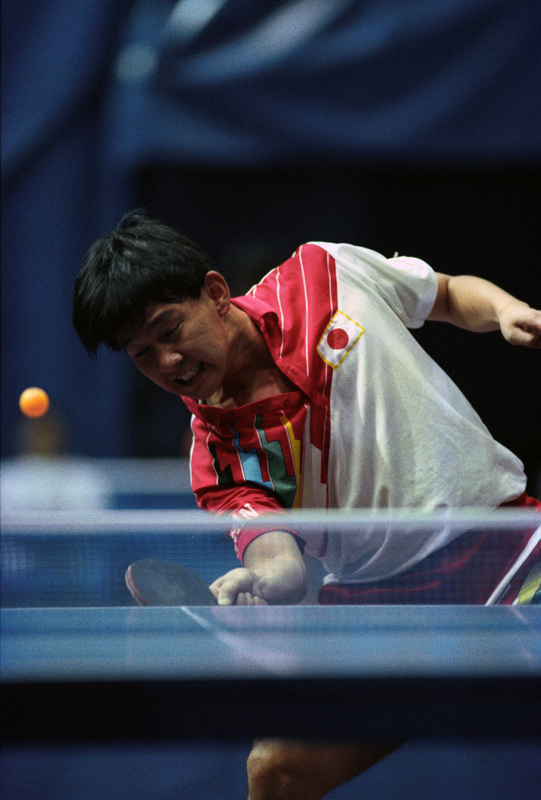
Table tennis balls have gone through changes in terms of their color, size and weight.
In the latter half of the 1980s, the late Ichiro Ogimura, who assumed the ITTF presidency around that time, felt table tennis was becoming less popular. He was alarmed particularly when a well-known TV personality created a buzz by calling the sport "gloomy."
As one of the measures implemented at that time, the color of balls was changed from white to orange. The change took a cue from tennis and was reportedly inspired by advice from then International Olympic Committee President Juan Antonio Samaranch, who recommended the color because it was telegenic. The color of competition tables was also changed to sky blue from dark green to make the sport look bright.
Orange balls were used in the 1992 Barcelona Olympics and the 1996 Games in Atlanta. The color eventually reverted to white because some pointed out there was often a lack of contrast between the orange balls and the flooring.
A further turning point came after the 2020 Sydney Olympics. Balls were made bigger from 38 millimeters in diameter to 40 millimeters, with their weight increased to 2.7 grams from 2.5 grams. Aimed an increasing rallies to excite spectators, these innovations were made in line with the commercialization of the Olympics.
These bigger and heavier balls, which make it difficult for players to spin, were initially believed to cause a disadvantage to choppers. However, a South Korean player employing this defensive style won the silver medal in the men's singles at the 2003 world championships, proving his desperate efforts to deal with the changes.
The transition to plastic balls also went through some challenges. How they bounced initially varied depending on their manufacturers. Whether players could win a match depended on how well they could master the ball they were using, and rumors say that the decision on which ball should be used for matches at the all-Japan championships came down to rock-paper-scissors.
Next summer's Olympics will be contested by Harimoto and other players who have played with plastic balls since their junior days.
The ITTF is now considering using yellow balls to once again make the sport more telegenic.
Read more from The Japan News at https://japannews.yomiuri.co.jp/