
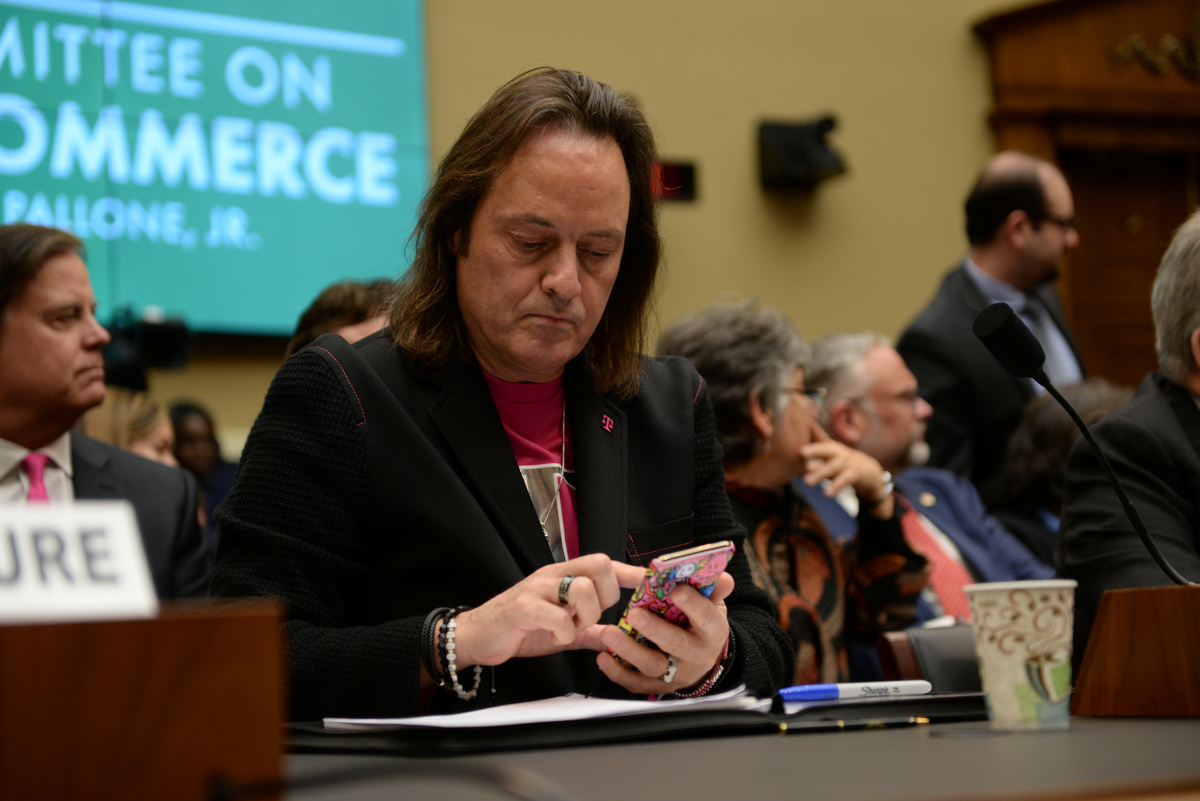
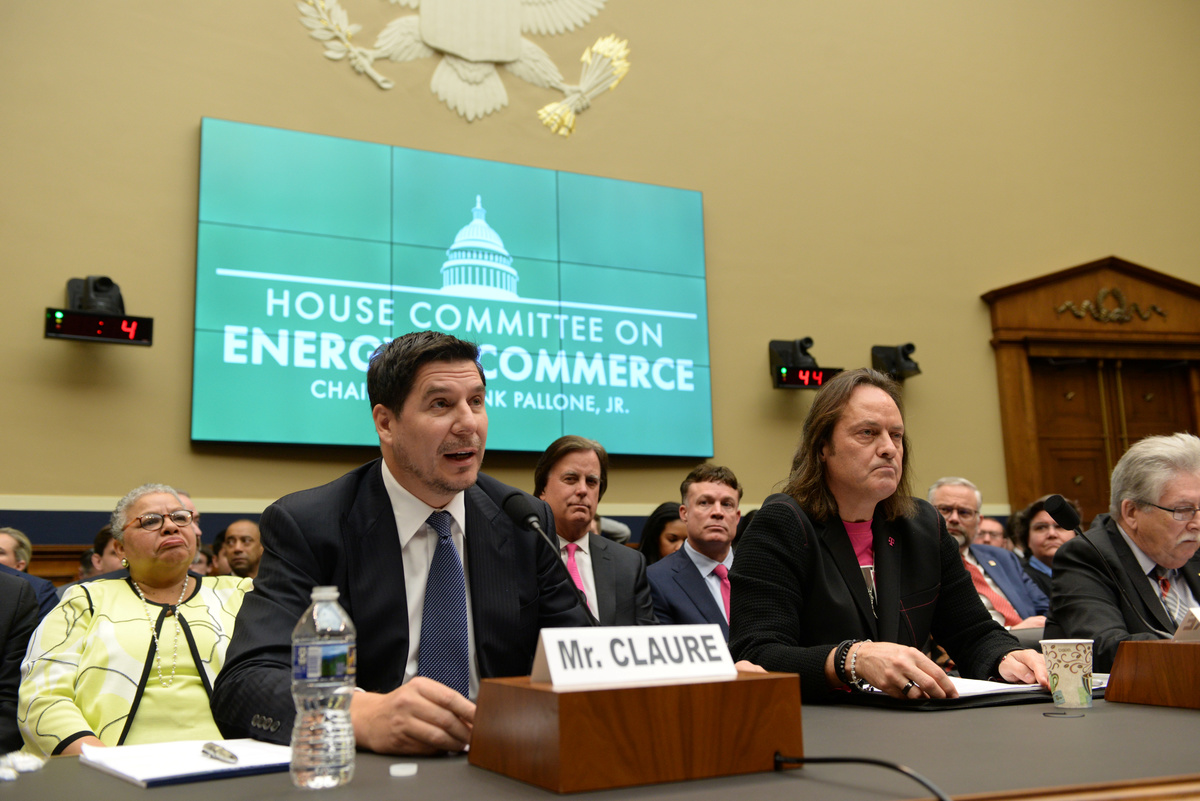
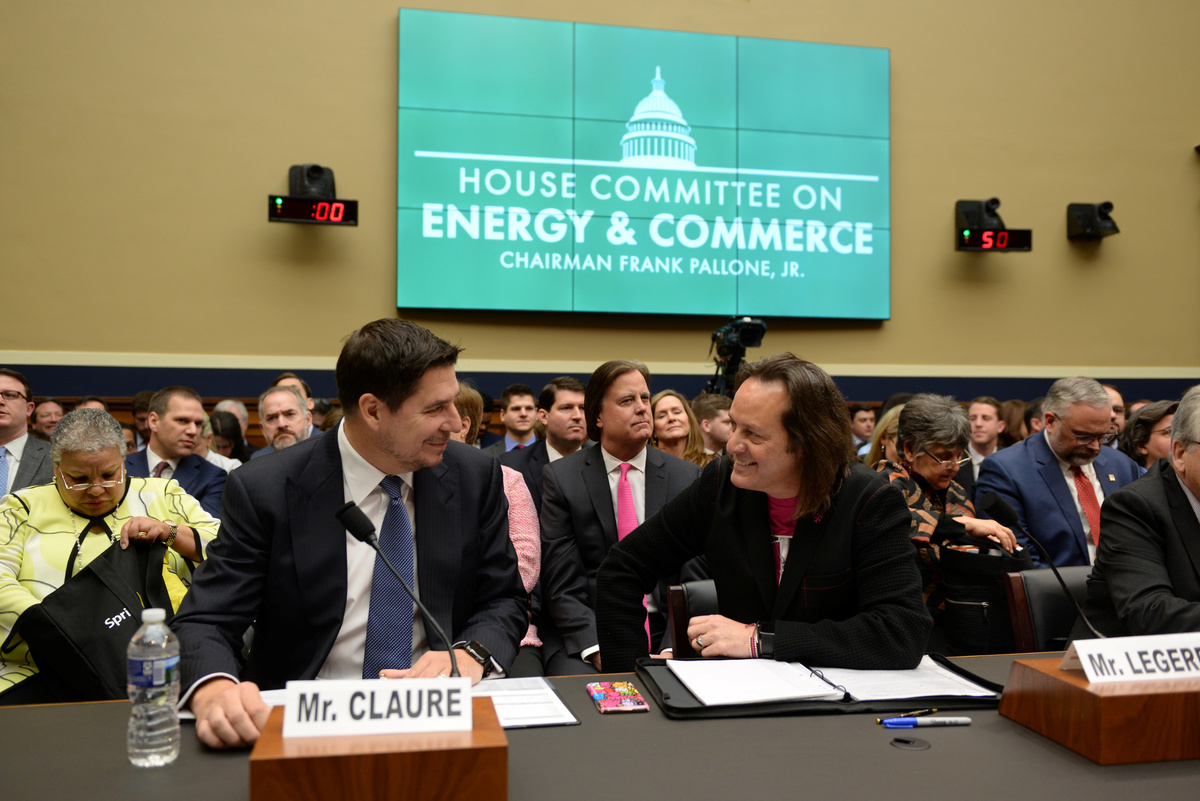
WASHINGTON (Reuters) - Executives from T-Mobile US Inc and Sprint Corp faced tough questions from lawmakers on Wednesday about how the companies' planned merger would affect prices and jobs, especially in rural America.
The deal to combine the No. 3 and No. 4 U.S. wireless carriers, struck in April, was approved by both companies' shareholders in October and has received national security clearance, but still needs approval from the Department of Justice and the Federal Communications Commission.
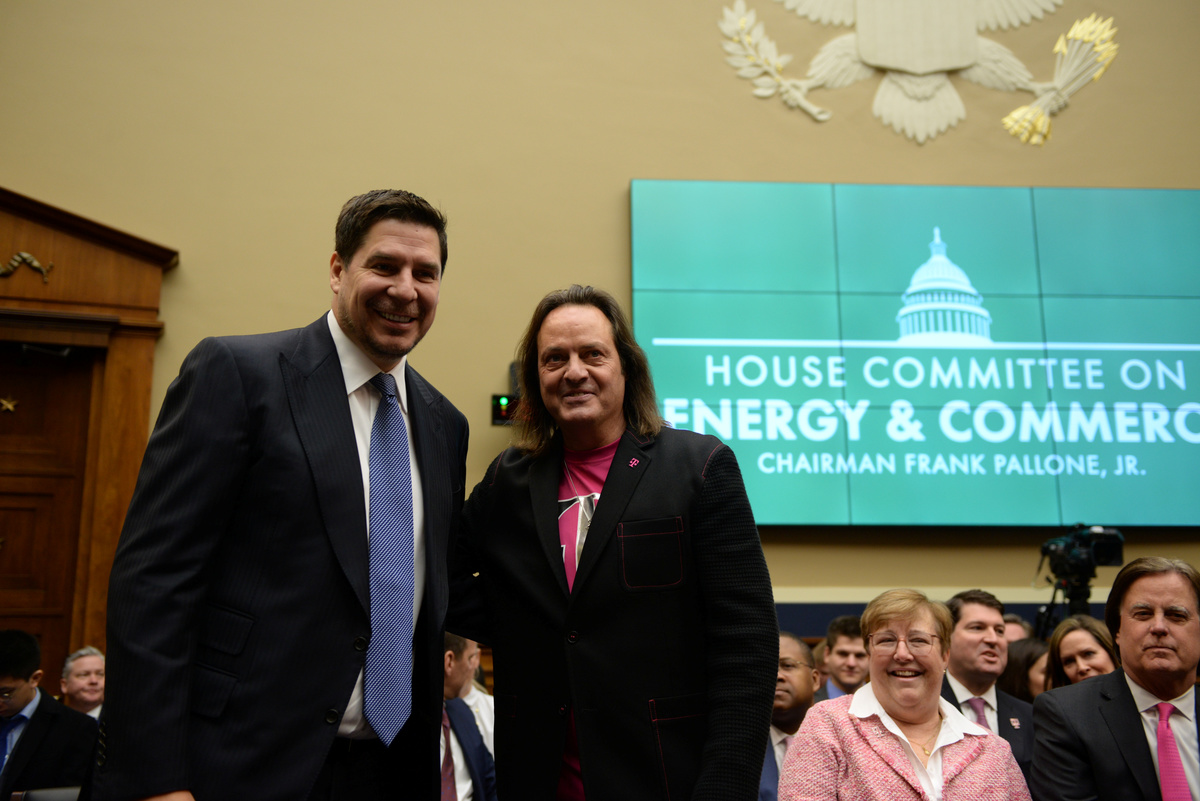
Representative Mike Doyle, who chairs the House of Representatives Energy and Commerce Committee panel holding the hearing, raised worries about the deal because the U.S. wireless market has just four main carriers. The industry leaders are AT&T Inc and Verizon Communications Inc.
"It's hard to think of one (deal) where consolidation did not result in people losing their jobs, prices going up and innovation being stifled," Doyle said.
Representative Billy Long, a Republican, expressed concern about lost jobs in his Missouri district. Representative Dave Loebsack, a Democrat, pointed to job losses in Iowa after T-Mobile's acquisition of Iowa Wireless last year and said T-Mobile's plan to buy Sprint made him "very concerned" about potential negative effects on Iowa.
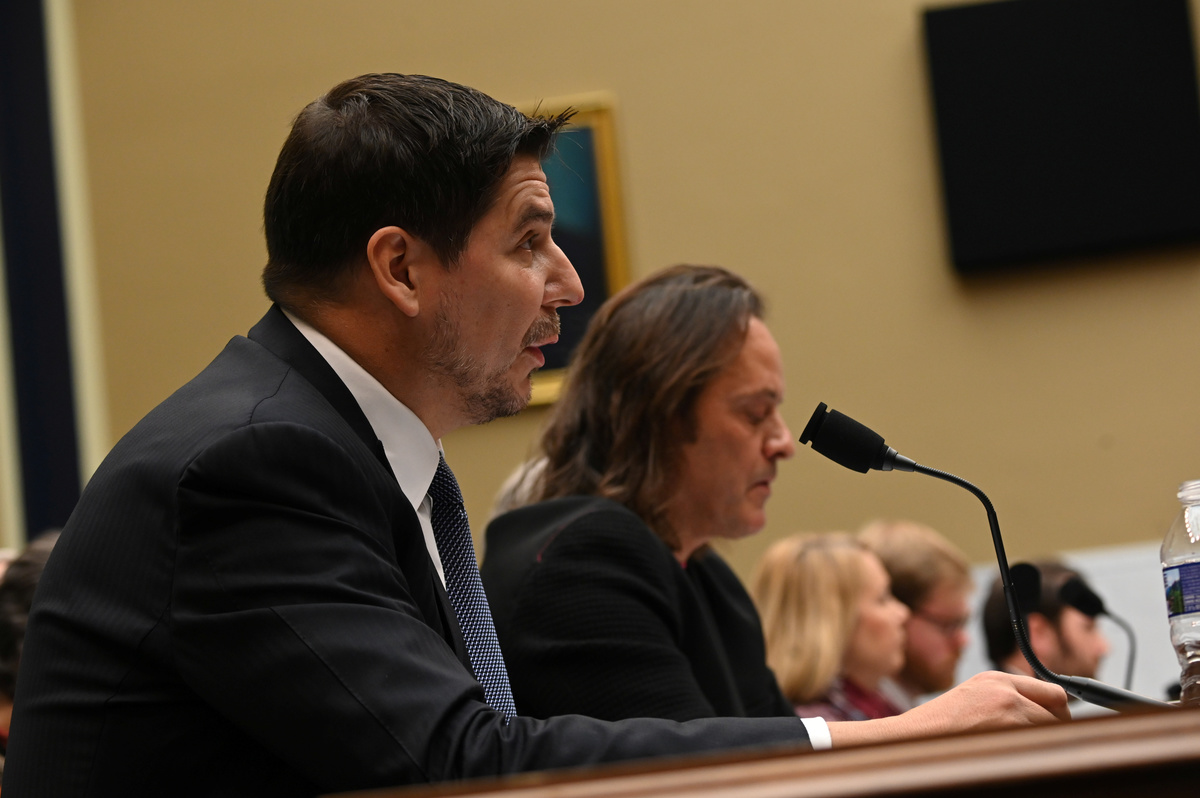
Representative Frank Pallone, a Democrat, said T-Mobile had sent call center jobs overseas in 2012 and asked for legally enforceable assurances that the new jobs touted by T-Mobile US Chief Executive John Legere would not be sent offshore once the deal wins approval.
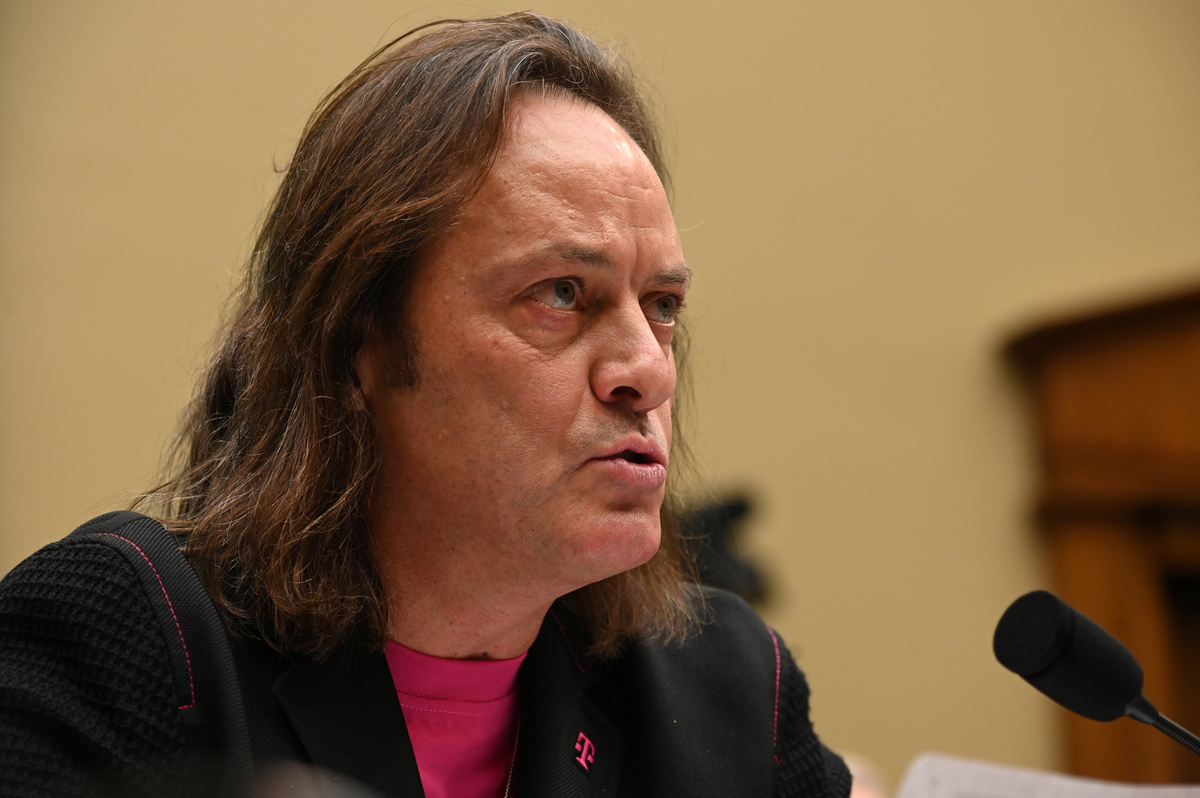
Legere defended the $26 billion deal, arguing that it will create jobs and help with the construction of the next generation of wireless networks. He said the merged company would have more capacity which would lead to a push to lower prices.
"This is a unique merger in that there will be a significant increase in supply," Legere said. To win support for the deal, T-Mobile previously said it would not increase prices for three years.
Legere was not without supporters. Representatives Anna Eshoo, a Democrat, and Steve Scalise, a Republican, asked questions that indicated support for the deal.
In prepared remarks released on Tuesday, Legere pointed to the company's history of aggressive pricing, said it would need 11,000 new employees by 2024 and pledged to compete hard on building the next generation of wireless, called 5G.
He also pledged to create 5G without using networking equipment from Huawei Technologies Co Ltd or ZTE Corp, two Chinese telecommunications firms distrusted by U.S. national security experts.
T-Mobile has run into criticism from unions and consumer advocates, but rural operators have been the fiercest opponents.
Carri Bennet, general counsel at the Rural Wireless Association, said the merger "will force rural Americans to pay more money for wireless services," especially if they contract with a mobile virtual network operator who buys wholesale access to Sprint's network and re-sells it.
She said that Sprint is the only one of the four national carriers that offers anything approximating commercially reasonable roaming rates to rural carriers. "It (the merger) should be denied," she said.
Communications Workers of America President Chris Shelton told the committee the deal would "kill American jobs, lower wages, and raise prices."
Consumer advocates have said that the poorest wireless customers were likely to be disproportionately hurt by the deal since Sprint and T-Mobile have a big market share in prepaid plans.
A group of eight Democratic U.S. senators and independent Senator Bernie Sanders urged the Justice Department and FCC on Tuesday to reject the deal, saying monthly bills could rise as much as 10 percent.
Lawmakers who signed the letter include potential or confirmed presidential candidates Sanders, Amy Klobuchar, Sherrod Brown, Kirsten Gillibrand, Elizabeth Warren and Cory Booker.
Sprint shares were up 0.2 percent in midday trade while T-Mobile shares fell 0.7 percent.
(Reporting by Diane Bartz; Additional reporting by David Shepardson; Editing by Bill Rigby and Meredith Mazzilli)












